









The Light That Never Reaches You
The single biggest difference between sitting by a window and being outside is the light that touches your skin. Sunlight contains different types of ultraviolet (UV) rays. While UVA rays, which contribute to skin aging, can pass through glass, UVB rays cannot.
This is critical, because your body needs direct exposure to UVB rays to produce Vitamin D, an essential nutrient for bone health, immune function, and nerve signaling. No matter how sunny your indoor spot is, standard window glass blocks the specific wavelength required for this vital process. So while you might feel the warmth, you are missing out on this key physiological benefit that only direct sun exposure can provide.
Your Body Clock Is Watching
Natural light does more than just help us make vitamins; it sets our internal clocks. Exposure to the full spectrum of sunlight helps regulate our circadian rhythms, the natural cycle of sleep and wakefulness. Getting direct sunlight, especially in the morning, sends a powerful signal to your brain that it’s time to be alert and active. Light filtered through a window is significantly less effective for this—by some estimates, as much as 50 times less so. While studies show that office workers with windows report better sleep and focus than those without, the unfiltered light from being truly outdoors provides a much stronger cue, leading to better sleep quality and more stable energy levels throughout the day.
The Air Inside Is Different
We tend to think of pollution as an outdoor problem, but the air inside our homes and offices can be two to five times more polluted than the air outside. Indoor environments trap pollutants from a wide range of sources, including cleaning products, furniture, cooking fumes, and dust. Without adequate ventilation, these contaminants build up. In contrast, spending time in nature offers fresh air, which is associated with increased energy and mental clarity. The simple act of stepping outside provides a break from the concentrated, stale air that we often breathe for the approximately 90% of the time we spend indoors.
An Experience for All Senses
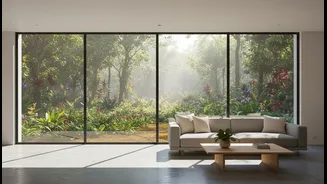
A view of nature is undeniably calming. Studies based on the “biophilia hypothesis”—the idea that humans have an innate tendency to connect with nature—show that even looking at trees from a hospital window can speed up recovery and reduce stress. However, a view is a purely visual experience. Being outdoors is a multi-sensory immersion. You feel the breeze on your skin, hear the sound of birds or rustling leaves, and smell the scent of rain-soaked earth or blooming flowers. This full-body experience provides a richer, more restorative effect that a pane of glass simply cannot replicate. These combined sensory inputs are linked to improved mood and reduced anxiety.
Your Brain on Nature
Spending time in nature has been shown to improve cognitive functions like memory, focus, and creativity. Attention Restoration Theory suggests that natural environments allow our brains to recover from the mental fatigue of directed attention—the kind we use to work or scroll through our phones. Watching clouds or leaves engages a softer, effortless form of fascination that recharges our mental batteries. Furthermore, walking on uneven ground, like a grassy field or a forest path, engages small muscles in your feet and legs, improving balance and proprioception—your body's awareness of its position in space. These are subtle but important physical and cognitive benefits that are activated only when you physically interact with a natural environment.