








A Landmark Launch
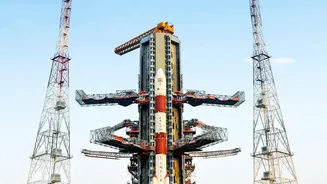
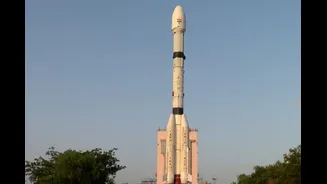
In the early hours of September 4, 2026, the Indian Space Research Organisation (ISRO) launched its Geosynchronous Satellite Launch Vehicle (GSLV-F17) from the Satish Dhawan Space Centre in Sriharikota. The rocket successfully placed the EOS-05 satellite
into its intended preliminary orbit, a crucial first step in its journey to its final position 36,000 kilometres above Earth. The mission was ISRO's first successful launch of 2026, marking a significant moment after previous setbacks, including the failure of a similar mission, EOS-03, in 2021. This success restores momentum and demonstrates the reliability of the GSLV rocket, once nicknamed the "naughty boy" for its early developmental issues.
What Makes EOS-05 Special?
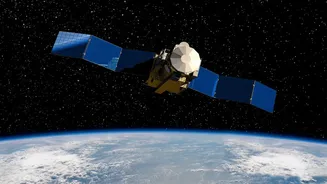
EOS-05 is India's first imaging satellite designed to operate from a geosynchronous orbit. Unlike most Earth observation satellites, which circle the planet in low-Earth orbit and pass over a location only at intervals, a geosynchronous satellite matches the Earth's rotation. This allows EOS-05 to hover over the Indian subcontinent continuously. The primary advantage is the ability to provide near real-time imagery of a large geographical area, taking pictures of specific regions at very frequent intervals. This persistent watch is a game-changer compared to waiting for a lower-orbit satellite to make its next pass.
A New Asset for Disaster Management
One of the most critical applications for EOS-05 will be in disaster management. The satellite's ability to provide rapid, repeated observations is invaluable for monitoring fast-developing natural disasters. It can track the formation and movement of cyclones over the Bay of Bengal and the Arabian Sea, observe the spread of floods during heavy monsoons, and monitor forest fires as they evolve. This near real-time data stream can provide authorities with crucial information to plan evacuations, coordinate emergency responses, and assess damage more effectively, ultimately helping to save lives and resources.
Broader Benefits for the Nation
Beyond disaster response, the applications of EOS-05 are vast. The satellite's data will support agriculture by monitoring crop health, water stress, and soil conditions across large farming regions. It will also aid in water resource management, urban planning, and environmental monitoring by tracking changes in forests, coastlines, and ecosystems. Furthermore, EOS-05 has significant strategic importance. By providing a constant watch over India's borders and maritime zones, it enhances the nation's security and surveillance capabilities, offering crucial data for defence purposes.
Redemption and a Look Ahead
The successful deployment of EOS-05 is a moment of redemption for ISRO, overcoming the 2021 failure of the nearly identical EOS-03 satellite. The mission's success validates the performance of the GSLV rocket's indigenous cryogenic upper stage, a complex technology that was the point of failure in the past. With this achievement, ISRO has not only delivered a vital national asset but has also bolstered confidence in its heavy-lift launch capabilities. This is particularly important as the agency gears up for more ambitious projects, including the Gaganyaan human spaceflight mission.