






The Master Switch for Your Body
At the core of your sleep-wake cycle is an internal body clock, known as the circadian rhythm. This 24-hour cycle tells your body when to feel alert and when to feel sleepy, primarily using daylight as its main cue. For most people, sleepiness peaks between
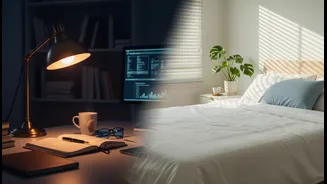
midnight and 7 a.m. When your job requires you to be wide awake during these hours, you are working in direct opposition to your body’s natural programming. This misalignment is what leads to the fatigue, poor sleep, and health issues commonly grouped under Shift Work Sleep Disorder (SWSD), a condition affecting a significant portion of those with non-traditional schedules. Understanding that light is the primary regulator of this clock is the first step toward taking back control.
Use Bright Light to Stay Alert
Just as sunlight signals daytime to your brain, artificial bright light can be used to promote alertness and help adjust your body clock. Studies show that timed exposure to bright light during a night shift can improve vigilance and reduce sleepiness. Many workplaces that operate 24/7 are dimly lit, which can make it harder to stay focused. To combat this, you can intentionally seek out brightly lit areas, especially during the first half of your shift. For a more targeted approach, some shift workers use a light therapy box, which provides intense but safe amounts of full-spectrum light. A 30-minute session with a light box early in a night shift can help delay the circadian rhythm, making it easier to stay awake and function effectively when you need to most.
Engineer Your Wind-Down Period
After a night of stimulating bright light, you need to send a clear signal to your body that it's time to prepare for sleep. This is where avoiding light, specifically blue light, becomes critical. The blue wavelengths found in sunlight and emitted by electronic screens are particularly effective at suppressing melatonin, the hormone that promotes sleep. To start your wind-down, consider wearing blue-light-blocking glasses for the last hour or two of your shift. This simple step can help your body begin producing melatonin even while you're still at work. This strategy is especially crucial for the commute home. Wearing dark, wrap-around sunglasses can prevent morning sunlight from hitting your eyes and immediately telling your brain it's time to be awake, which would sabotage your upcoming sleep.
Create Your Personal Sleep Cave
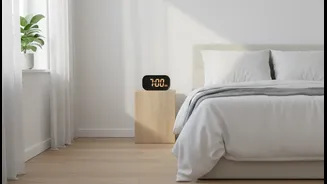
Once you get home, your bedroom needs to become a sanctuary of darkness to ensure high-quality daytime sleep. Even small amounts of light can disrupt sleep architecture, making you feel less rested when you wake up. The most effective tools for this are blackout curtains or blinds that completely block outside light. An eye mask can provide an extra layer of protection. It’s also important to eliminate sources of light within the room itself. Turn off or cover electronic devices with small indicator lights, such as televisions, chargers, and digital clocks. If you need to get up, use a dim nightlight with a warm or red hue, which is less disruptive to your circadian rhythm than blue or white light. The goal is to create an environment that tells your body, unequivocally, that it is time to rest.
Putting It All Together: A Sample Plan
Let’s imagine you work a permanent night shift from 11 p.m. to 7 a.m. Your light plan could look something like this. From 11 p.m. to 3 a.m., spend as much time as possible in brightly lit areas of your workplace to maximize alertness. Around 5 a.m., put on a pair of blue-light-blocking glasses to start signaling to your brain that the 'day' is ending. At 7 a.m., before you leave work, put on your dark sunglasses for the commute home. Once home, go to bed as soon as possible in your completely dark bedroom. This routine helps create a new, consistent light-dark cycle that supports your work schedule. For those on rotating shifts, the principles are the same, but the timing needs to be adjusted with each rotation—a challenging but crucial practice for long-term health.