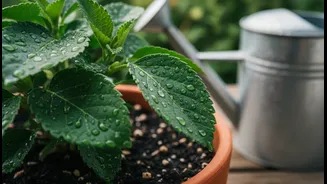







The Myth of Automatic Rain Watering
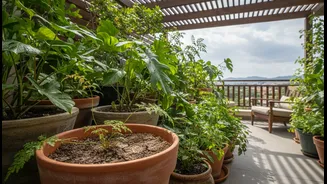
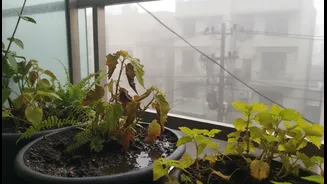
It’s a common assumption among urban gardeners: if it’s raining, the plants on the covered balcony are getting watered. In reality, this is rarely true. The combination of a roof overhang and wind creates a “rain shadow,” an area that stays surprisingly
dry even during a storm. Rain driven by wind might wet the outer row of pots while leaving those closer to the wall completely dry. This uneven distribution means some plants may get drenched while others get nothing at all, making passive watering a gamble you’re likely to lose. Even a short, heavy shower might only wet the top layer of soil without reaching the critical root zone, giving a false impression of a well-watered plant.
Why Manual Soil Checks are Non-Negotiable
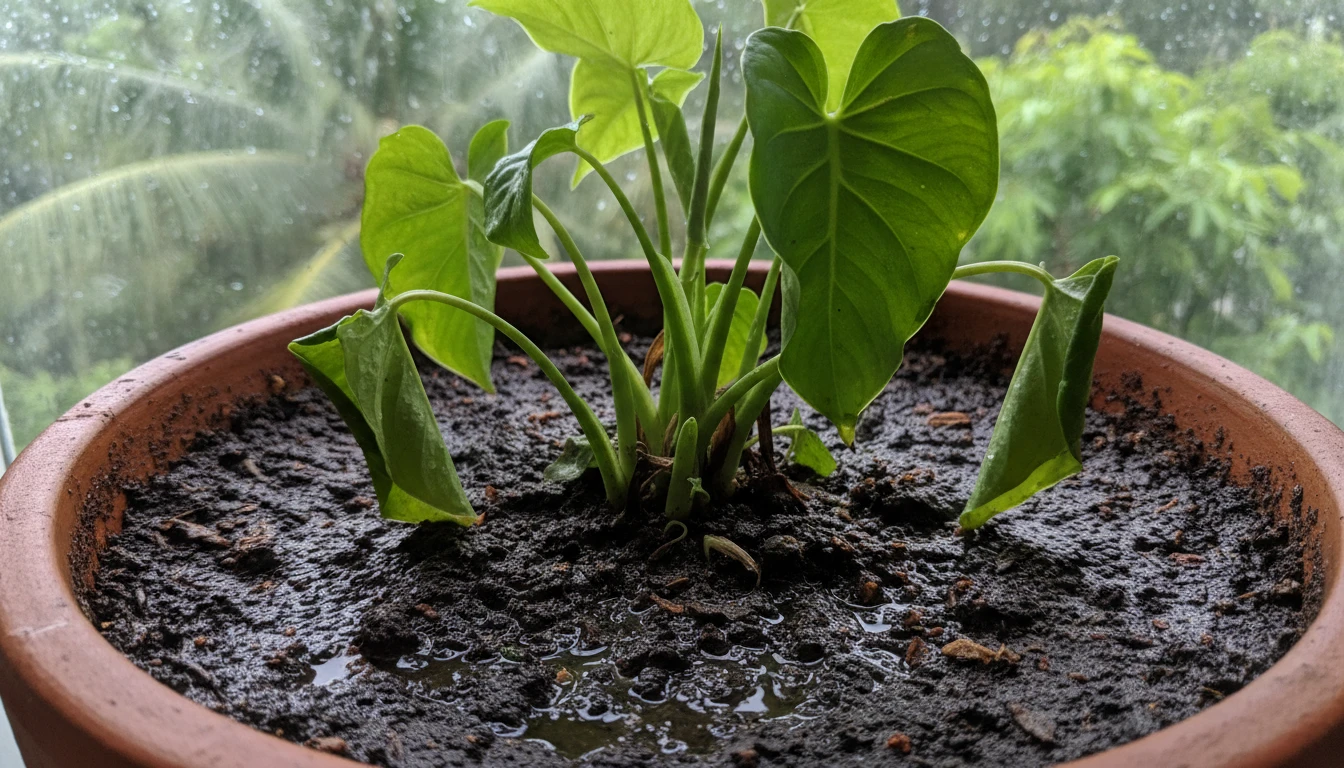
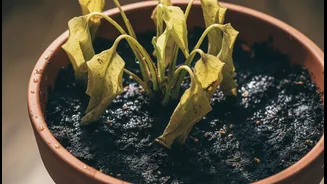
Because you can't trust the rain, actively checking your soil is the only way to know what your plants need. The risks of not checking are twofold. The most obvious is underwatering, where a plant slowly wilts from thirst despite the rainy weather outside. The less obvious, and often more dangerous, is overwatering. If one side of a pot is consistently hit by wind-blown rain while the other remains dry, you might water it, not realizing half the soil is already saturated. This leads to root suffocation, which causes symptoms like wilting and yellowing leaves that ironically look just like underwatering. This confusion can cause well-meaning plant owners to add more water to an already drowning plant, accelerating its decline.
Four Foolproof Ways to Check Soil Moisture
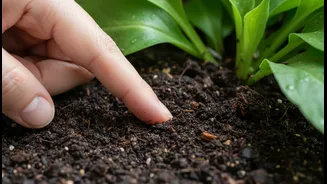
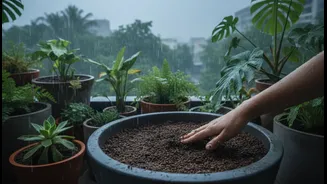
Forget watering on a rigid schedule; instead, let your plants tell you when they’re thirsty. Here are four reliable methods to check the soil: 1. The Finger Test: This is the oldest and simplest method. Stick your index finger about two inches into the soil. If it comes out clean and dry, it’s time to water. If soil sticks to it and feels cool and damp, wait another day or two. 2. Lift the Pot: Get a feel for how heavy your pots are just after a thorough watering. Then, you can simply lift them every few days. A surprisingly lightweight pot is a clear sign the soil has dried out. This method is best for small to medium-sized containers. 3. The Skewer Method: For deeper pots, use a plain wooden or bamboo skewer like a cake tester. Push it all the way to the bottom of the pot, leave it for a minute, and pull it out. If the skewer comes out clean and dry, it’s time to water. If it’s damp and has soil clinging to it, the plant has enough moisture at the root level. 4. Use a Moisture Meter: For a more scientific approach, a soil moisture meter removes all guesswork. Insert the probe deep into the root zone and check the reading. These devices are especially helpful for large pots or for gardeners who are still learning to read their plants’ needs.
A Smarter Watering Strategy
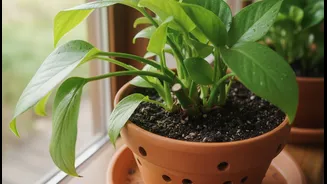
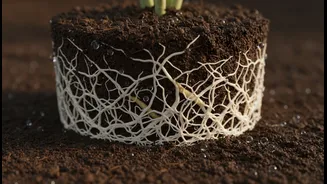
Once you've confirmed a plant needs water, do it correctly. Water deeply and thoroughly until you see it run out of the drainage holes. This ensures the entire root ball is hydrated and flushes out any mineral buildup. Shallow, frequent watering only encourages weak, surface-level roots. Aim the water at the base of the plant, directly onto the soil, rather than on the leaves, which can promote fungal diseases. The best time to water is in the morning, giving the plant ample moisture to handle the day's heat and allowing any wet foliage to dry quickly, reducing the risk of pests and disease. Finally, always ensure your pots have clear drainage holes to let excess water escape, which is the single most important defense against root rot.
Reading the Signs: Thirsty vs. Drowning
Sometimes, despite your best efforts, a plant will show signs of stress. It's crucial to know the difference between overwatering and underwatering, as their symptoms can appear similar. Signs of Underwatering often include wilting, but the leaves will feel dry and crispy. The soil will be visibly pulling away from the edges of the pot, and the leaves may have brown, brittle tips. An underwatered plant will typically perk up quickly after a good drink. Signs of Overwatering also include wilting and yellowing leaves, but the leaves will feel soft and limp, not crispy. The stem might feel mushy near the base, and the soil may have a sour or swampy smell. You might also see mold or green algae on the soil's surface. Unlike a thirsty plant, an overwatered one will not recover after being watered again.