





A Landmark Investment in Connectivity
The Cabinet Committee on Economic Affairs (CCEA), led by Prime Minister Narendra Modi, has given the green light to three major multi-tracking railway projects with a combined investment of ₹10,783 crore. This initiative will add approximately 656 kilometers
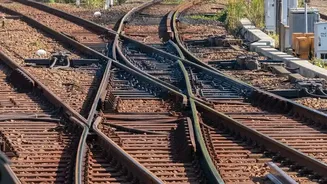
of new railway lines across West Bengal, Odisha, Jharkhand, Madhya Pradesh, and Chhattisgarh. The projects are specifically designed to increase the capacity of some of the country's most congested rail corridors, which are crucial for both passenger travel and freight movement. By adding third and fourth lines to existing routes, the government aims to significantly improve the efficiency and reliability of train operations.
The Five States in Focus
The expansion is not limited to just Bengal and Odisha but extends into three other states, covering a total of 14 districts. The approved projects include the Kharagpur–Jharsuguda (Bagdehi) fourth line, the Katni–Pendra Road fourth line, and the Bilaspur (Uslapur)–Pendra Road third line. These corridors are strategically important, linking industrial hubs with mineral-rich regions. This expansion is set to directly benefit an estimated 5.6 million people across nearly 4,800 villages by providing them with better and more reliable access to major towns, cities, educational institutions, and healthcare facilities.
Easing Freight Bottlenecks
A primary objective of this massive undertaking is to decongest the railway network, which currently operates at over 100% capacity on many key routes. These routes are essential for transporting critical commodities like coal, cement, iron, and steel, which form the backbone of India’s industrial economy. The expansion is projected to create an additional freight traffic capacity of 27 million tonnes per annum (MTPA). By separating freight and passenger traffic more effectively, Indian Railways can run goods trains faster and more predictably, which helps in reducing logistics costs for businesses and ensuring a smoother supply chain for essential goods across the country.
The Broader Economic and Social Impact
Beyond the immediate benefits to the railway network, this infrastructure upgrade is expected to have a significant ripple effect on the regional economy. The construction phase itself is anticipated to generate substantial employment. In the long term, improved connectivity is a catalyst for industrial growth, encouraging businesses to invest in areas that were previously considered remote. Furthermore, the project will enhance access to several important religious, tourism, and archaeological sites, including the Taratarini Temple in Odisha and the Bandhavgarh Tiger Reserve in Madhya Pradesh, potentially boosting local tourism-dependent economies.
Aligning with a National Vision
This railway expansion is a key component of the PM Gati Shakti National Master Plan, which emphasizes integrated and multi-modal connectivity to improve logistics efficiency nationwide. The projects, slated for completion by the 2029-30 fiscal year, are not just about adding tracks but about building a more resilient and modern transportation network for the future. By shifting more freight from road to rail, the initiative also aligns with India's environmental goals. It is estimated that the increased rail usage will reduce oil consumption by approximately 120 million litres annually and cut down on carbon emissions significantly.