




The City of Palaces
Kolkata, then Calcutta, served as the capital of British India from 1772 to 1911. During this period, it transformed into the second most important city of the British Empire after London itself. The East India Company and later the British Raj poured
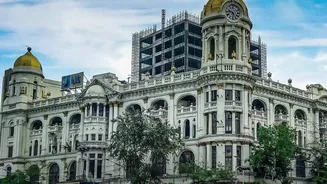
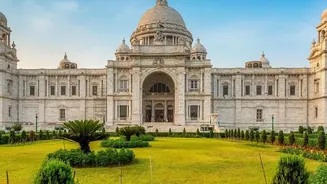
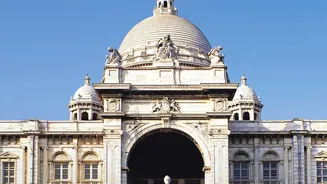
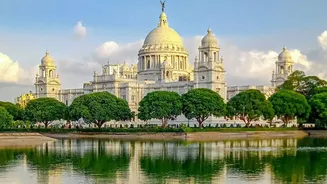
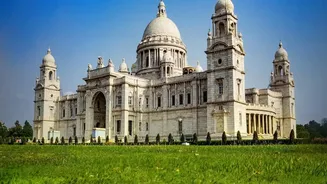
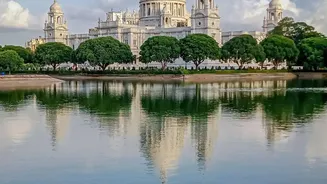
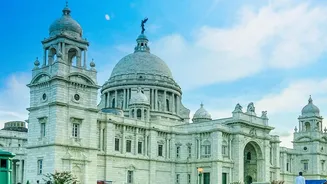
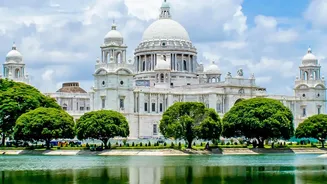
immense resources into constructing a capital that would project imperial power and grandeur. This ambition gave rise to another of the city's nicknames: the 'City of Palaces'. The architecture was a deliberate statement, a fusion of European styles like Neoclassical, Gothic Revival, and Victorian, meant to establish a sense of dominance and permanence. The result was a cityscape filled with stately buildings, wide roads, and a civic layout that drew direct comparisons to European capitals, particularly London.
The Heart of the Empire: B.B.D. Bagh
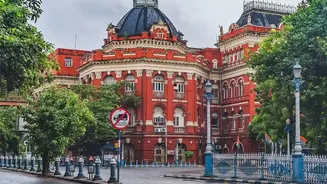
Nowhere is this architectural legacy more concentrated than in the area formerly known as Dalhousie Square, since renamed B.B.D. Bagh. This district was the administrative and commercial nucleus of British India. Today, it stands as one of the world's most significant zones of colonial architecture. The square is built around the Lal Dighi water tank and is framed by monumental structures. Dominating the northern side is the Writers' Building, a massive red-brick structure originally built in 1777 to house the junior clerks or 'writers' of the East India Company. Over time, it evolved into the seat of government. Other landmarks ringing the square include the impressive General Post Office (GPO) with its high dome, the former Treasury Office, and St. John's Church, which was modelled after St. Martin-in-the-Fields in London.
A Thames on the Hooghly
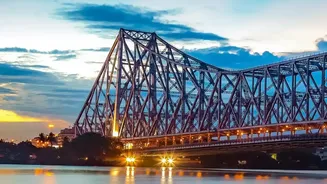
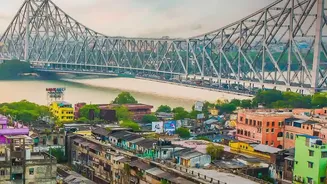
The comparison to London is also rooted in the river that defines both cities. Just as London developed along the Thames, Kolkata's identity is inextricably linked to the Hooghly River. The British developed Strand Road, a major thoroughfare that runs along the river's eastern bank, in the 1820s. This waterfront became a vital artery for commerce, with goods and officials arriving and departing from its many ghats, or riverside steps. Chandpal Ghat, for instance, was the primary landing point for many British administrators arriving from London. The riverfront was lined with warehouses, jetties, and grand colonial mansions, mirroring the commercial bustle of London's own riverbanks. Imposing structures like Prinsep Ghat, with its Greek Revival style, further enhanced the European feel of the riverfront.
A Cultural and Commercial Echo
The 'London of India' moniker extends beyond just bricks and mortar. As the empire's second city, Kolkata became a crucible of cultural fusion, developing a unique 'Babu culture' that blended English liberalism with Indian traditions. It was a hub for education, journalism, and intellectualism, much like its British counterpart. The city's social life was also patterned on British customs, with exclusive clubs like the Bengal Club and the Royal Calcutta Golf Club becoming institutions for the colonial elite. The commercial machinery of the city, from the grand headquarters of banks like HSBC to the bustling tea auction houses, was built on a British model, solidifying the city's role as the financial engine of British India.
A Living Legacy
Today, Kolkata is a vibrant, modern Indian metropolis, but the ghosts of its imperial past are everywhere. The grand colonial buildings still dominate the old commercial district, though many are in varying states of repair. The tram system, the only one of its kind remaining in India, adds to the city's oldworld charm, offering a slow moving glimpse into its layered history. While the nickname 'London of India' is rooted in a complex colonial history, it speaks to a period when Kolkata was a global city of immense importance. The architectural and cultural legacy from that era remains a defining, and fascinating, aspect of the city's unique character, offering a tangible link to the past amidst the energy of the present.