








The Founder's Unfinished Dream
Long before the legendary McLaren F1 redefined the supercar in the 1990s, Bruce McLaren had a different dream: a road-going machine born from his dominant Can-Am race cars. In the late 1960s, he envisioned the M6GT, a sleek, closed-cockpit coupe based
on the chassis of the all-conquering M6A racer. The plan was ambitious: to build a car for the street that was lighter, faster, and more advanced than anything from established rivals like Ferrari or Porsche. Bruce was so committed to the project that he used the first prototype, registered OBH 500H, as his personal transport. However, his tragic death in a testing accident in 1970 brought the M6GT production plans to an abrupt and permanent halt, with only a couple of prototypes ever completed.
A Modern Resurrection by MSO
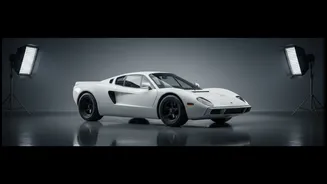
Decades later, McLaren's in-house bespoke division, McLaren Special Operations (MSO), has taken on the task of finishing what the founder started. This is not a modern reinterpretation but a faithful recreation built from the ground up. The project started with a period-correct M6A race car chassis, ensuring the same foundation as the original. MSO technicians even discovered the original body moulds in the UK, using them to form the new car's stunning fibreglass shell. The team’s dedication to authenticity was so thorough that they preserved small modifications found in the moulds, evidence of the design's evolution during its initial development. The goal was to build the car exactly as Bruce McLaren would have.
The Significance of Colnbrook White
The recreated M6GT is finished in a unique, cream-based shade called Colnbrook White. The name is a direct homage to the location of the workshop where Bruce McLaren first developed his road car concepts in England. This special colour is more than just paint; it's a link to the very origins of McLaren's road car ambitions. The exterior is paired with a vibrant green interior, a nod to the livery of the 1966 M2B, the very first McLaren Formula 1 car. This white-and-green combination powerfully connects the brand's earliest F1 efforts with its first, unrealised supercar project, wrapping the vehicle in layers of company history.
Authenticity Down to the Rivets
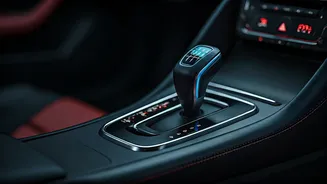
The MSO team's commitment to historical accuracy extended to every component. The car is powered by a period-correct, 5.7-litre small-block Chevrolet V8 with specific 'camel hump' cylinder heads, mated to a five-speed manual gearbox. Many parts, like the roll hoop and wiring harness, were hand-fabricated from scratch. Specialists restored original M6GT suspension hardware, even tracking down hard-to-find imperial-era bearings to ensure the car’s handling would be identical to the original. Inside, the cockpit features custom green vinyl seats with period-correct stitching and a hand-turned walnut gear knob, completing the 1970s aesthetic.