







A New Vision of a Wetter Mars
For decades, scientists have known Mars wasn't always the frigid desert it is today. Evidence has long pointed to a watery past, from dried-up lakebeds to minerals that only form in water. But the big question has always been: how much water was there,
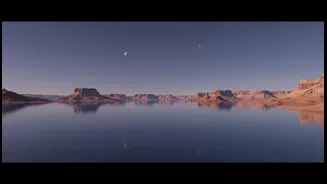
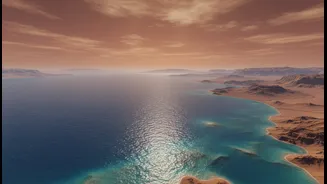
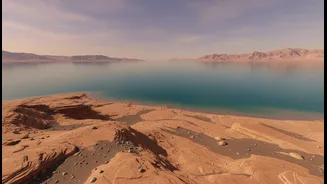
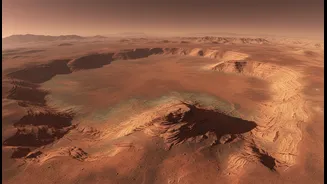
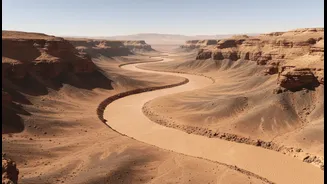
and how long did it last? A flurry of recent studies is painting a radical new picture. Instead of a world with fleeting floods or isolated lakes, the data now points to a planet with massive, continent-sized river systems and a prolonged period of hydrologic activity that shaped the surface in profound ways. This wasn't just a brief, wet chapter in Martian history; it was a sustained era of flowing water.
Reading the Martian Scenery
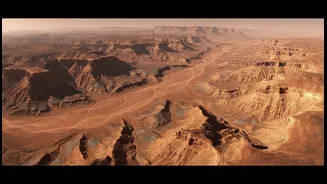
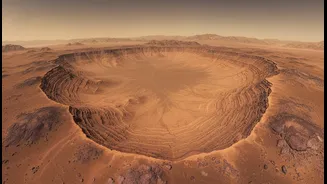
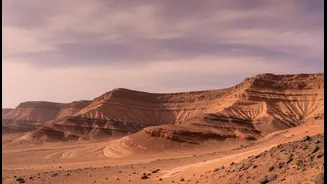
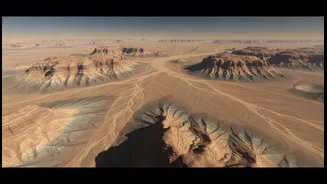
Much of this new understanding comes from looking at Mars with fresh eyes and new tools. Using high-resolution satellite imagery and ground-penetrating radar from rovers like Perseverance, scientists have been able to map ancient landscapes in stunning detail. In regions once thought to be barren, researchers have identified thousands of miles of ancient riverbeds. These aren't just simple channels; they are complex networks called fluvial ridges, which form when river sediments harden over time and the softer surrounding ground erodes away. One study even used radar to peer deep beneath the surface of Jezero Crater, revealing a vast, buried river delta system that existed long before the one Perseverance is currently exploring on the surface. This suggests multiple, stacked phases of water activity over an extended period.
More Than Just a Puddle
The scale of these discoveries is what truly changes the story. Scientists have now systematically mapped at least 16 large-scale river basins, each over 100,000 square kilometers—the threshold for a large drainage basin on Earth. Together, these massive systems are estimated to have transported nearly half of all the river-eroded sediment on the planet. This kind of widespread, organized river activity requires a persistent water source, most likely from planet-wide precipitation like rain or snow. Some rock formations show rivers were active for potentially 100,000 years or more, building up thick layers of sedimentary rock just as they do on Earth. This contradicts older theories that Mars was mostly cold and dry, with only brief, sporadic melts of ice sheets.
An Extended Window for Life
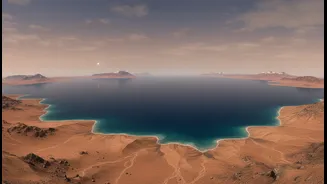
This dramatically extended timeline for water on Mars has huge implications for the search for life. A world with persistent rivers, sprawling deltas, and large lakes over many millennia is a far more promising candidate for habitability than one with only short-lived floods. The period when this water flowed, more than 3.7 billion years ago during the Noachian era, is now seen as the best time to search for signs of ancient life. The sedimentary rocks laid down by these ancient rivers are ideal targets because they could preserve chemical traces or biosignatures. The discovery of hidden, older river systems deep underground further extends the window of time when Mars might have harbored life, pushing it further back into the planet’s history. These long-lived watery environments could have provided stable habitats for microbial life to emerge and thrive.