




A Partnership Forged for the Future
In October 2026, NASA and the DOE solidified their long-standing collaboration with a new Memorandum of Understanding to accelerate the development of space nuclear technologies. This formal partnership combines NASA's expertise in spaceflight and exploration
with the DOE's deep knowledge of nuclear science, reactor development, and safety. The goal is to create reliable power systems for missions where conventional energy sources fall short. The DOE is responsible for the nuclear systems themselves, including the design, development, and fuel, while NASA leads the overall mission integration and application.
Why Not Just Use Solar Panels?
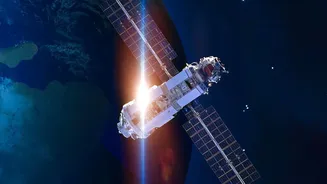
Solar power has been the workhorse of space exploration for decades and works exceptionally well for satellites in Earth orbit and missions to the inner solar system. However, its effectiveness plummets the farther a spacecraft travels from the sun. At Jupiter, for instance, sunlight is only 4% as intense as it is at Earth, making enormous solar arrays impractical. Even closer to home, solar power has limitations. The Moon has long, two-week nights where temperatures plummet, and permanently shadowed craters may hold valuable resources but have no sunlight at all. On Mars, planet-wide dust storms can block the sun for extended periods, rendering solar panels useless when they're needed most. Nuclear power, which operates independently of sunlight, provides a constant, reliable solution for these challenging environments.
The Nuclear Options on the Table
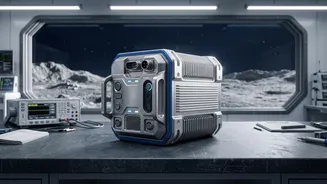
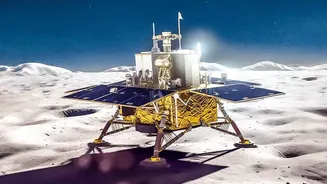
The partnership is developing a suite of nuclear technologies tailored for different needs. The first are Radioisotope Power Systems (RPS), often called 'nuclear batteries'. These systems use the heat from the natural decay of plutonium-238 to generate a steady stream of electricity. RPS have a long, successful history, powering iconic missions like the Voyager probes and the Curiosity and Perseverance rovers on Mars. For more demanding jobs, like powering a lunar base, the focus is on Fission Surface Power (FSP). This involves a small, portable nuclear reactor that can generate several kilowatts of electricity—enough to power dozens of households—continuously for a decade. This technology is critical for supporting habitats and equipment through the long lunar night. NASA and the DOE are working with private industry on designs for a demonstration on the Moon targeted for the early 2030s.
Faster Travel with Nuclear Propulsion
Beyond just providing electricity, nuclear fission is set to revolutionize how we travel through space. The partnership is advancing two main types of propulsion: Nuclear Thermal Propulsion (NTP) and Nuclear Electric Propulsion (NEP). NTP uses a reactor to directly heat a propellant like liquid hydrogen, creating a high-thrust exhaust that is more than twice as efficient as the best chemical rockets. This could dramatically shorten transit times to Mars, reducing astronauts' exposure to deep-space radiation. NEP uses the reactor's heat to generate electricity, which then powers highly efficient ion thrusters. While lower in thrust than NTP, NEP is extremely propellant-efficient, allowing for massive payloads or missions to the outer solar system that would otherwise be impossible.
Powering the Artemis Generation and Beyond
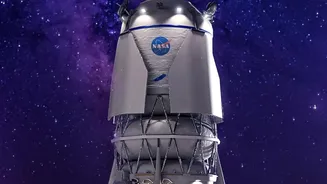
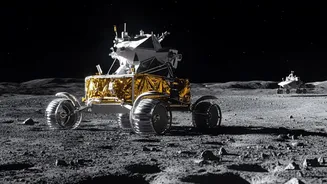
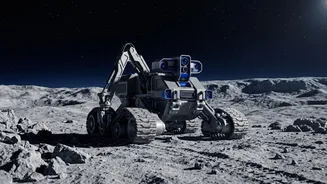
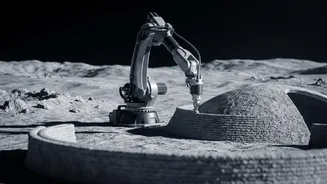
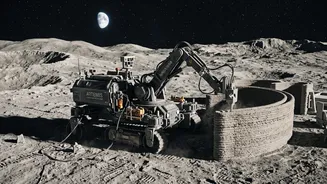
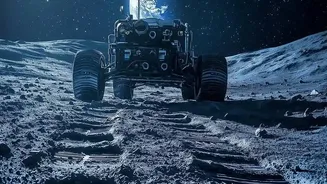
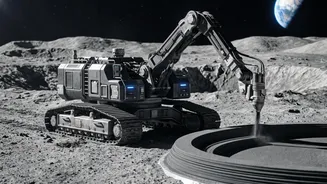
These nuclear technologies are not just theoretical; they are foundational to NASA's Artemis program, which aims to establish a sustainable human presence on the Moon and prepare for missions to Mars. A Fission Surface Power system is planned to provide the energy needed for a future lunar base, powering habitats, rovers, and resource utilization plants. Meanwhile, nuclear propulsion is seen as a key enabler for human missions to Mars, making the journey faster and safer. By demonstrating these systems on the Moon first, NASA and the DOE are paving the way for a new era of exploration throughout the solar system.
A Focus on Safety
The use of nuclear material in space understandably raises questions about safety. The primary safety objective is to prevent any radioactive material from entering Earth's biosphere. This is managed through multiple layers of protocols. Reactors for surface power are designed to be launched cold and not activated until they are safely in orbit or on the lunar surface. All systems must comply with stringent US laws and regulations, with agencies like the Nuclear Regulatory Commission involved in safety reviews. The systems are designed for autonomous operation and to withstand the harsh environment of space, with international committees also collaborating to ensure a shared understanding and framework for nuclear safety beyond Earth.