





A Groundbreaking Discovery
In a significant contribution to planetary science, researchers at the Physical Research Laboratory (PRL) in Ahmedabad have created a detailed map of Mars's atmospheric behaviour. Published in the journal Current Science, their study reveals a planet with
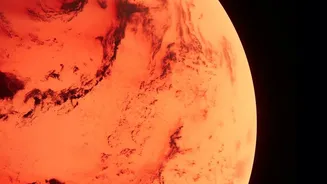
a far more dynamic and complex climate than previously understood. The team analysed data from the Emirates Mars Mission's 'Hope' spacecraft, focusing on two of the planet's largest impact basins, Hellas and Argyre. What they found was a world of breathtaking thermal extremes, where surface temperatures can plummet to a frigid -123 degrees Celsius and, in the summer, climb to a relatively mild 27 degrees Celsius. This is not just random weather; it is a predictable, if harsh, system that we are finally beginning to comprehend, thanks to this pioneering Indian research.
Riding the Zonal Waves
The most fascinating aspect of the discovery is the identification of large-scale atmospheric patterns known as 'zonal waves'. Instead of temperatures rising and falling uniformly with the sun, heat energy ripples across the Martian surface in massive, planet-circling waves. The scientists described it as being like watching ripples on a pond to understand the currents underneath. These waves are heavily influenced by Mars's topography. For instance, the deep and vast Hellas basin creates complex wave-2 and wave-3 patterns, while the Argyre basin is dominated by a simpler wave-1 pattern. This confirms that the planet's mountains, craters, and plains play a crucial role in shaping its global weather systems, dictating how heat is moved around the thin atmosphere.
Why Mars Weather is So Extreme
The reason for these wild temperature swings lies in Mars's incredibly thin atmosphere. Composed of 95% carbon dioxide, its atmospheric pressure is less than 1% of Earth's. This tenuous blanket of gas is simply unable to store and distribute heat effectively. As a result, the Martian surface heats up rapidly under the sun and loses that heat just as quickly when night falls. This effect is compounded by Mars's elliptical orbit, which brings it much closer to the sun during its southern hemisphere's summer, making that season particularly intense. Understanding these fundamentals is key to grasping why the PRL team's detailed mapping is so revolutionary; it puts precise numbers and patterns to these long-theorised atmospheric behaviours.
Safer Landings, Smarter Missions
This research is not merely an academic exercise; it has profound implications for the future of Mars exploration. The most critical phase of any Mars mission is the entry, descent, and landing. Sudden shifts in atmospheric density, driven by the very temperature waves the PRL scientists have mapped, can throw a descending spacecraft off course with catastrophic results. By providing more accurate, real-world data, this study allows engineers to build better climate models. The research found that existing models were often off by as much as 10 degrees Kelvin, a significant margin when mission safety is on the line. This new understanding will enable the design of more robust landers, rovers, and eventually, human habitats that are prepared for the true violence of the Martian environment.
India's Next Giant Leap
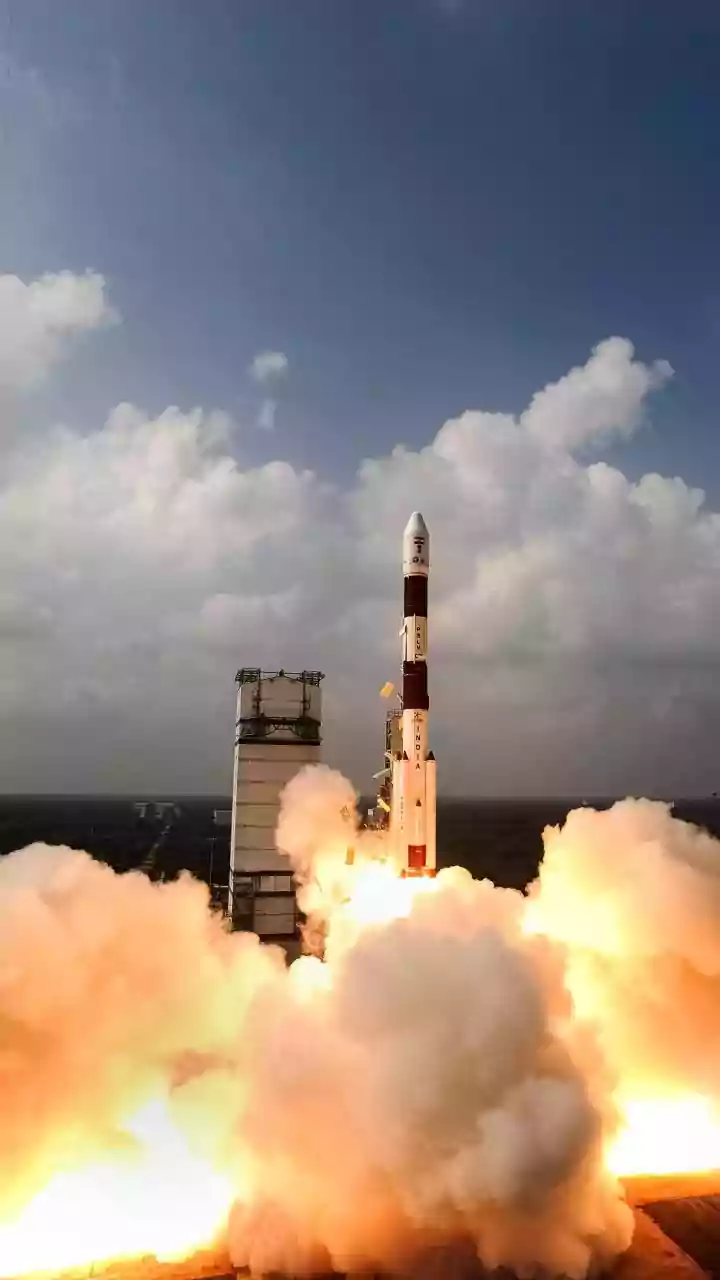
This breakthrough places Indian science at the forefront of Mars research and serves as a vital stepping stone for the nation's own spacefaring ambitions. Following the historic success of the Mars Orbiter Mission (Mangalyaan), India is looking towards future, more complex missions. The knowledge gained from studies like this is foundational for planning a potential Mars lander or even more advanced robotic explorers. Each piece of the atmospheric puzzle solved by our scientists reduces the risk and increases the probability of success for these future endeavours. It demonstrates that India is not just a participant in space exploration but a key contributor, generating essential knowledge that will benefit all of humanity as we continue our journey to the stars.