




A Sweet Discovery in a Cosmic Cloud
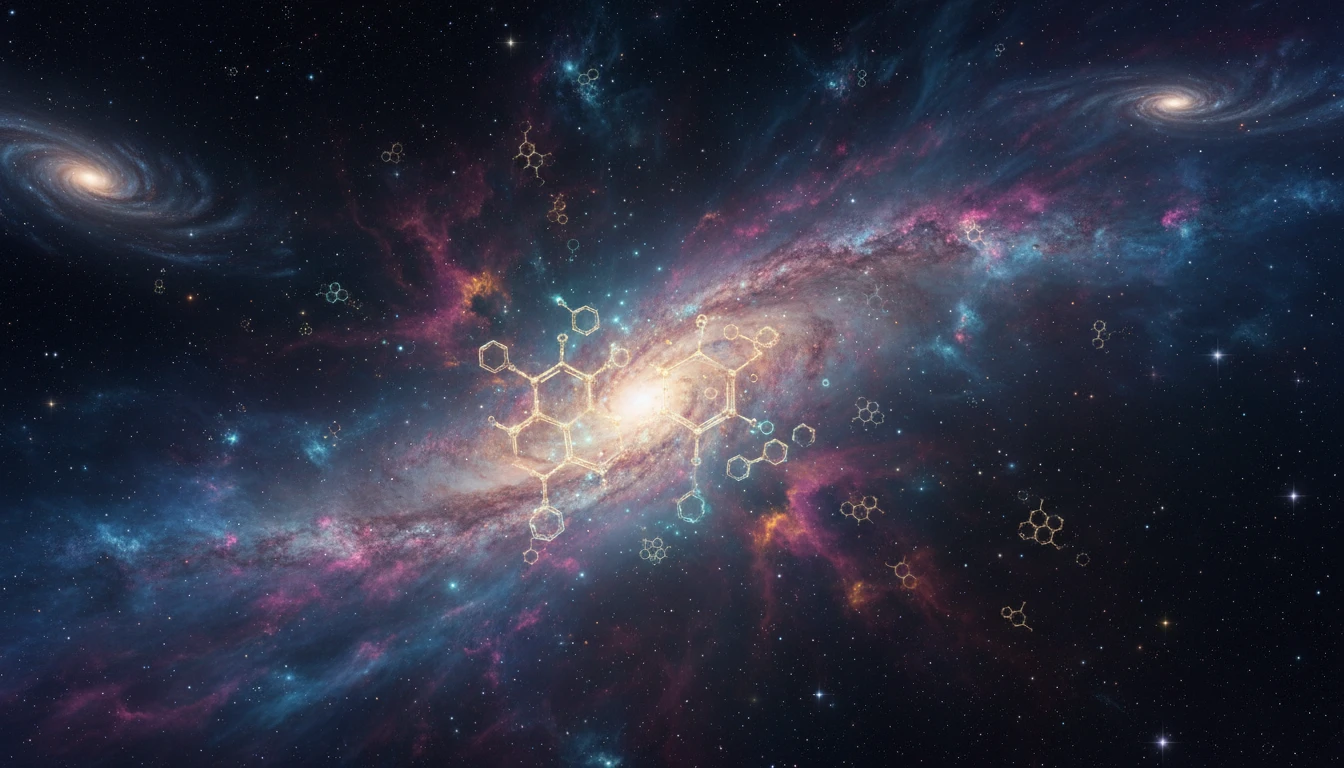
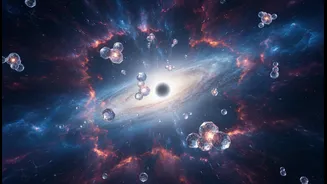
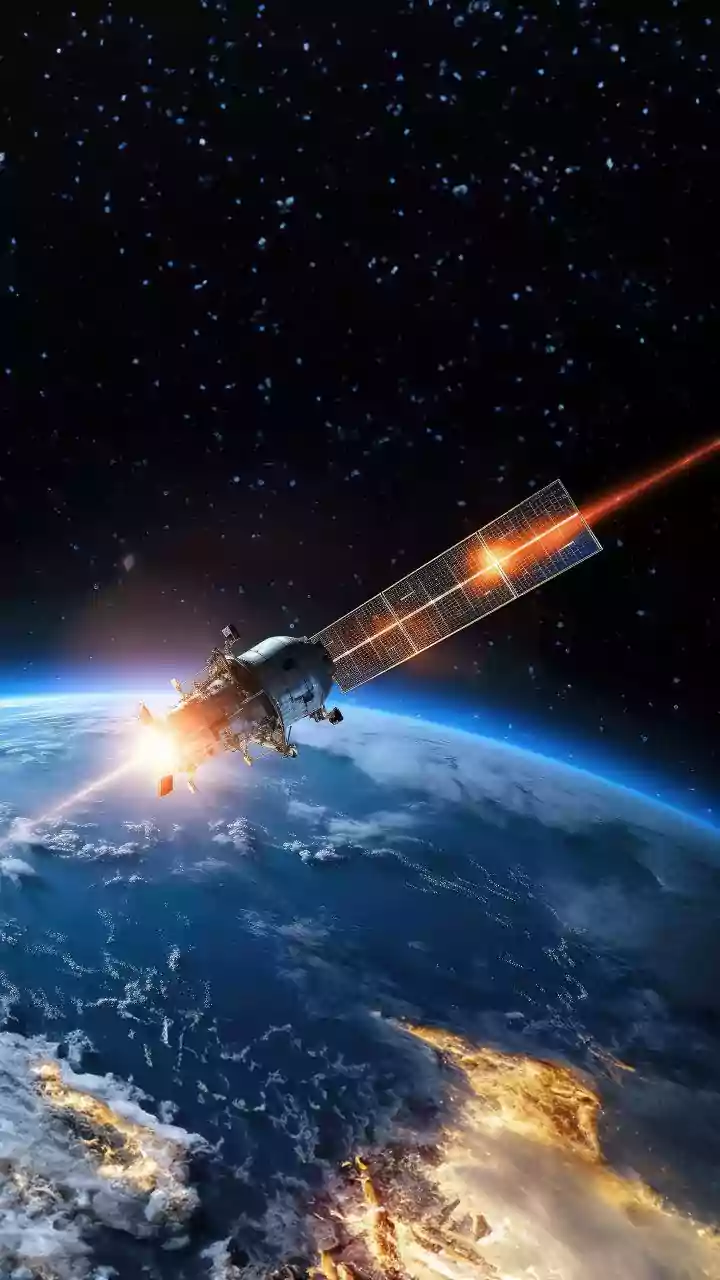
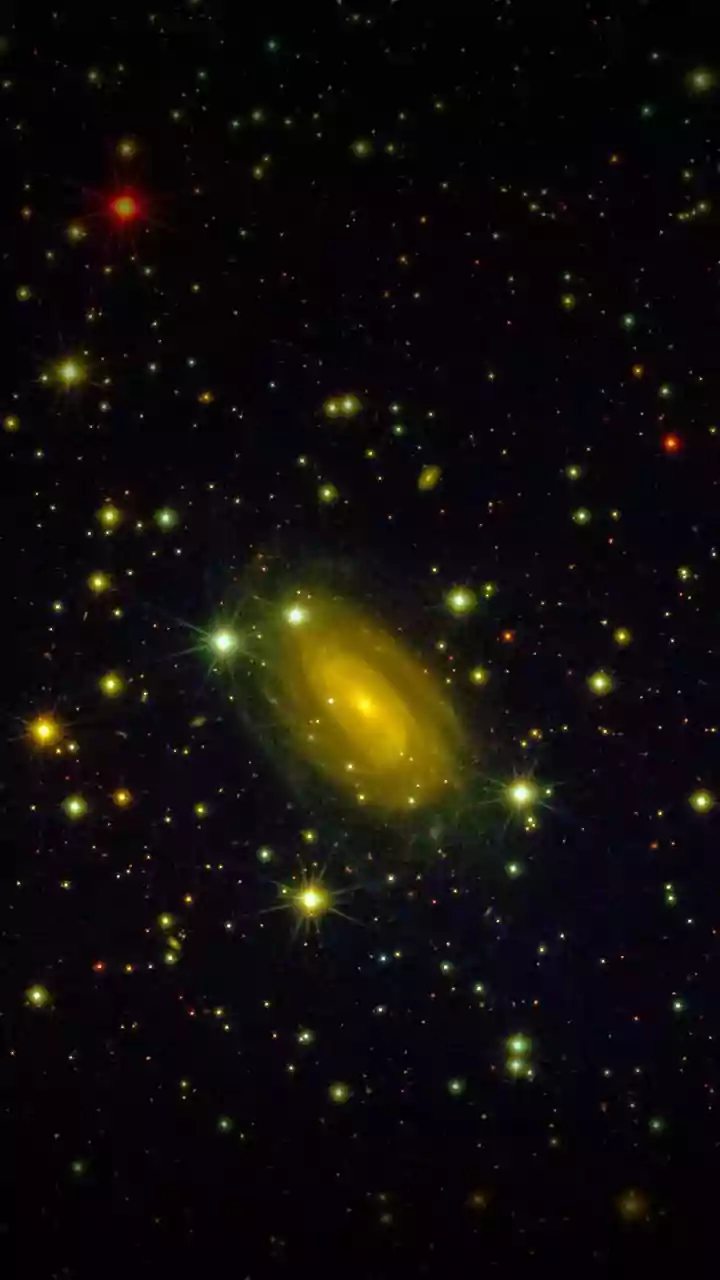
Using powerful radio telescopes in Spain, a team of scientists peered into a massive, cold cloud of gas and dust called G+0.693-0.027, located about 27,000 light-years away near the bustling center of our Milky Way galaxy. Hidden within the faint signals
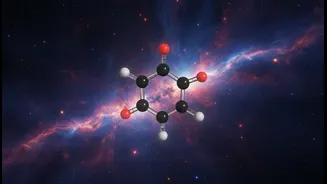
coming from this stellar nursery, they identified the unmistakable chemical signature of erythrulose. This isn't just any simple molecule; erythrulose is a four-carbon sugar, making it the first 'true' sugar and one of the most complex organic molecules ever found floating freely in the interstellar medium. While simpler, two-carbon sugar-like molecules had been seen before, finding a more complex structure like this is a significant leap forward.
What is Erythrulose?
On Earth, erythrulose might not be a household name, but it is found naturally in small amounts in fruits like raspberries. It's a monosaccharide, part of the same chemical family as glucose and fructose. This specific sugar is also commonly used in sunless tanning lotions, where it reacts with amino acids in the skin to create a brownish colour. But its presence in a frigid gas cloud, thousands of light-years from any raspberry patch, is what makes it so extraordinary. The discovery was surprising because scientists expected to find simpler, three-carbon sugars first, based on theories that molecules grow one carbon atom at a time. The abundance of this four-carbon sugar suggests that the chemical factories in space might work in more complex ways than we imagined.
The Universe as a Chemical Factory
This discovery reinforces the idea that the ingredients for life are not unique to Earth. Interstellar clouds, like the one where erythrulose was found, are cosmic factories where stars and planets are born. The current thinking is that complex molecules form on the icy surfaces of tiny dust grains within these clouds. Over millions of years, chemical reactions, potentially sparked by radiation, build larger and more intricate structures. These molecules, including sugars, can then be incorporated into asteroids and comets. It’s theorised that during our planet’s early history, a constant bombardment by these cosmic objects could have delivered a rich supply of water and organic compounds, effectively seeding the young Earth with the raw materials needed for life to begin.
A Stepping Stone to DNA and RNA
The real excitement surrounding this finding lies in its connection to the very blueprints of life. Sugars form the structural backbone of nucleic acids—RNA and DNA—which carry the genetic code for every known living organism. While erythrulose itself isn't a direct component of our DNA, it belongs to the right chemical family. Its existence proves that the universe is capable of producing the types of complex sugars necessary for prebiotic chemistry. Some scientists believe erythrulose could have been a 'feedstock' for the first nucleic acids. This discovery lends crucial support to the 'RNA World' hypothesis, which posits that RNA, a simpler cousin of DNA, was the first genetic material to emerge on Earth. Finding a key ingredient like sugar in a pre-planetary environment makes this theory much more plausible.
What Comes Next in the Cosmic Search?
This discovery does not mean we've found alien life. Rather, it confirms that the building blocks for life are common throughout the galaxy, increasing the statistical probability that life could arise elsewhere. Astronomers are now energised to hunt for even more complex molecules. The ultimate prize would be detecting ribose, the five-carbon sugar that forms the backbone of RNA, in interstellar space. Each new molecule identified adds another piece to the puzzle of our own origins. By studying the chemistry of these distant clouds with instruments like India's Giant Metrewave Radio Telescope (GMRT) near Pune, scientists are piecing together the story of how a lifeless universe gave rise to biology.