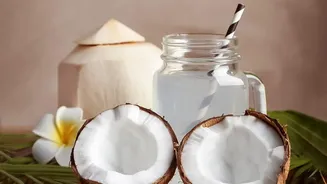









The Hydration Showdown
When it comes to pure hydration, both drinks are effective, but in slightly different ways. Coconut water is often called a natural isotonic drink because it's packed with electrolytes like potassium, sodium, and magnesium. These are the essential minerals
you lose through sweat, and replenishing them is key to staying hydrated, preventing fatigue, and avoiding muscle cramps. This makes coconut water excellent for quick rehydration, especially after being in the sun or doing light exercise. Buttermilk, or chaas, also has a high water content and electrolytes, particularly potassium and sodium. It replenishes fluids effectively, though perhaps not as rapidly as the electrolyte-rich coconut water.
A Nutritional Face-Off
Beyond hydration, their nutritional profiles diverge significantly. Coconut water is the lighter option, with roughly half the calories of buttermilk. A typical cup of coconut water has about 45-60 calories, while buttermilk contains around 98-100 calories. Coconut water is naturally low in fat and has a notable amount of Vitamin C. In contrast, buttermilk is a powerhouse of different nutrients. It provides significantly more calcium, which is vital for bone health, as well as a range of B vitamins (including B12) and Vitamin A. Buttermilk also contains protein, which makes it a more filling and substantial beverage compared to the light and refreshing coconut water.
The Gut Health Factor
This is where buttermilk truly shines. As a fermented dairy product, traditional buttermilk is a rich source of probiotics. These are beneficial live bacteria that support a healthy gut microbiome, which is crucial for good digestion, nutrient absorption, and even a strong immune system. Drinking buttermilk, especially after a meal, can help soothe the stomach, reduce bloating, and calm acidity, making it an excellent digestive aid. Coconut water does not contain probiotics, but it is gentle on the stomach and easy to digest.
When to Choose Which: The Latest Thinking
Recent expert advice focuses less on a single "winner" and more on strategic consumption. The latest development is a consensus that the best choice depends entirely on your needs at a given moment. For quick, low-calorie hydration and an immediate electrolyte boost—like after a workout or on a particularly hot day—coconut water has the edge. It is best consumed fresh and on an empty stomach to maximize its benefits. Conversely, if you're looking for a cooling drink that aids digestion and supports gut health, buttermilk is the superior choice, especially after a meal. Thanks to its sodium content, it can also be very effective at replacing salts lost during heavy sweating. Many experts now suggest alternating between the two to get the benefits of both.
Cost, Accessibility, and Customisation
In India, both drinks are widely available, but their cost and form can vary. Fresh coconut water from a street vendor is a common sight, though packaged versions are also popular. Buttermilk is a staple in most households and can be made easily at home by diluting curd, which often makes it a more economical choice. Commercially, both are part of a rapidly growing market for functional and hydration drinks in India. A key advantage of buttermilk is its versatility. You can easily enhance its nutritional value and taste by adding spices like roasted cumin, mint, and black salt, which also offer their own digestive and cooling benefits.