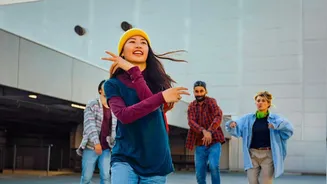








1. It Forges Instant Community
Humans are wired for connection, and moving together is a primal way to build it. When you dance in a group, you engage in something called interpersonal synchrony—the unconscious coordination of movements and rhythms with others. This phenomenon isn't
just about mirroring steps; it’s a powerful social glue. Studies show that when we move in sync, our brains can literally align, fostering feelings of trust, empathy, and social bonding. This creates a sense of belonging and community that can reduce feelings of loneliness and isolation, which are known triggers for stress and anxiety. The shared experience of learning, laughing, and moving together in a dance class provides a support system that boosts confidence and a sense of self-worth.
2. It’s a Serious Workout for Your Brain
While your body is getting a physical workout, your brain is doing some heavy lifting too. Learning choreography requires you to engage multiple cognitive functions at once: memory for the steps, spatial awareness to navigate the room and avoid bumping into others, and quick decision-making to keep up. This mental multitasking helps build neuroplasticity, the brain's ability to form new neural connections. Research has shown that this process can improve memory retention, enhance concentration, and sharpen problem-solving skills. In fact, one landmark study found that dancing was the only physical activity linked to a significantly lower risk of dementia, highlighting its profound effect on cognitive resilience.
3. It Melts Stress and Calms the Mind
Had a stressful day? A dance class might be more effective than winding down on the couch. The combination of physical activity and music is a potent formula for stress reduction. Movement helps release endorphins, the brain's natural mood-boosting chemicals that act as stress relievers and mood enhancers. Furthermore, the rhythmic nature of dance can be a form of mindfulness in motion. By focusing on your body's movements and the beat of the music, you are drawn into the present moment, which helps to quiet anxious thoughts about the past or future. This process can activate the body's relaxation response, counteracting the physical and mental toll of chronic stress.
4. It Creates a Natural, Collective High
The joy you feel after a great dance session isn't just in your head. The release of endorphins creates a feeling of pleasure often called a “runner’s high,” but group dancing takes it a step further. Research suggests that when we move in synchrony with others, the endorphin release can be amplified. This experience not only elevates your pain threshold but also deepens social closeness among the participants. This neurochemical cocktail, which also includes dopamine and serotonin, creates a powerful sense of collective joy and euphoria. It's a natural high that elevates your mood and physical energy, leaving you feeling lighter, happier, and more connected to those around you.
5. It Builds Embodied Confidence
Learning a new skill and mastering it builds confidence, and dancing is no exception. As you progress from fumbling through steps to executing them with grace, you gain a sense of accomplishment. This process of mastering movement not only improves your body image but also enhances proprioception—your awareness of your body in space. This strengthened mind-body connection can make you feel more grounded and comfortable in your own skin. For many, performing in front of others, even just in a class setting, helps them overcome shyness and build resilience. This newfound physical confidence often translates to other areas of life, empowering you to take on new challenges both on and off the dance floor.