




The Dazzling Dance of the Planets
September is a fantastic month for planet-spotting, with several of our solar system neighbours making prominent appearances. Venus will be a stunningly bright beacon in the western sky shortly after sunset, reaching its peak brilliance around the middle
of the month. Look for it near the crescent Moon on September 14. In the pre-dawn hours, the eastern sky will be dominated by the bright, white light of Jupiter. Mars, with its distinct reddish glow, will also be visible in the morning sky. Not to be outdone, yellowish Saturn rises in the east not long after sunset and will be visible for most of the night. Keep an eye out on September 26 and 27, when the full Moon will appear close to the ringed planet.
The Full Harvest Moon
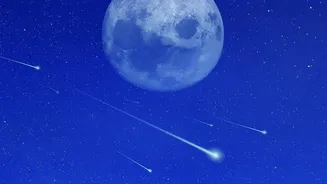
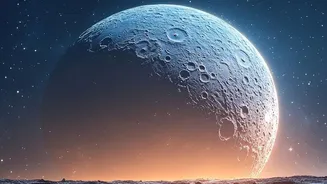
The celestial main event of September is undoubtedly the Harvest Moon, which reaches its peak illumination on September 26. This full moon is the one that falls closest to the autumnal equinox, a time historically important for farmers who used its light to extend their harvesting day into the evening. One unique characteristic of the Harvest Moon is that it rises around the same time—near sunset—for several evenings in a row in the Northern Hemisphere. This gives you a longer window to enjoy its beautiful, golden glow as it appears on the horizon. For the best view, find a spot with a clear eastern horizon and watch as it ascends into the sky, creating a spectacular sight that requires no special equipment to enjoy.
Neptune at Its Best
For those with a bit of equipment, September offers a rare opportunity to spot the most distant planet in our solar system. On September 26, Neptune will be at opposition, meaning Earth is directly between it and the Sun. This alignment makes Neptune appear at its brightest and closest for the year. Even at its brightest, shining at a magnitude of +7.8, the planet is too faint to be seen with the naked eye. You'll need a good pair of binoculars or a small telescope to pick it out from the background stars. It will appear as a tiny, blueish-green disc in the constellation of Pisces. Looking for Neptune can be a rewarding challenge for amateur astronomers wanting to push their skills beyond the brighter, more obvious targets.
A Mark of Changing Seasons: The Equinox
While not a visual spectacle you can watch in a single moment, the September equinox is a significant astronomical event that officially marks the beginning of autumn in the Northern Hemisphere. This year, it occurs on September 22 or 23, depending on your time zone. On the day of the equinox, the Sun shines directly over the Earth's equator, and the length of day and night are nearly equal across the globe. This celestial milestone signals the shift in seasons, leading to the longer, cooler nights that are often ideal for stargazing. While you won't see the Sun cross the celestial equator, you can appreciate the balance it represents and the promise of even darker skies to come as we move deeper into the year.
Tips for the Indian Skywatcher
Enjoying September's celestial display doesn't require a lot of fancy gear, but a little preparation can make all the difference. For the best views of planets and the Harvest Moon, try to get away from city lights that cause light pollution. A dark location with an unobstructed view of the horizon is your best bet. Give your eyes about 20-30 minutes to fully adapt to the darkness; this will help you spot fainter objects. While most of the month's highlights are visible with the naked eye, a simple pair of binoculars can dramatically enhance your view, revealing the moons of Jupiter or the faint glow of distant star clusters. Finally, check the specific moonrise and sunset times for your city, as these can vary across India and will help you time your viewing perfectly.