








A Scar on the Moon
In a remarkable feat of orbital detective work, NASA's Lunar Reconnaissance Orbiter (LRO) has successfully located and photographed the impact site of a stray SpaceX Falcon 9 rocket stage. The impact occurred on August 5, 2026, when the multi-ton piece
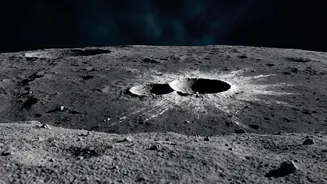
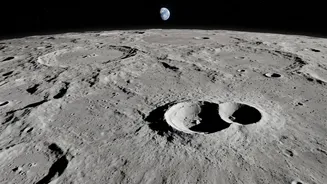
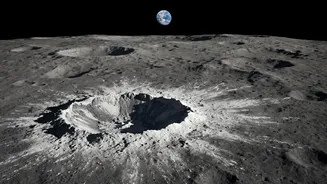
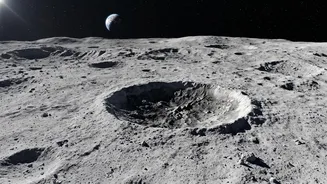
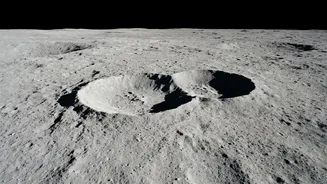
of space hardware slammed into the lunar surface at an estimated 5,400 miles per hour. Images captured by the LRO between August 11 and 12 reveal a newly formed crater approximately 60 feet (18 meters) wide near a feature known as Einstein Crater. Finding it was no easy task; operators had to precisely tilt the fast-moving orbiter to catch a glimpse of the predicted impact zone from 60 miles above. The resulting before-and-after images provide the first definitive, high-resolution look at the aftermath of this unintentional collision.
The Journey of a Rogue Rocket
The object in question was the upper stage of a Falcon 9 rocket launched in January 2025. Its primary mission was to deploy two commercial lunar landers, Firefly Aerospace's Blue Ghost 1 and ispace's RESILIENCE. While the launch was successful, the upper stage was left with insufficient fuel for a controlled de-orbit into Earth's atmosphere, where it would have burned up. Instead, it was abandoned in a high, chaotic orbit. Over the following 18 months, the gravitational pulls of the Earth, Moon, and Sun, combined with solar radiation pressure, subtly altered its trajectory, nudging it onto an unavoidable collision course with the Moon. This marked the first confirmed unintentional impact of a commercial rocket stage on the lunar surface, turning a piece of leftover hardware into a subject of intense scientific interest.
An International Hunt
Pinpointing the crash site was a collaborative effort. Initial predictions from astronomers on the ground gave space agencies a search area. Following the impact, South Korea’s Danuri lunar orbiter was the first to capture images that confirmed the location, narrowing down NASA's search parameters to within about 0.6 miles of the predicted spot. This data was crucial for the LRO team to target their own powerful cameras and capture more detailed views. While telescopes on Earth could not see the impact directly, some did detect a plume of sodium and lithium gas ejected from the surface, providing further evidence that the collision occurred as predicted. The entire episode served as a real-world test of our ability to track objects in deep space.
A Scientific Surprise
The new crater holds a surprise. Close analysis of the LRO images shows patterns of ejected material, or rays, stretching out from the impact zone. The blast excavated both darker, weathered surface material and brighter, fresh material from deeper underground, giving scientists a rare look at the Moon's subsurface composition. The darker streaks consist of lunar dust, or regolith, that has been exposed to the harsh space environment for eons, while the brighter streaks are pristine material kicked up from below. This accidental excavation provides a unique scientific opportunity, turning a space debris incident into an impromptu impact experiment that can help researchers better understand the physics of lunar collisions and the structure of the Moon's crust.
A Wake-Up Call for Lunar Traffic
While scientifically valuable, the event is also a stark reminder of a growing problem: space junk. As more government and commercial missions target the Moon, the risk of similar incidents increases. Unlike Earth, the Moon has no atmosphere to burn up incoming objects, so every piece of debris, whether a tiny bolt or a four-ton rocket stage, poses a threat. The high-speed ejecta from impacts can travel for miles, potentially damaging future lunar bases, scientific equipment, or even astronauts. This crash has amplified calls within the space community for better tracking of objects in cislunar space and the development of clear international protocols for the disposal of spacecraft, ensuring the long-term safety and sustainability of lunar exploration.