



A Landmark, Imperfect Success
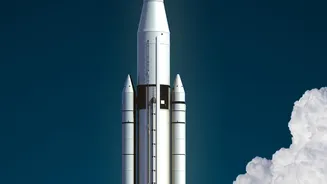
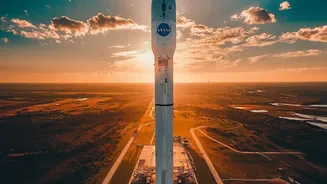
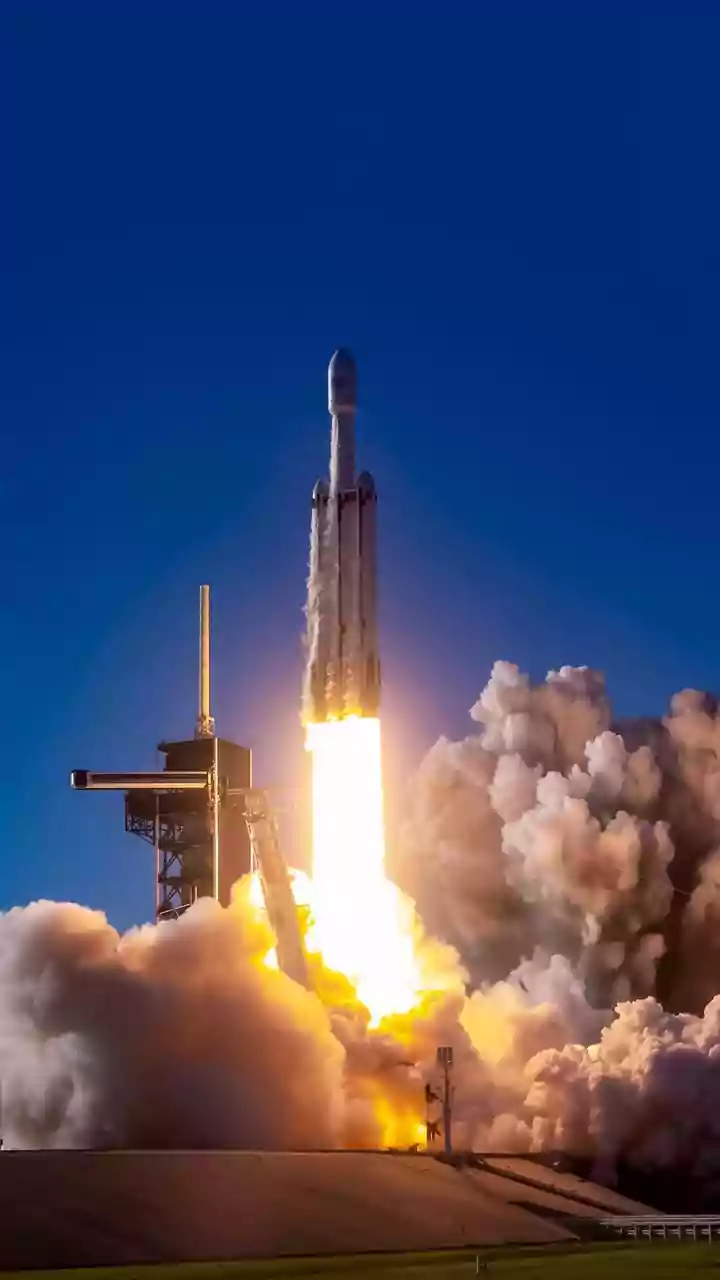
On its 14th test flight, the most powerful rocket ever built blasted off from Starbase, Texas. Despite an engine shutting down on the upper stage during ascent, mission controllers made the tense call to proceed. Roughly 25 minutes after launch, Starship
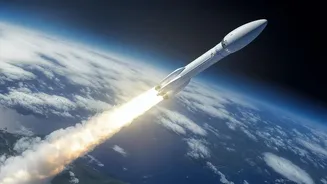
achieved its primary goal: it entered a stable orbit around Earth, a feat that drew cheers from mission control. The mission wasn't flawless. The flight was originally planned to last nearly 10 hours and complete six orbits, but out of an abundance of caution due to the engine issue, SpaceX decided to bring the vehicle home early. After about three hours, Starship performed a deorbit burn and splashed down in the Pacific Ocean, where it broke apart. However, the mission successfully deployed 26 operational Starlink satellites into the company's growing constellation, a first for Starship and a key demonstration of its future role.
The Giant Leap from Suborbital to Orbital
Prior to this flight, Starship's 13 previous integrated tests were all suborbital. Think of it as the difference between throwing a ball very high into the air and throwing it so fast that it continuously falls around the curve of the Earth. A suborbital rocket goes up and comes straight back down. An orbital rocket must achieve a staggering speed—about 28,000 km/h—to maintain its trajectory around the planet. This leap in velocity is what makes orbital flight so technically challenging and why this achievement is so significant. It proves that Starship can operate not just as a test vehicle for high-altitude hops, but as a true spacecraft capable of sustained missions in orbit.
Why Reaching Orbit is a Game-Changer
This successful orbital flight is more than just a technical milestone; it underpins SpaceX's entire business strategy and the future of several key programs. First, it is a massive boost for NASA's Artemis program. NASA has selected a modified version of Starship to be the vehicle that will land the next astronauts on the Moon. Before this flight, that plan relied on a vehicle that had never reached orbit. This success provides crucial validation that the hardware is on the right track. Second, Starship is essential for the expansion of Starlink, SpaceX's satellite internet business. The rocket's massive size is designed to deploy larger, next-generation V3 satellites in numbers that far exceed the capacity of its workhorse Falcon 9 rocket. This flight's deployment of 26 satellites was a direct demonstration of that capability.
The Road to Mars and Full Reusability
Ultimately, Starship was conceived with one grand goal in mind: making humanity a multi-planetary species by enabling the colonization of Mars. Achieving that vision depends on a fully and rapidly reusable transportation system, which would dramatically slash the cost of spaceflight. While the Super Heavy booster has been caught by the launch tower's 'chopstick' arms on previous flights, the Starship upper stage has not. Perfecting the recovery and reuse of both stages is the next major mountain to climb. The data gathered from this first orbital re-entry, even though it ended in a destructive splashdown, is invaluable for refining the heat shield and landing maneuvers required for routine reuse. SpaceX's iterative approach—building, flying, breaking, and learning—has now pushed its revolutionary vehicle into the orbital class.