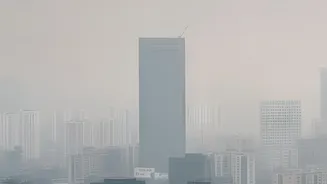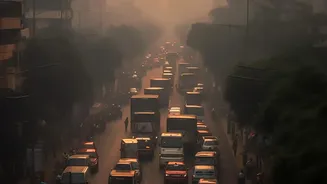








As November's haze settles over Delhi, the familiar signs of air pollution—coughing, burning eyes—return. But beyond this seasonal discomfort lies a graver, invisible threat: the long-term damage that fine particulate matter inflicts on our bodies.
The Unseen Enemy: PM2.5
The
culprit behind the city's health alerts is often PM2.5, or fine particulate matter. These are microscopic particles, less than 2.5 micrometres in diameter, about 1/25th the width of a human hair. Their tiny size is precisely what makes them so dangerous. Unlike larger dust particles that are filtered out by the nose and throat, PM2.5 can travel deep into the lungs. They come from sources like vehicle emissions, industrial processes, construction dust, and crop burning in neighbouring states, which, combined with post-Diwali pollution and winter weather, create a toxic mix in the air every year. Delhi's air quality regularly deteriorates to 'poor' and 'very poor' levels during this period, with the AQI recently settling at 303.
From Lungs to Bloodstream
Once inhaled, PM2.5 particles don't just stay in the lungs. They are small enough to pass through the lung's lining and enter the bloodstream. From there, they circulate throughout the body, triggering systemic inflammation and oxidative stress. Think of it as an invader that puts your entire body on high alert. This widespread inflammation is the root cause of the most severe long-term health problems associated with air pollution. The World Health Organization (WHO) classifies PM2.5 as a Group 1 carcinogen, the same category as tobacco smoke, highlighting its potential to cause cancer.
A Heavy Toll on the Heart
While many associate air pollution with lung problems, its impact on the cardiovascular system is just as devastating. When PM2.5 particles enter the blood, they cause inflammation in the lining of blood vessels. This can lead to the hardening and narrowing of arteries, a condition known as atherosclerosis. It also increases blood pressure and makes the blood more likely to clot. Consequently, long-term exposure significantly raises the risk of heart attacks, strokes, irregular heartbeats (arrhythmia), and heart failure. Studies have shown that for every 10 microgram per cubic meter increase in PM2.5, the risk of death from heart disease rises by 10%.
The Impact on the Brain and Mind
Emerging research shows a frightening link between air pollution and brain health. Fine particles can reach the brain either through the bloodstream or directly via the olfactory nerve in the nose. This infiltration causes neuro-inflammation and oxidative stress, damaging brain cells. Over the long term, this damage has been associated with cognitive decline, a higher risk of dementia and Alzheimer's disease, and even psychiatric disorders. For children, whose brains are still developing, the impact can be particularly severe, affecting cognitive function and development.
Chronic Respiratory Illness and Cancer
Of course, the lungs bear the initial and most direct assault. Constant irritation from fine particles can lead to the development of chronic conditions like asthma, especially in children, and Chronic Obstructive Pulmonary Disease (COPD). It worsens symptoms for those who already have these conditions, leading to more frequent hospital visits. Furthermore, the carcinogenic nature of these particles means that prolonged exposure is a known risk factor for lung cancer, even in nonstokers. Studies in Delhi have found a significantly higher prevalence of respiratory symptoms compared to areas with cleaner air.
Who Is Most Vulnerable?
While polluted air is harmful to everyone, some groups are disproportionately affected. Children are especially vulnerable because their lungs and immune systems are still developing, and they breathe more air relative to their body weight. The elderly, pregnant women, and individuals with pre‐existing heart or lung conditions also face a much higher risk of severe health consequences from poor air quality. For these groups, a 'very poor' air day isn't an inconvenience; it's a direct threat to their health and well‐being.