




What Exactly Did They Find?
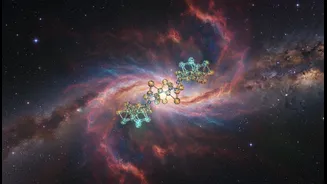
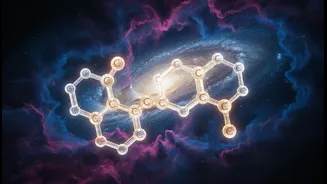
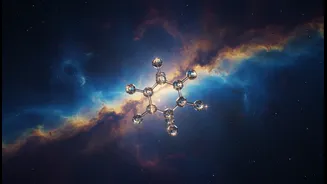
An international team of scientists has identified a molecule called erythrulose in a giant molecular cloud named G+0.693-0.027. This isn't the same sugar you stir into your morning chai, but it is a genuine sugar—a four-carbon monosaccharide, to be precise.
On Earth, erythrulose is found in small amounts in fruits like raspberries and is even used in sunless tanning lotions. Its discovery in space, however, is a remarkable first. While simpler sugar-like molecules had been found before, this is the first time a true, multi-carbon sugar has been definitively detected in the interstellar medium, the vast expanse between stars.
A Cosmic Chemical Factory
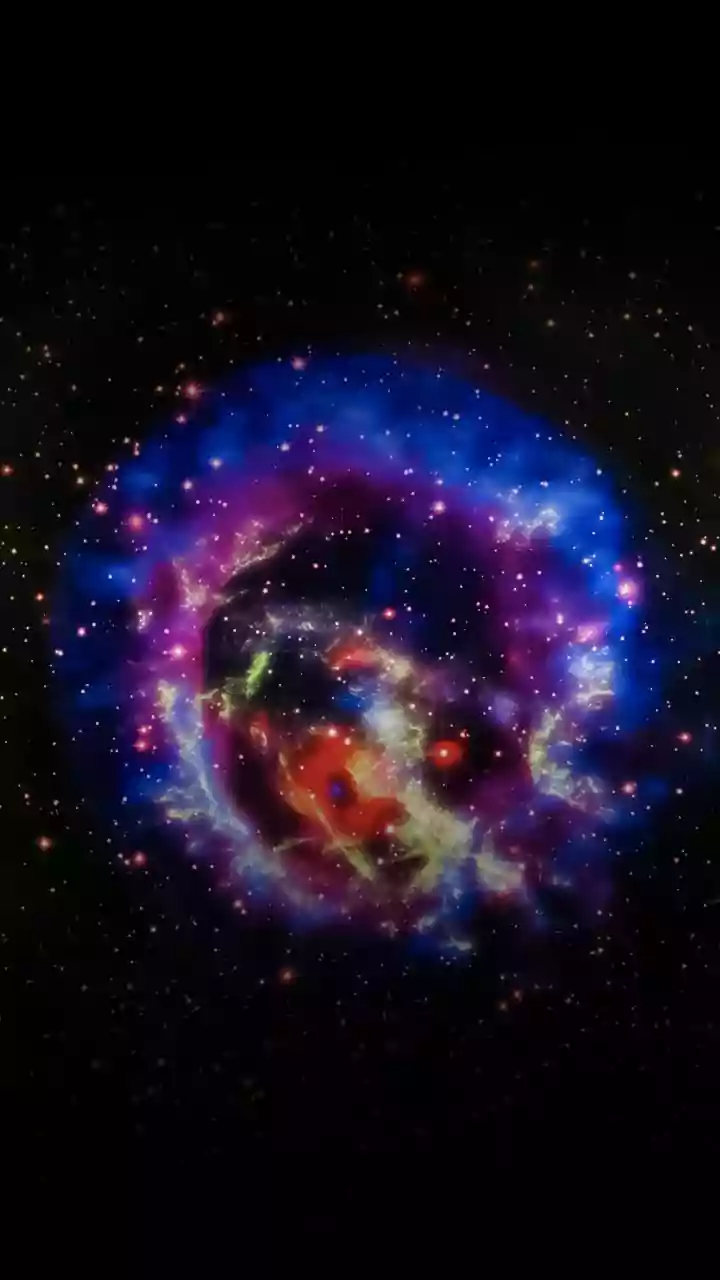
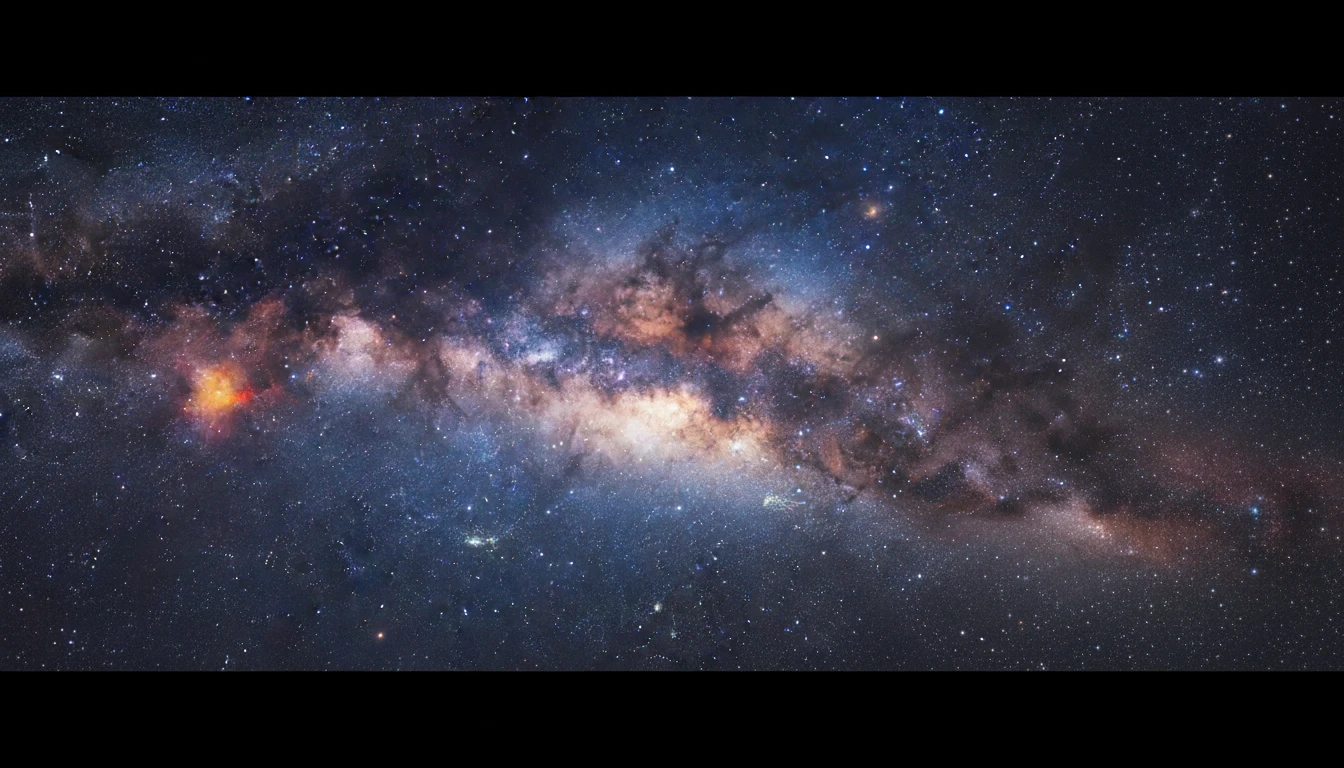
The discovery was made in a particularly interesting neighbourhood: the molecular cloud G+0.693-0.027, located roughly 26,700 light-years from Earth near the chaotic center of our Milky Way galaxy. This region is a known hotbed of complex chemistry, a cosmic factory churning out a diverse range of organic molecules. Using the Yebes 40-m and IRAM 30-m radio telescopes in Spain, astronomers scanned the cloud for faint radio signals. Molecules in space vibrate and rotate, emitting energy at specific frequencies that act like a unique fingerprint. By matching the signals from the cloud to the known spectral fingerprint of erythrulose measured in a lab, the team confirmed its presence.
The Building Blocks of Life
So, why is finding sugar in deep space such a big deal? It comes down to the fundamental question of where we come from. Sugars are more than just a source of energy; they are crucial components of life as we know it. Most importantly, they form the backbone of RNA and DNA, the molecules that carry the genetic code for all living organisms. Scientists have long wondered how the raw materials for life first appeared on the early Earth. Experiments trying to replicate prebiotic conditions on Earth often fail to produce sugars in the necessary amounts. This discovery supports a compelling alternative theory: that these essential ingredients didn't have to form on Earth at all. Instead, they could have formed in interstellar clouds and been delivered to young planets by comets and meteorites.
A Pathway to RNA
While erythrulose itself is not a direct part of our genetic material, it's a very close cousin to molecules that are. Scientists find its presence particularly exciting because it can readily convert into other crucial sugars. Specifically, it is linked to threose, a sugar considered a possible precursor to the very first RNA-like molecules on Earth. The ultimate prize for astrochemists is finding ribose, the five-carbon sugar that is a direct component of RNA. The discovery of a complex four-carbon sugar like erythrulose is a major step in that direction, suggesting that the chemical pathways to create even more complex, biologically vital molecules exist in the cosmos. It implies that the chemistry needed to kick-start life isn't a rare fluke but could be a common process throughout the galaxy.
What Happens Next?
This finding has opened a new frontier in the search for life's origins. Researchers now have a prime location—G+0.693-0.027—and a proven technique to hunt for other prebiotic molecules. Lead author Izaskun Jiménez-Serra and her team have noted that the next step is to search for even more complex sugars and the direct precursors to RNA. The presence of erythrulose strongly suggests that the ingredients for life could be widespread, waiting in the stellar nurseries where new planets are born. Each new molecule identified in these cosmic clouds helps us piece together the incredible journey from simple interstellar dust to the complexity of life itself, potentially happening not just here, but across the universe.