






The Current Launch Target
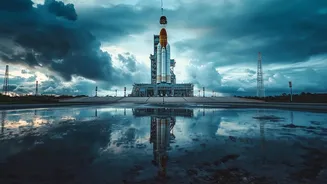
The Indian Space Research Organisation (ISRO) is now targeting the end of 2026 for the first uncrewed Gaganyaan mission, known as G1. This was reaffirmed by ISRO Chairman V. Narayanan following a successful satellite launch on September 4, 2026. This mission is the first of several
uncrewed flights designed to test the technology and safety of the spacecraft before any astronauts are on board. While the end-of-year target is firm for now, mission timelines for such complex endeavours are often fluid, contingent on the successful completion of all preceding tests and safety checks. The G1 mission was previously scheduled for various dates, with delays attributed to the pandemic and the immense technical challenges of human-rating a launch vehicle.
What is the Uncrewed Mission?
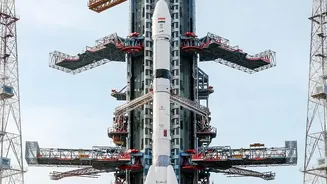
The G1 mission is a full dress rehearsal for the main event, but without a human crew. The Gaganyaan spacecraft, consisting of a crew module and a service module, will be launched into a 400 km orbit above Earth by the human-rated LVM3 rocket (HLVM3). The primary objective is to test the performance of the vehicle, the orbital module, life support systems, and re-entry procedures in a real-world space environment. This ensures that every system, from launch to splashdown, functions perfectly before risking human lives. The mission serves as a critical validation of India's capability to safely transport humans to and from low-Earth orbit.
Meet Vyommitra: The Humanoid Passenger
A key passenger aboard the G1 flight will be 'Vyommitra', a sophisticated humanoid robot developed by ISRO. Vyommitra, whose name means "space friend" in Sanskrit, is designed to simulate human functions inside the crew module. This 'half-humanoid' robot can monitor module parameters, operate switch panels, and communicate with the command centre. Its role is to provide invaluable data on how the spacecraft's environment, including life support systems, behaves during flight. By mimicking crew activities, Vyommitra will help engineers understand the conditions an astronaut would experience, from vibrations during launch to the microgravity environment of space, making it a crucial data-gathering tool for astronaut safety.
The Road to a Crewed Flight
The G1 mission is just one piece of a larger, meticulous testing plan. ISRO has planned for at least two uncrewed orbital flights to demonstrate the reliability of the systems. Following the successful completion of these uncrewed missions, ISRO will proceed with the first crewed flight, currently designated H1. The current official target for this historic mission, which will carry Indian astronauts into orbit, is 2027. However, this timeline is dependent on the G1 mission launching as planned in late 2026 and subsequent tests proceeding without significant issues. Delays in the uncrewed flights would logically push back the crewed launch date, potentially to 2028. The four astronaut-designates for the program—all decorated Indian Air Force test pilots—are continuing their extensive training in preparation.
Why Safety is Pacing the Schedule
The shifting timelines for Gaganyaan reflect an unwavering commitment to safety. Human spaceflight is an incredibly complex and high-risk undertaking, and ISRO's mantra has been to test, re-test, and validate every single component. The programme involves numerous critical milestones, including multiple test vehicle flights to perfect the crew escape system, which is designed to save the astronauts in case of a launch anomaly. The agency has already conducted several successful tests related to parachute systems and splashdown procedures. Every delay and every revised schedule is a direct result of this safety-first approach, ensuring that when India does launch its own citizens into space, it will be with the highest possible degree of confidence and security.