






A Living Legend in Sikkim
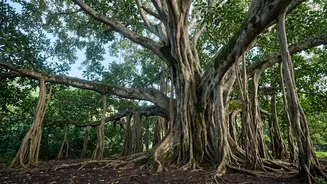
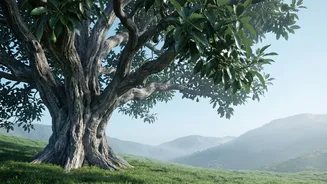
Deep in the eastern Himalayan state of Sikkim, a specific avocado tree has become the subject of local pride and historical curiosity. While official verification is a complex process, oral histories and local records suggest this tree was planted around
1921. If true, this would make it not only a centenarian but also a strong contender for the title of India's oldest living avocado tree. This claim is significant because it potentially pushes back the timeline of the fruit's successful cultivation in the region, which has long been associated more with the southern states.
The Fruit's Journey to India
The story of the avocado in India is one of slow introduction and gradual acceptance. The fruit, botanically known as Persea americana, is native to Central America. Its journey to India is believed to have begun in the early 20th century, introduced by travellers and missionaries from Sri Lanka. These early plantings were concentrated in the southern hill stations of Tamil Nadu, Kerala, and Karnataka, where the climate was deemed suitable. For decades, the fruit, often called 'butter fruit' locally, remained a horticultural curiosity rather than a commercial crop, grown in homesteads and mission compounds. In some parts of Wayanad, it was even dismissed as 'pattippazham' (dog fruit) until its value was discovered much later.
Challenging the Southern Narrative
The established history credits southern India, particularly places like Bangalore and the hills of Tamil Nadu, with the earliest avocado introductions around the early 1900s. An American missionary is said to have brought the first seedlings from Ceylon's Royal Botanical Gardens to Bangalore sometime between 1906 and 1914. These southern regions have since become the primary avocado-growing belts in the country. The Sikkim tree, however, complicates this narrative. Its existence suggests that efforts to cultivate the fruit were also happening concurrently, and successfully, in the eastern Himalayas, a region with a distinctly different climate and agricultural history. While varieties like Fuerte were known to be grown successfully in Sikkim's mid-altitude hills, the age of this particular tree makes it unique.
The Quest for Verification
Determining the exact age of a tree is a scientific endeavour, often requiring dendrochronology, or the analysis of tree rings. Without such a study, the claim for the Sikkim tree rests heavily on anecdotal evidence and community memory, passed down through generations. The debate highlights the difference between official records and the living history preserved within local communities. While the introduction of specific avocado varieties like 'Purple' and 'Green' is documented to 1941, the Sikkim specimen would predate this by two decades, placing it in an earlier, less-documented wave of agricultural experiments. Even Mahatma Gandhi showed interest in cultivating avocados in his Wardha ashram in 1935, though the saplings sent from California unfortunately did not survive the journey.
More Than Just a Record
Why does the location of the oldest tree matter? Beyond setting a record, it touches upon agricultural heritage, biodiversity, and the adaptability of species. The Sikkim tree, a living relic, could hold genetic traits that made it resilient enough to thrive for a century in Himalayan conditions. It also enriches the national story of the avocado, a fruit that has transformed from a backyard oddity into a mainstream superfood featured on cafe menus across urban India. This journey from 'butter fruit' to 'avo toast' is a recent phenomenon, making the long history of these early trees even more fascinating. The existence of such old trees in diverse locations like Sikkim and Wayanad demonstrates the fruit's long, quiet history in the country before its recent surge in popularity.