

A Serendipitous Discovery
The discovery of Beta Pictoris d was an astronomical surprise, found not once, but twice, by independent teams of researchers. One team, using the European Southern Observatory's Very Large Telescope (VLT), was studying the system's first-known planet,
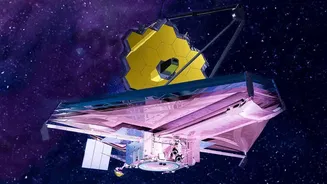
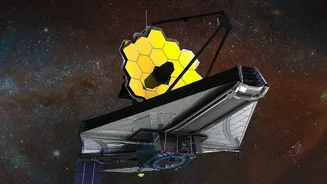
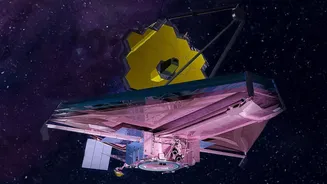
Beta Pictoris b, when they noticed another faint object in their data. At the same time, another team using NASA's James Webb Space Telescope (JWST) was analyzing the atmosphere of Beta Pictoris b when they detected an unexpected chemical fingerprint from a different location, which turned out to be the new planet. After spotting the planet, astronomers combed through archival data and realized the planet had been hiding in plain sight in images for over a decade, just waiting to be found.
The Challenge of Seeing Worlds
Directly imaging an exoplanet—taking an actual picture of it—is incredibly difficult. The overwhelming glare of a host star is millions of times brighter than the light reflected by any orbiting planets, making them almost impossible to see. It's often compared to trying to spot a firefly next to a powerful searchlight. This is why the vast majority of the thousands of known exoplanets have been found using indirect methods, like detecting the dip in a star's light as a planet passes in front of it. Direct imaging is typically only possible for young, large planets that are still glowing with the heat of their formation and orbit far from their star. The discovery of Beta Pictoris d, which is about 100 times fainter than its sibling Beta Pictoris b, showcases the increasing power of new telescopes and techniques.
A System in its Youth
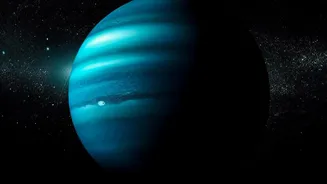
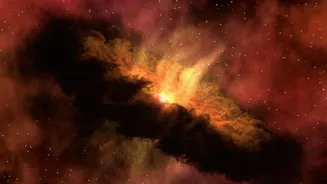
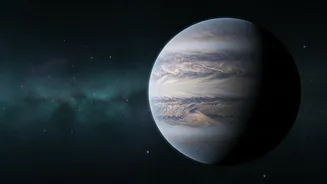
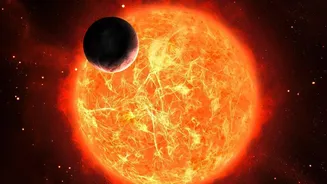
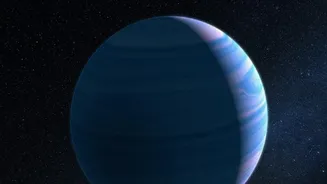
Located just 63 light-years from Earth, the Beta Pictoris system is a priceless laboratory for studying how planets form. The star itself is very young, at only about 23 million years old, compared to our Sun's 4.6 billion years. Because of its youth, it is surrounded by a massive, edge-on disk of dust and debris—the raw material left over from planet formation. This system was already famous for hosting two other giant planets, Beta Pictoris b and c, and for being the first system where exocomets were detected. The newcomer, Beta Pictoris d, is a gas giant with about 2.4 times the mass of Jupiter. Its two larger siblings, b and c, are each roughly ten times Jupiter's mass. This family of planets provides a unique opportunity to study three different worlds that all formed from the same material around the same star.
The Exclusive Two-Member Club
With the confirmation of Beta Pictoris d, the system joins HR 8799 as the only two star systems where astronomers have been able to directly image three or more planets. Located about 133 light-years away, the HR 8799 system is also young (around 30-42 million years old) and contains four massive gas giants orbiting their star. These two systems are benchmarks for astronomers, offering a 'before' and 'after' snapshot of planetary evolution. By comparing the planets' atmospheres, orbits, and interactions with their debris disks, scientists can test and refine their theories about how planetary systems like our own solar system came to be. The discovery of Beta Pictoris d not only adds a new world to our catalogue but deepens our understanding of the architectures of systems beyond our own.