







The New AI Gatekeepers
Across India and the world, companies are overwhelmed. A single job posting can attract thousands of applicants, a volume far too large for human recruiters to manage effectively. To cope, a vast majority of employers now use Artificial Intelligence in some
form during the hiring process. These tools, often called Applicant Tracking Systems (ATS), are the new gatekeepers. They scan resumes for keywords, match qualifications to job descriptions, and rank candidates in seconds. Some companies even use AI-powered chatbots for initial screening conversations or to schedule interviews, freeing up human resources teams to focus on higher-level tasks. The primary goals are speed and efficiency, allowing companies to sift through the noise and identify a shortlist of seemingly qualified individuals much faster than ever before.
When Every Candidate Looks Perfect
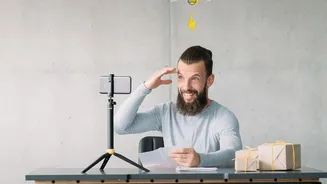
However, this AI-driven efficiency comes with a significant challenge. As job seekers have become aware of these automated systems, they too have turned to AI. Sophisticated tools can now polish a resume, write a compelling cover letter, and even provide real-time, scripted answers during a video interview. The result is an 'automated arms race' where every candidate can appear perfect on paper or screen. This makes it increasingly difficult for hiring managers to determine if they are assessing a candidate's genuine skills or their ability to prompt an AI. Consequently, the trust in fully remote or automated hiring processes is eroding, as employers worry about everything from embellished skills to outright cheating.
The Return of the Handshake
This is precisely where the in-person interview is making a strategic comeback, its role more important than ever. Faced with the challenge of verifying skills that look flawless on a screen, companies are increasingly reintroducing face-to-face meetings. This shift isn't about nostalgia; it’s a necessary 'human correction to an AI-distorted process'. The in-person interview now serves as the crucial verification stage. It’s the opportunity for a hiring manager to move beyond the polished resume and AI-assisted answers to see how a candidate thinks on their feet, communicates under pressure, and solves problems in real time.
What's Really Being Tested In Person
The focus of the modern in-person interview has sharpened. While AI can screen for technical keywords and qualifications, it struggles to assess the nuanced soft skills that are critical for success in most roles. Recruiters are now using face-to-face time to probe for lived experience with behavioural questions that AI can't easily fabricate. They are evaluating qualities that can only be observed through direct interaction: emotional intelligence, genuine communication style, adaptability, and the ability to collaborate within a team. These human-centric skills are now at a premium. An in-person check allows an employer to assess not just what a candidate knows, but how they apply that knowledge and whether they will be a good cultural fit—something an algorithm cannot truly measure.