





A New Tool for Planet Hunters
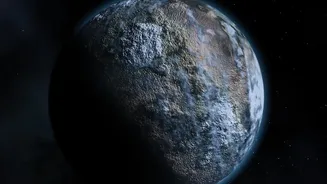
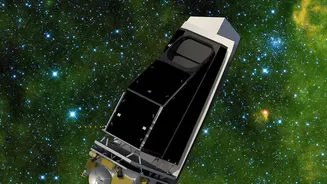
Pandora is a small satellite, or SmallSat, designed for a very specific and crucial task: studying the atmospheres of planets outside our solar system, known as exoplanets. Launched in January 2026, it is the first mission in NASA's Astrophysics Pioneers
program, which focuses on conducting compelling science through faster, lower-cost projects. Over its year-long primary mission, Pandora will observe at least 20 different exoplanets, aiming to understand what their atmospheres are made of—specifically looking for clues about clouds, haze, and water. The project is a collaboration between NASA's Goddard Space Flight Center, Lawrence Livermore National Laboratory, and the University of Arizona, among others.
Solving the Stellar Contamination Puzzle
When scientists study an exoplanet's atmosphere, they typically use a method called transit spectroscopy. They watch as a planet passes in front of its host star, causing a tiny dip in the star's light. As that light filters through the planet's atmosphere, some of it is absorbed by molecules like water, leaving a chemical fingerprint that telescopes can detect. However, stars themselves are not perfect, uniform balls of light. They have active surfaces with bright spots and dark starspots, much like our own Sun. This stellar activity can change the light signal in ways that either mimic or hide the atmospheric features of the planet. It creates a 'contamination' problem, making it difficult for scientists to be sure if a detected molecule, like water, is from the planet's atmosphere or the star itself.
Seeing in Two Lights at Once
This is where Pandora's unique ability comes in. The spacecraft is designed to disentangle these mixed signals from the star and the planet. It does this by observing them simultaneously in two different types of light. A 45-centimeter all-aluminum telescope collects the light, and a beam-splitting mirror sends it to two different instruments. One instrument measures the star's brightness in visible light over long periods, while the other captures a spectrum in near-infrared light during the planet's transit. By combining these two data streams, scientists can create a much clearer model of the star's activity and effectively subtract it from the planetary data, leaving behind a much cleaner signal of just the exoplanet's atmosphere.
A Specialist, Not a Generalist
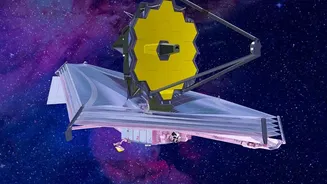
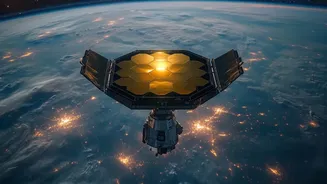
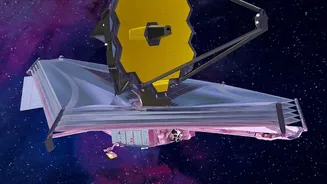
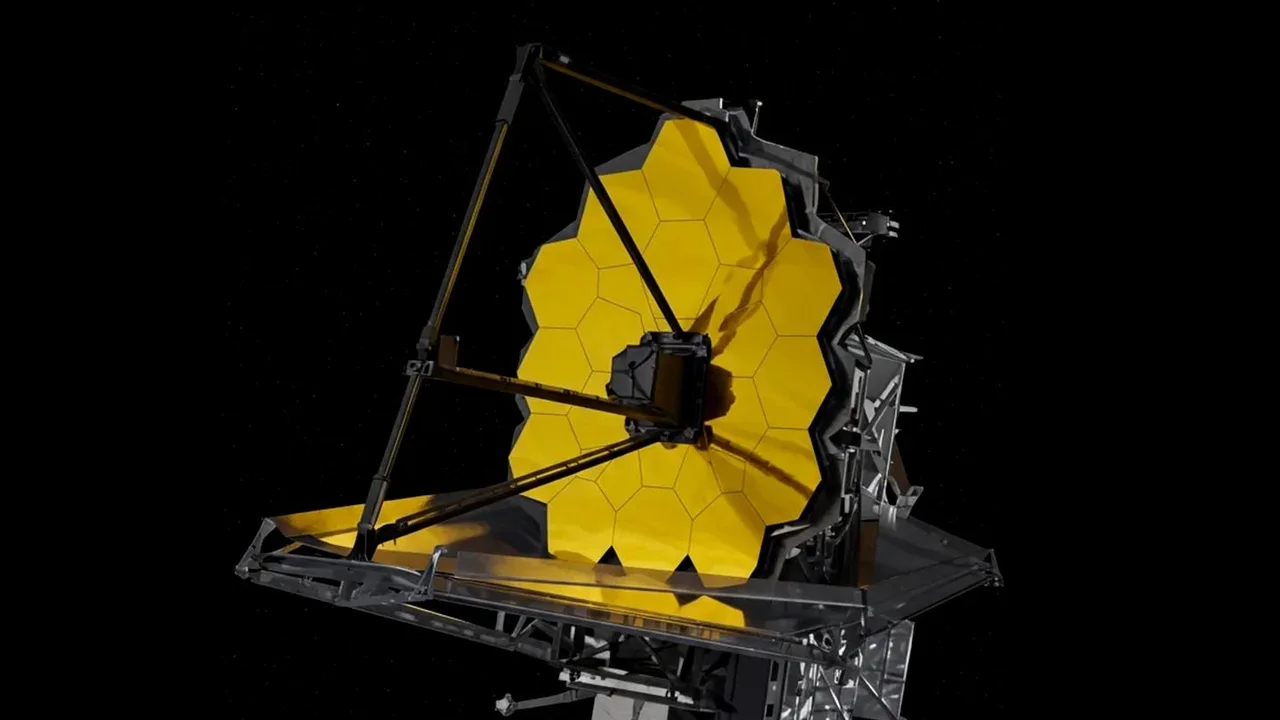
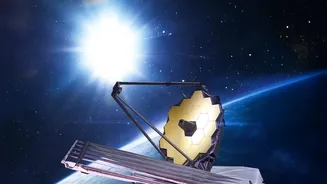
Unlike giant observatories like the James Webb Space Telescope (JWST), Pandora is not meant to be an all-purpose discovery machine. Instead, it's a specialist designed to complement them. Flagship missions like Webb are in high demand, and it's difficult to schedule the long, continuous observations needed to solve the stellar contamination problem. Pandora can perform these long stares, observing a single target for 24 hours at a time, something larger telescopes can't afford to do. By doing this focused work, Pandora will help astronomers identify which exoplanets have truly interesting atmospheres—like those rich in hydrogen or water—making them prime targets for more in-depth study by Webb and future missions. In fact, Pandora's near-infrared detector is a spare part originally built for JWST, linking the two missions directly.