

A Postcard from a Puzzling Planet
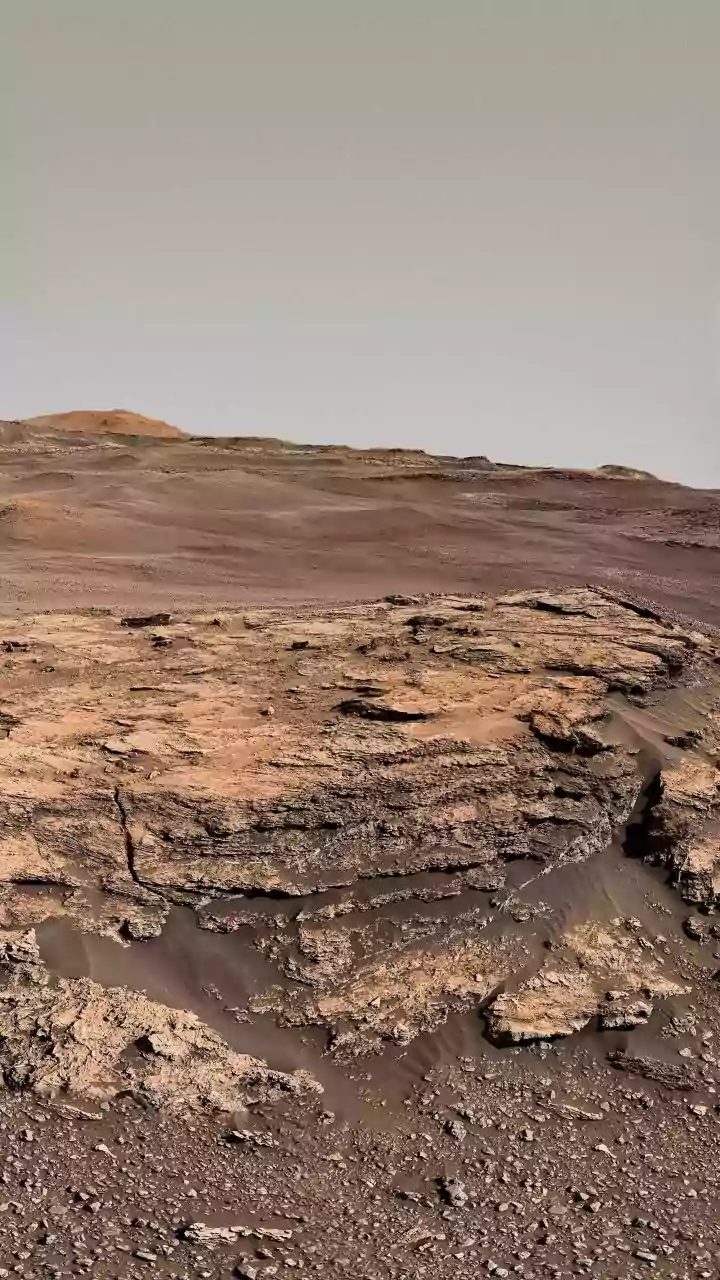
While climbing Mount Sharp, a massive mountain in the middle of Gale Crater, the Curiosity rover stumbled upon a peculiar sight. Dotting the rocky ground in an area nicknamed Valle Grande were a series of small, shallow divots. One of the most distinct
holes, photographed in detail, measures about a centimetre across. While holes are common on a planet that has been bombarded by meteorites for billions of years, these new features immediately stood out to the mission's science team as something different. This isn't the first time Mars has presented a geological mystery, but these particular pits don't fit the usual explanations.
What Makes These Holes So Strange?
Normally, small pits in Martian bedrock have a straightforward origin story. A small, hard pebble or mineral nodule resists erosion better than the softer rock around it. Eventually, the nodule weathers away, leaving behind the small cavity it once occupied. However, the holes discovered by Curiosity are unusually broad and shallow compared to previously observed examples. More importantly, there are no obvious pebbles or nodules nearby that look like they could have once filled these depressions. This lack of a clear culprit is what has baffled the scientists managing the rover from millions of miles away. As one mission scientist noted, after 14 years on the surface, Mars continues to surprise.
The Geological Detective Work Begins
With a new mystery on their hands, the NASA team is using Curiosity's advanced toolkit to play detective. The rover's Mars Hand Lens Imager (MAHLI) was used to take close-up photos of the pits, while its Mastcam cameras captured overlapping stereo images of the terrain. These images will be combined to create detailed three-dimensional models of the surface. By precisely measuring the shape and depth of the holes, scientists hope to work backwards and figure out what geological process could have formed them. For now, researchers are avoiding any definitive explanations, acknowledging that the available data doesn't yet point to a specific mechanism. The answer could be an unfamiliar erosion process, a unique property of the local rock, or a combination of factors they have yet to consider.
Reading the History in the Rocks
This discovery comes as Curiosity explores a fascinating and relatively new chapter in the history of Mars. The rover is ascending through sulfate-rich layers on Mount Sharp, and each layer tells a story about how the Martian climate and the presence of water have changed over billions of years. The area is revealing rapid changes in rock beds, with some tougher gray layers resisting erosion differently than their neighbours. Investigating these geological puzzles is the core of Curiosity's mission: to assess whether Mars ever had the right environmental conditions to support microbial life. Discoveries like these strange holes, or the recent identification of diverse organic molecules, are not just curiosities; they are crucial clues in reconstructing the planet's ancient past and understanding its potential for habitability.