






The Latest Document Drop
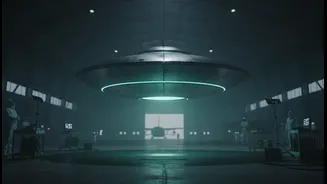
On Friday, the Department of War released its fourth batch of declassified files related to Unidentified Anomalous Phenomena, or UAPs—the official term for what many know as UFOs. This release, part of a broader transparency initiative, includes 40 new
files comprising documents, videos, audio clips, and images from agencies like the Pentagon, CIA, FBI, and NASA. The materials, which cover incidents spanning from the late 1940s to recent years, include everything from a 1949 transcript about mysterious “green fireballs” seen over Los Alamos to military pilot testimony and grainy infrared videos of unexplained objects. One newly released report from 2015 details an unidentified object that entered restricted airspace over a nuclear facility, prompting a lockdown.
Transparency vs. Secrecy: A Balancing Act
While each release fuels public fascination, it also illuminates the fundamental challenge government agencies face. The core of the issue is a persistent tension between the public's right to know and the government's duty to protect its secrets. Officials have repeatedly stated their commitment to transparency. Yet, many of the documents contain redactions, and some videos are short, grainy, and lack conclusive context. This isn't necessarily a sign of hiding a grand conspiracy, but rather an illustration of the difficult choices involved in declassification. Every piece of information must be weighed: will its release compromise national security? Will it endanger a source? This balancing act defines the entire UAP disclosure process.
The Critical Need to Protect Witnesses
One of the primary reasons for caution and redaction is the protection of witnesses. Many UAP reports come from military pilots, sailors, and security officers—individuals whose careers could be impacted by coming forward. For decades, a significant stigma was attached to reporting such sightings. The current effort to encourage reporting hinges on the guarantee of anonymity. By redacting names, locations, and other identifying details, the government hopes to create a safe environment where personnel feel comfortable reporting unusual events without fear of ridicule or professional reprisal. This is crucial for the All-domain Anomaly Resolution Office (AARO), the Pentagon office tasked with investigating UAPs, as its effectiveness depends entirely on a steady flow of high-quality data from credible observers. Without protecting the sources, the data stream would quickly dry up.
Guarding Military Capabilities
The other major pillar of secrecy involves protecting military capabilities. When a Navy fighter jet's sensor captures an object behaving in a strange way, the video contains more than just the UAP. It also reveals the capabilities and limitations of the multi-million-dollar sensor system itself—its range, resolution, and tracking abilities. Releasing a high-resolution, unedited video could provide a roadmap of our most advanced surveillance technologies to adversaries. Therefore, officials are not just redacting information about the UAP, but also any data that could betray how we see the world. This explains why much of the released footage is low-quality or brief. The goal is to show the anomaly without giving away the state-of-the-art systems used to capture it.
What Does This Mean for Disclosure?
This ongoing series of document dumps confirms that the government is taking the UAP issue seriously, moving it from the fringe to a formal national security topic. However, it also manages public expectations. Officials consistently state that unresolved cases do not equate to confirmation of extraterrestrial origins; rather, they are cases where data is insufficient for a definitive conclusion. Proponents of greater transparency see these releases as a positive step, building a public archive of evidence that was once hidden. Skeptics, however, might see the carefully curated and redacted releases as a way to control the narrative. The truth, as revealed by this process, is that disclosure is not a single event or a dramatic revelation. It is a slow, methodical, and often frustrating process of untangling legitimate mysteries from the critical secrets that keep a nation safe.