



The Ultimate Survival Pod
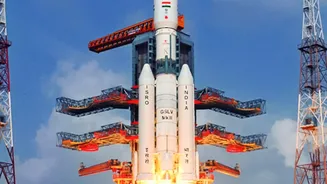
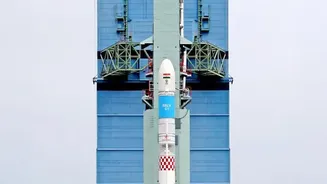
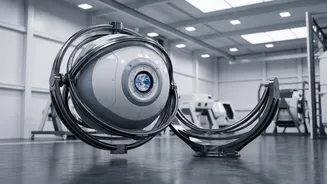
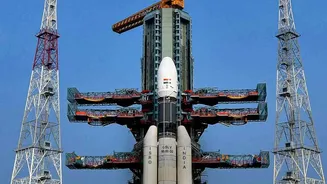
The Gaganyaan crew module is the only part of the entire rocket system that will return to Earth. Designed to carry three astronauts to an orbit of 400 kilometres, it serves as their home and office in space for three days. More critically, it acts as their shield
during the fiery re-entry through the atmosphere and their lifeboat upon splashdown. Every switch, seal, and system must be 'human-rated'—a term that signifies the highest level of reliability and redundancy, as human lives are on the line. ISRO is leaving no stone unturned, conducting thousands of tests on every component, from the structural integrity of the capsule itself to the complex life support systems within it. According to officials, a significant portion of these initial tests are already complete, paving the way for uncrewed test flights.
A Symphony of Parachutes
Bringing the crew module home safely after it re-enters the atmosphere is one of the most critical phases of the mission. The capsule will be travelling at immense speeds, and the only way to slow it down for a gentle splashdown in the ocean is a perfectly sequenced parachute deployment. ISRO has developed a sophisticated, multi-stage system involving a total of ten parachutes of four different types. The sequence begins with the deployment of smaller drogue parachutes, which are designed to stabilize the module and reduce its velocity. This is followed by the main parachutes, which ultimately slow the capsule to a safe landing speed. To validate this critical system, ISRO has been conducting a series of Integrated Air Drop Tests (IADT).
Dropping In from the Sky
The Integrated Air Drop Tests involve lifting a simulated crew module, matching the weight and dimensions of the real one, to a high altitude using an Indian Air Force Chinook or IL-76 aircraft and dropping it over the sea. In a recent test, a 5.7-tonne module was released from about 3 kilometres up. Onboard avionics then trigger the parachute deployment sequence automatically, mimicking the exact process that will occur during an actual mission. These tests are designed to validate the entire system's end-to-end performance, from parachute deployment to splashdown velocity. Successful tests, like the recent IADT-02, provide crucial data and confidence in the entirely indigenous parachute system's reliability.
Perfecting the Splashdown
Once the crew module splashes down in the ocean, the mission is still not over. The crew must be recovered quickly and safely. ISRO has been collaborating extensively with the Indian Navy to perfect recovery procedures. Using a mock-up of the crew module, teams have been conducting trials in various conditions, starting in controlled pools and moving to open seas off the coast of Visakhapatnam. These trials help refine the Standard Operating Procedures (SOPs) for everything from attaching a recovery buoy and towing the module, to hoisting it aboard a naval ship. Recent tests have even validated a 'well deck' recovery method, where a ship's deck is flooded to allow the capsule to be gently brought inside, ensuring minimal discomfort for the astronauts.
A Bubble of Earth in Space
Inside the capsule, an advanced Environmental Control and Life Support System (ECLSS) will create a habitable bubble for the astronauts. This indigenously developed system is mission-critical, responsible for maintaining breathable air, regulating temperature and humidity, managing water, and handling waste in microgravity. It supplies oxygen while using special filters to remove carbon dioxide and other odours. Since natural air convection doesn't happen in space, fans are used to circulate the air and prevent dangerous pockets of CO2 from forming. The system also includes fire detection and suppression mechanisms, as fire behaves differently in a weightless environment.
Ensuring Structural Integrity
Beyond the descent and recovery, the module itself must withstand the immense forces of spaceflight. ISRO has conducted a battery of ground-based qualification tests. These include float inflation tests for the Crew Module Up-righting System (CMUS), which uses a gas-based system to ensure the capsule turns upright if it lands upside down in the water. Other critical tests have validated the umbilical separation system, which cleanly severs the connections between the crew and service modules before re-entry, and the structural strength of the module during the apex cover separation, which protects the parachutes. Each successful test confirms that the design and materials can handle the harsh realities of the journey.