

The Countdown to 2027
According to Union Railway Minister Ashwini Vaishnaw, the countdown has officially begun for the first trial runs of India's bullet train. The initial tests are scheduled to take place on a section of the 508-kilometre corridor in Gujarat, likely between
Surat and Bilimora, where construction has advanced most rapidly. Following a testing period of two to four months to ensure all systems meet the stringent safety and performance standards, the first commercial services are expected to launch. This phased rollout plan aims to bring high-speed rail to the public in stages, with the Surat-Vapi section targeted for completion by the end of 2026. The ultimate goal remains the full commissioning of the line connecting Mumbai and Ahmedabad.
From Blueprint to Concrete Progress
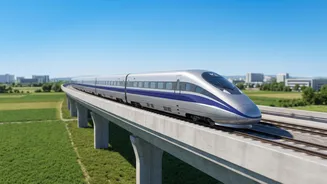
What was once a blueprint is now a tangible reality stretching across Gujarat and Maharashtra. The National High Speed Rail Corporation Limited (NHSRCL), the agency implementing the project, has reported significant physical progress. As of mid-2026, pier work has been completed on over 450 kilometres of the alignment, and more than 350 kilometres of viaduct—the elevated structure on which the train will run—is already in place. The project has crossed the 62% physical completion mark. Key milestones, such as the construction of major river bridges and the installation of thousands of masts for the overhead electrical system, underscore the rapid pace of work. This visible progress on the ground is what makes the 2027 trial run a credible and exciting target.
Engineering a High-Speed Marvel
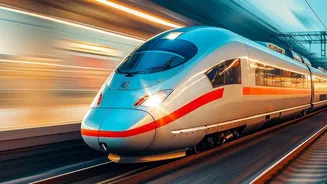
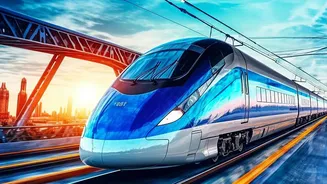
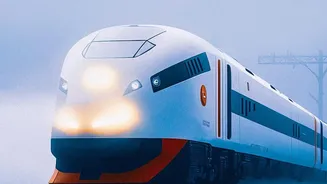
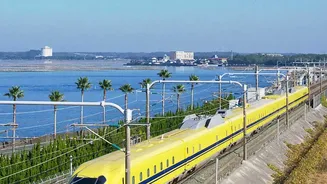
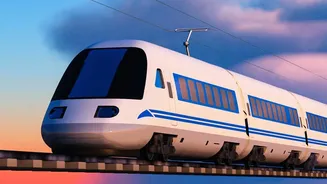
The project is not just about speed; it's about a technological leap for Indian Railways. The corridor will use Japan's renowned Shinkansen technology, known for its exceptional safety and reliability. The trains, based on the E5 series, are designed to operate at a speed of 320 km/h, which will drastically cut the travel time between Mumbai and Ahmedabad from around eight hours by conventional rail to just over two hours. The project also includes India's first undersea rail tunnel, a 7-kilometre stretch beneath Thane Creek in Mumbai, showcasing the complex engineering involved. While the technology is Japanese, the manufacturing is embracing the 'Make in India' initiative, with trainsets being produced indigenously.
Navigating Costs and Challenges
The journey to this point has not been without its hurdles. The project has faced significant delays, primarily due to challenges in land acquisition, especially in Maharashtra, and pandemic-related disruptions. These factors have also led to a considerable cost escalation. The project's initial estimate of around ₹1.1 lakh crore has been revised, with recent reports suggesting the final cost could approach ₹2 lakh crore. Despite these challenges, officials have pushed forward, resolving most of the land acquisition issues and accelerating construction to make up for lost time. A substantial portion of the project is financed through a soft loan from the Japan International Cooperation Agency (JICA).
The Bigger Picture for India
The Mumbai-Ahmedabad High-Speed Rail corridor is more than just a transportation project; it is a catalyst for economic growth and a symbol of a new India. The massive construction effort has already created thousands of jobs and is expected to spur economic development in the towns and cities along the route. It represents a massive upgrade in technology and skills for India's engineering and construction sectors. Once operational, the bullet train will offer a faster, safer, and more reliable mode of transport, fostering greater business and leisure travel between two of India's most important commercial hubs. It sets the stage for a potential network of high-speed corridors across the country, transforming how Indians travel and connect.