



A Continent of Contradictions
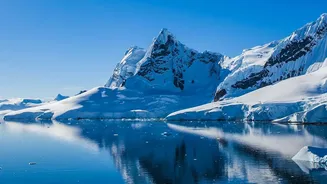
Antarctica is a place of extremes, and its role in climate change is no different. For decades, the narrative has been one of accelerating ice loss, particularly from the West Antarctic Ice Sheet, contributing significantly to global sea level rise. Overall,
the continent has been losing about 140.5 billion tons of ice per year over the last two decades. The eastern part of the continent, however, was long considered a relatively stable giant. But recent discoveries are showing that the story of the East Antarctic Ice Sheet (EAIS) is far more dynamic and complicated than previously thought, with snowfall playing a pivotal and sometimes counterintuitive role.
Record Snowfall, But Not So Fast
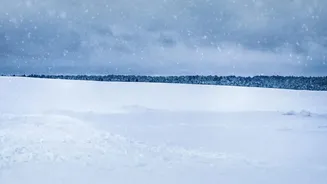
A recent study published in the journal Nature has unveiled a remarkable event: between 2021 and 2023, East Antarctica gained an astonishing 695 billion tons of ice. This was the largest short-term mass gain ever recorded by GRACE satellites, which measure changes in Earth's gravity field to track ice mass. This gain came from exceptionally heavy snowfall. On the surface, this sounds like fantastic news — a reversal of the worrying trend. However, scientists are quick to caution against simple conclusions. This massive dump of snow temporarily slowed Antarctica's overall contribution to sea level rise, but it does not reverse the long-term trend of ice loss. Think of it as making a surprise extra payment on a large loan; it helps, but the underlying debt remains.
The Tropical Connection
So, what caused this sudden surge in snowfall? The new study's most fascinating angle is its discovery of a long-distance climate connection, or 'teleconnection'. Researchers found the culprit thousands of miles away, in a persistently warm patch of the tropical ocean where the Pacific meets the Indian Ocean. This sustained warming set off a chain reaction in the atmosphere, creating a wave-like pattern that traveled south. This pattern altered wind circulation over East Antarctica, essentially opening a highway for moisture-rich air from the mid-latitude Indian Ocean to be funneled deep into the continent’s interior, where it fell as heavy snow. This process, involving atmospheric rivers, shows how an event in the tropics can have dramatic consequences at the pole.
A Complex Climate Feedback Loop
This phenomenon highlights a paradox of a warming planet. A warmer atmosphere can hold more moisture, which can lead to increased snowfall in the world's coldest regions. This effect has been observed before, with studies noting that increased snowfall during the 20th century helped mitigate what would have been an even greater rise in sea levels. However, this benefit is in a constant battle with the other effects of warming. The same atmospheric and oceanic heat that can boost snowfall is also responsible for melting the floating ice shelves that hold back the continent's massive glaciers, particularly in West Antarctica. The key question for scientists is which of these processes—snowfall gain versus meltwater loss—will dominate in the long run. The recent massive snowfall was largely due to a specific, periodic weather pattern, not a permanent change that can offset accelerating melt elsewhere.
What This Means for Our Future
While the 695-billion-ton ice gain is significant, it's a temporary reprieve, not a solution. Scientists emphasize that the Antarctic continent as a whole is still on a long-term trajectory of losing ice, and that loss is accelerating. This new understanding of the 'tropical warm pool-East Antarctic' connection provides a crucial new piece of the puzzle. It helps researchers refine their climate models to better predict how Antarctica will respond to future warming. These models are essential for coastal communities in India and around the world to prepare for future sea-level rise. The study underscores that Antarctica's fate is not sealed in one direction; it is a battleground of competing climate forces, and we are only just beginning to understand the intricate connections that will shape its future, and ours.