





The Plateau of the Static Plank
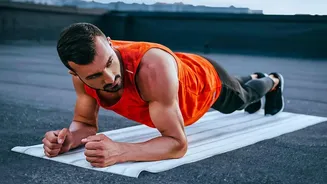
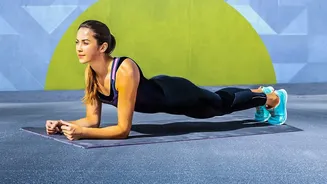
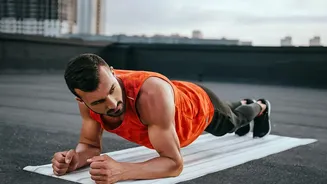
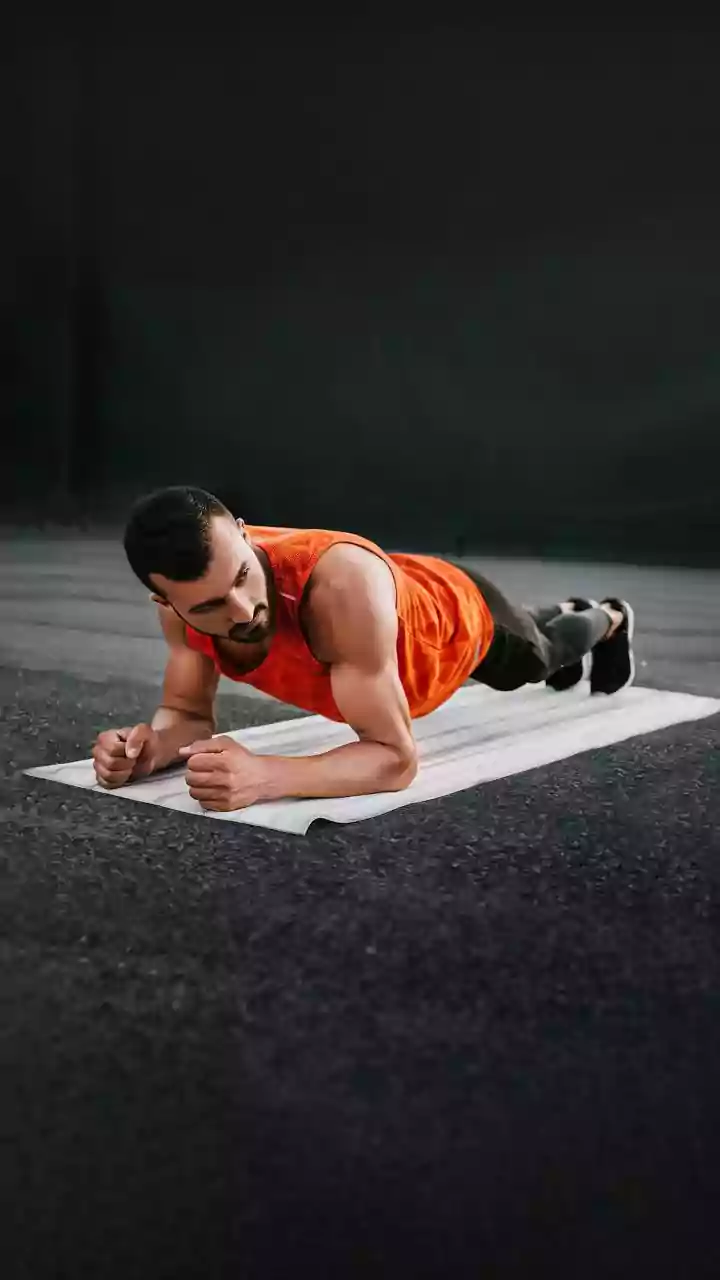
Holding a traditional plank is an isometric exercise, meaning the muscles contract without changing length. It’s excellent for building a baseline of core endurance and learning proper form. However, your body is incredibly efficient. Once it masters
this static hold, the benefits begin to diminish. Holding a plank for minutes on end primarily builds endurance, not necessarily greater strength. For your muscles to grow stronger, they need to be progressively challenged. When the challenge becomes about time rather than intensity, you risk your form breaking down, which can shift the load from your abs to your lower back.
The Science of Dynamic Movement
This is where dynamic variations come in. By adding movement—lifting a leg, reaching an arm, or hopping your feet—you introduce instability. Your core's main job is to stabilize your trunk while your limbs are in motion. Dynamic planks mimic this real-world function, forcing your deep stabilizing muscles to work much harder to prevent your body from twisting or sagging. This constant adjustment recruits more muscle fibers, including the often-neglected obliques and transverse abdominis, leading to more comprehensive strength gains. It’s the difference between bracing for a stationary impact and bracing while running or lifting—the latter is far more complex and beneficial.
Beyond the Six-Pack: Functional Strength
A strong core is about so much more than aesthetics. It is the center of your body's power, supporting your spine and facilitating the transfer of energy to your arms and legs. Strong, stable core muscles are essential for good posture, better balance, and reducing the risk of injury, especially in the lower back. Dynamic core training prepares your body for the demands of everyday life, from carrying groceries to playing sports, because these activities require your core to provide stability during movement.
Dynamic Plank #1: Plank with Reach
The Plank with Reach challenges your anti-rotation strength. Start in a high or elbow plank position. Keeping your hips as square to the floor as possible, slowly lift one arm and extend it straight in front of you. The key is to fight the natural urge for your torso to twist or your hips to drop. Hold for a moment, then return the hand to the floor with control and repeat on the other side. This movement intensely engages your abs and obliques as they work to maintain stability on a reduced base of support.
Dynamic Plank #2: Spiderman Plank
The Spiderman Plank is a fantastic move for targeting the obliques. From an elbow or high plank position, slowly bring your right knee towards the outside of your right elbow. Try to get them as close as possible without letting your hips sag or hike up into the air. Return your leg to the starting position and alternate sides. This exercise not only carves out your sides but also improves hip flexibility and control.
Dynamic Plank #3: Plank Jack
Ready to add a cardio element? The Plank Jack combines the stability of a plank with the explosiveness of a jumping jack. From a high plank position with your feet together, jump both feet out wide and then immediately jump them back together. The goal is to keep your upper body and hips as still as possible, letting only your legs move. This variation elevates your heart rate for a calorie-burning boost while forcing your core to work overtime to prevent your hips from bouncing.
Dynamic Plank #4: Body Saw
The Body Saw adds a challenging layer of intensity to the standard elbow plank. Assume an elbow plank position, perhaps with your feet on a towel on a smooth floor or on sliders. From there, use your forearms and shoulders to push your entire body backward a few inches, then pull yourself forward past your starting point, like a sawing motion. This movement creates a massive contraction in the abs as you fight to maintain a straight line from head to heels throughout the entire range of motion.