





The Billion-Dollar Ante
The upfront cost of deepwater exploration is immense, making it a game reserved for corporate giants and national oil companies. A single exploratory well drilled in deep or ultra-deep waters can cost anywhere from $80 million to over $150 million. Recent
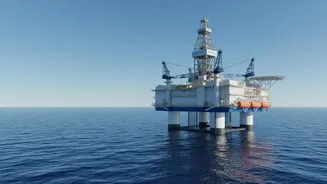
Indian projects, for example, have seen estimated costs for a single well climb from ₹800 crore to ₹1,200 crore. These figures don't even include the capital-intensive infrastructure that follows a discovery. The price tag is driven by the need for highly specialized equipment, such as dynamically positioned drillships and semi-submersible rigs that can cost a fortune to rent and operate. Add to that the expense of support vessels, helicopters for crew transport, and the complex logistics of operating far from shore, and it's clear why these projects represent a massive financial commitment before a single drop of oil is confirmed.
Engineering at the Extremes
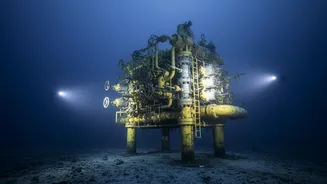
Beyond the financial outlay, deepwater drilling is an extraordinary technological challenge. Operations take place in environments of crushing pressure and near-freezing temperatures on the seafloor. These conditions, often designated as High-Pressure, High-Temperature (HPHT), demand specialized materials and equipment that can withstand the harsh, corrosive environment. Engineers must navigate a narrow margin between the natural pressure of the reservoir and the pressure that would fracture the surrounding rock, a delicate balance crucial for preventing well blowouts. The entire process is managed with advanced robotics, like remotely operated vehicles (ROVs), which are essential for installation and maintenance tasks thousands of meters below the surface where humans cannot go.
The Geological Lottery
Even with the most advanced 3D seismic imaging and geological analysis, deepwater exploration remains a game of chance. The success rate for exploratory wells—those drilled in unproven areas—can be low. While overall commercial success rates have improved with better technology and prospect selection, many ventures still result in 'dry holes', finding no commercially viable hydrocarbons. For instance, the commercial success rate in ultra-deepwater fell to just 3% between 2020-2024 from around 20% a decade earlier. A discovery is only the first hurdle. The size of the find and the prevailing price of oil determine whether it is economically feasible to develop. A project may require a specific oil price—its breakeven price—to be profitable, a figure that can be a moving target in a volatile global market. Companies have walked away from significant finds because the cost of development was deemed too high to generate a return.
India's Deepwater Ambition
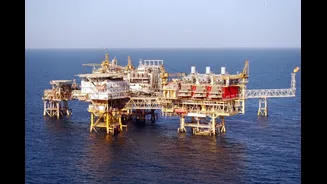
As a major energy consumer heavily reliant on imports, India is making a concerted push into deepwater exploration to enhance its energy security. The government recently launched the 'Samudra Manthan' scheme, a massive ₹84,084 crore initiative to accelerate offshore exploration. Recognizing the high risks, the scheme provides financial support to operators, covering up to 50% of drilling costs to de-risk the investment. State-run ONGC and other players are actively drilling in basins like the Mahanadi, Krishna-Godavari, and Andaman. While early results from some projects have been encouraging, boosting confidence in the region's potential, the journey from exploration to sustained production is long and fraught with the same commercial and technical uncertainties faced globally.