







A Larger, More Complex Family
The BRICS group, originally comprising Brazil, Russia, India, China, and South Africa, has undergone a significant transformation. The bloc has now expanded to include Egypt, Ethiopia, Iran, the United Arab Emirates (UAE), and most recently, Indonesia.
This expanded group, sometimes referred to as BRICS+, now represents nearly half the world's population and a substantial portion of the global economy. While Saudi Arabia was invited to join and is listed in some documents, its formal status remains somewhat ambiguous. This growth makes BRICS a more representative voice for the Global South but also introduces a wider range of national interests and potential friction points, making consensus harder to achieve.
The Agenda in New Delhi
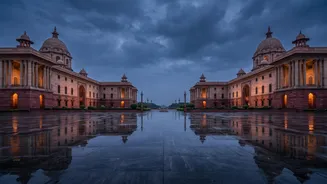
Under its 2026 chairmanship, India has set the theme as “Building for Resilience, Innovation, Cooperation and Sustainability”. The agenda is packed with discussions on strengthening multilateralism, reforming global governance, and deepening economic cooperation. Key priorities include facilitating trade in local currencies to reduce dependence on the US dollar, enhancing the role of the New Development Bank (NDB), and collaborating on climate action, digital payments, and healthcare. The flurry of ministerial meetings leading up to the summit aims to produce tangible outcomes rather than just broad declarations, reflecting India’s ambition to make the bloc more action-oriented.
The Dragon in the Room
A central strategic question for BRICS is the influential role of China. Beijing has been a major proponent of expansion, seeing it as a way to build a bloc that can effectively challenge Western-led global institutions. China's economic might gives it significant leverage to shape the group's agenda, a reality that creates unease for other members, particularly India. New Delhi has historically been more cautious about rapid expansion, concerned that it could dilute its own influence and amplify Beijing's. Balancing the desire for a multipolar world with the risk of becoming part of a China-centric order is a tightrope walk for Indian diplomacy.
Geopolitical Fissures on Full Display
The expansion has brought long-standing regional rivalries directly into the BRICS fold. The recent addition of Iran and the UAE, two countries with competing interests in the Middle East, is a prime example. Tensions in the region, particularly concerning the Strait of Hormuz, have already created discord within the bloc. A recent foreign ministers' meeting highlighted these cracks, failing to produce a unified joint statement on the crisis and instead issuing a less powerful Chair's Statement. This underscores the fundamental challenge for an expanded BRICS: can a group containing geopolitical rivals find a common voice on critical security issues, or will its diversity become a source of paralysis?
India's Delicate Balancing Act
As the host, India finds itself in a challenging position. New Delhi must navigate the push from Russia and China for a more confrontational anti-Western stance, particularly on issues like de-dollarisation and UN reform, while maintaining its own policy of strategic autonomy. India has strong ties with both Western nations and BRICS members, positioning it as a potential bridge within the group. Its leadership aims to steer the conversation toward constructive development goals and institutional reform, framing BRICS as a force for a more inclusive global order rather than a purely oppositional one. The success of the New Delhi summit will be measured by India's ability to foster consensus and project an image of unity, despite the deep-seated strategic divergences.