


The Foundation of Flavour
For generations of Indian home cooks, the combination of ginger, garlic, and turmeric isn't a health trend; it's the very soul of the kitchen. This trio forms the aromatic base for countless curries, dals, and sabzis, a flavour foundation so essential
it's often prepared as a ready-to-use paste. Before any medicinal properties were analyzed in labs, their power was understood through taste, smell, and the way they transform simple ingredients into a complex, satisfying meal. They are celebrated not for what they might do for our cells, but for what they consistently do for our food: make it taste incredible. It's time we re-center that culinary magic, separating the delicious facts from the often-overstated functional hype.
Ginger: A Zing of Reality
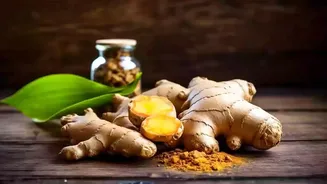
The flavour of ginger is a complex and wonderful thing: sharply pungent, spicy, and warm, with undertones of lemon and citrus. This distinct zing comes from compounds like gingerol. Whether grated into a hot chai, minced into a stir-fry, or pounded into a marinade, ginger provides a comforting kick that awakens the palate. Medically, ginger has been used for centuries to treat stomach upset, and modern science offers good support for its ability to alleviate nausea related to pregnancy, motion sickness, and chemotherapy. However, while studies show promise for its anti-inflammatory properties, potentially helping with arthritis pain or muscle soreness, much of the evidence is still developing or comes from animal studies. The amount you use to season your food is unlikely to deliver a clinical dose, but it will absolutely deliver a burst of vibrant, energizing flavour.
Garlic: Pungent, Powerful, and Practical
Raw garlic is famously pungent and spicy, a quality that mellows considerably with cooking. When roasted, it becomes soft, sweet, and nutty, while sautéing brings out a milder, savoury character. This transformation is thanks to its sulfur compounds, notably allicin, which is created when a clove is chopped or crushed. In the kitchen, it's a non-negotiable for adding savoury depth. Health-wise, garlic has been linked to cardiovascular benefits for a long time. Research suggests it may have a modest effect on lowering blood pressure and reducing total and LDL (bad) cholesterol. But many of these studies use concentrated supplements, not the cloves you'd chop for your dal. While it's a fantastic component of a heart-healthy diet, it is not a standalone cure. So, enjoy garlic for its indispensable role in making food delicious, from tadkas to pastas.
Turmeric: The Golden Standard of Flavour
Turmeric's brilliant golden-orange hue is perhaps more famous than its flavour, which is more subtle than its colour suggests. It has a warm, earthy, and slightly bitter taste with peppery, mustard-like notes. It rarely stars alone, instead acting as a foundational flavour that complements and enhances other spices in a blend. The wellness world is abuzz with curcumin, turmeric's main active compound, praised for its potent anti-inflammatory and antioxidant properties. Studies have explored its potential benefits for everything from arthritis to managing metabolic syndrome. However, there's a catch: curcumin has very poor bioavailability, meaning the body struggles to absorb it. The amount of turmeric used in cooking is very different from the high-dose, often specially formulated curcumin supplements used in clinical trials. While its earthy flavour is essential to a good curry, it's best to view any health effects from culinary use as a small bonus, not a guarantee.