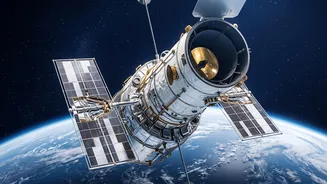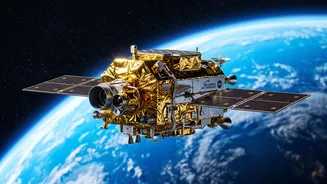


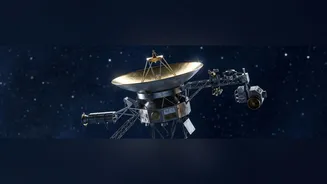
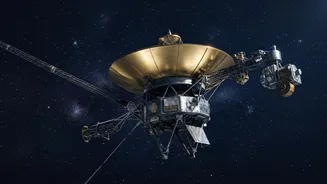
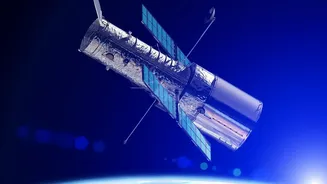
In a fittingly fiery finale, NASA's Neil Gehrels Swift Observatory concluded its nearly 22-year mission on November 4, 2026, re-entering Earth’s atmosphere. But this was no mere end; it was the final act for a telescope that changed our view of the cosmos.
A Swift End for a Rapid Hunter
On November 4, NASA confirmed the Swift Observatory plunged through the atmosphere over the North Sumatra region of Indonesia. Launched in November 2004, Swift was a rapid-response space telescope designed for a mission of just two years. It far outlived that expectation, becoming one of astronomy’s most productive tools. Its purpose was to solve the fleeting mystery of gamma-ray bursts (GRBs), the most powerful explosions in the universe. The observatory's orbit had been decaying for years, a process accelerated by recent solar activity that caused Earth's atmosphere to expand, increasing drag on the satellite. A final, ambitious commercial rescue mission to boost its orbit was attempted but failed due to technical issues, sealing the observatory's fate.
Solving the Gamma-Ray Burst Mystery
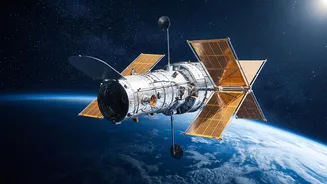
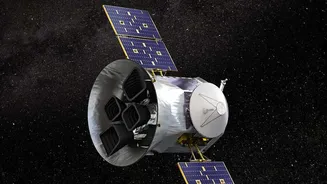
Before Swift, gamma-ray bursts were an enigma. These are colossal flashes of the most energetic form of light, appearing randomly across the sky and vanishing within seconds or minutes. Scientists knew they were powerful but struggled to pinpoint their origins because they faded too quickly for ground-based telescopes to catch them. Swift was engineered to solve this. Its name reflected its key capability: speed. Equipped with three telescopes working in unison, it could detect a new GRB, calculate its position, and autonomously pivot to focus its more sensitive X-ray and ultraviolet/optical telescopes on the location, all within about 90 seconds. This allowed it to capture the fading 'afterglow' of the explosion, a crucial step that finally unlocked their secrets.
Painting a Complete Picture of Cosmic Explosions
By studying the afterglows, Swift allowed astronomers to determine where GRBs came from. It confirmed they were not events within our own Milky Way, but originated in distant galaxies, billions of light years away. The data helped classify them into two main types. 'Long' bursts, lasting more than two seconds, are typically caused by the collapse of massive stars into black holes. 'Short' bursts, which can last mere milliseconds, are the signature of colliding neutron stars, a discovery that helped usher in the era of multi-messenger astronomy by connecting these bursts to gravitational wave events. In its nearly 22nd year career, Swift detected over 2,000 GRBs, providing an unprecedented catalogue for scientists.
Beyond the Bursts: A Versatile Observer
While built as a specialist GRB hunter, Swift's rapid response capabilities and multi wavelength eyes made it an invaluable tool for all kinds of astronomy. It was a true cosmic multi tool. Astronomers used it to study over 1,400 supernovae, sometimes catching stars in the very act of exploding for the first time. It monitored flare ups from supermassive black holes at the centres of active galaxies, observed comets and asteroids within our own solar system, and even contributed to the study of X ray flares from stars. This versatility meant that data from Swift contributed to thousands of scientific papers, cementing its role as a workhorse for the global astronomy community.