







A Landmark Signing in Washington
In a ceremony at NASA headquarters on August 31, 2026, Turkey's Minister of Industry and Technology, Mehmet Fatih Kacır, formally signed the Artemis Accords. The event, hosted by NASA Administrator Jared Isaacman, marked Turkey's entry into a growing
global coalition dedicated to cooperative exploration of the Moon, Mars, and beyond. This decision aligns Turkey's expanding space goals with a common set of principles, solidifying its commitment to playing a significant role in the next chapter of space exploration. The Turkish Space Agency (TUA) President Yusuf Kıraç also attended, underscoring the national importance of the agreement.
What are the Artemis Accords?
Established in 2020 by NASA and the U.S. State Department along with seven other founding nations, the Artemis Accords are a set of non-binding principles designed to guide civil space exploration. They build upon the foundational 1967 Outer Space Treaty, establishing a modern framework for responsible behavior in space. Key tenets include peaceful exploration, transparency in activities, the public release of scientific data, providing emergency assistance to astronauts in distress, and the safe disposal of space debris. By signing, nations agree to these shared ideals, fostering a cooperative and sustainable environment for future missions to the Moon and Mars.
Turkey's Accelerating Space Ambitions
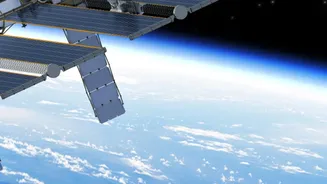
Joining the Artemis Accords is a logical next step in Turkey's rapidly advancing space program. The country has recently achieved several major milestones, including sending its first astronaut, Alper Gezeravcı, to the International Space Station in early 2024 for a research mission. Another Turkish researcher, Tuva Atasever, completed a suborbital flight the same year. Furthermore, Turkey is actively developing its first lunar mission, AYAP-1, which aims to send a domestically engineered spacecraft to the Moon in 2027. The country is also developing a spaceport in Somalia to gain sovereign launch capabilities. Signing the Accords provides a crucial international framework to support these ambitious projects.
Strategic Importance and Geopolitical Context
For years, Turkey had maintained a degree of separation from the Artemis framework, even as it expanded its space cooperation with other nations, including China. Its decision to join now is significant, placing it firmly within the U.S.-led coalition as its own lunar program approaches a critical launch phase. While the Accords do not require signatories to choose sides between competing space blocs, the move enhances Turkey's collaboration with NASA and its partners. This addition strengthens the Artemis coalition, which now includes fellow regional powers like the UAE, Saudi Arabia, and Israel, creating a broader front for cooperative space governance. For context, India is also a key signatory, highlighting the global and diverse nature of the partnership.
What's Next for the Partnership?
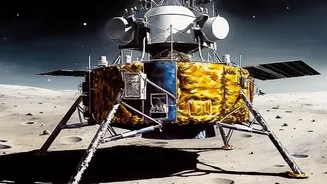
With the ink barely dry, the focus now shifts to implementation. As a signatory, Turkey can contribute hardware, scientific instruments, and other capabilities to future Artemis missions. The country is set to host the prestigious International Astronautical Congress (IAC) in Antalya in October 2026, which will serve as a major platform for Artemis signatories to discuss the future of peaceful space exploration. The AYAP-1 lunar mission in 2027 will be the first major test of Turkey's capabilities within this new cooperative framework, as it aims to collect data from lunar orbit before making a controlled hard landing on the surface. This mission will be a clear demonstration of the nation's growing prowess and its commitment to the shared goals of the Artemis program.