





A Faster Commute for the NCR
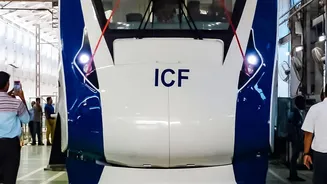
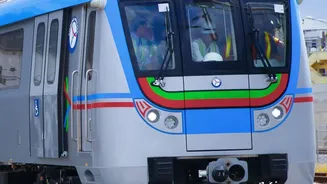
The daily commute between Delhi and Meerut has been transformed with the introduction of new 'fast train' services on the Namo Bharat Regional Rapid Transit System (RRTS) corridor. The National Capital Region Transport Corporation (NCRTC) has launched
these limited-stop trains to significantly shorten journey times, especially during the busy morning and evening peak hours. This development is a game-changer for the thousands of office-goers, students, and other daily travellers who depend on this crucial link between Uttar Pradesh and the national capital. The entire corridor, from Sarai Kale Khan in Delhi to Modipuram in Meerut, can now be covered in less than 50 minutes, a substantial reduction from the previous 64 minutes taken by regular services.
The Numbers: How Much Faster?
The time savings are most dramatic on key sections of the 82.15 km route. A journey from Anand Vihar in Delhi to Ghaziabad now takes a mere eight minutes. The stretch between Ghaziabad and the Begumpul station in Meerut can be covered in just 28 minutes, down from 37 minutes. This adds up to a total travel time of just 36 minutes from Anand Vihar to Begumpul. Previously, a regular journey along the full length of the corridor took about an hour. The introduction of these fast services shaves off a crucial 14 minutes, making regional travel more efficient than ever. These services are specifically timed for peak hours, with two trains departing from both Sarai Kale Khan and Modipuram at 8:00 AM and 8:30 AM, and again at 6:00 PM and 6:30 PM.
The 'Fast Train' Strategy
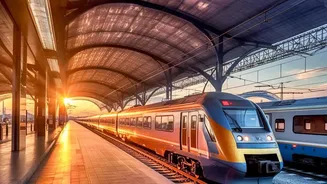
The secret to this speed boost is a simple but effective strategy: fewer stops. While regular Namo Bharat services halt at all stations, the new fast trains stop at only five key locations: Sarai Kale Khan, Anand Vihar, Ghaziabad, Begumpul, and Modipuram. This allows the trains to maintain a higher average speed and bypass intermediate stations, catering directly to passengers travelling longer distances between major hubs. It's a two-tiered system designed for maximum efficiency: regular services continue to run every 10 minutes for local commuters, while the fast trains provide an express option for end-to-end travellers. Passengers are advised to check station display boards and listen for announcements to ensure they board the correct service.
More Than Just Speed
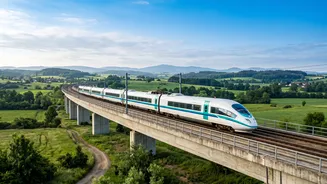
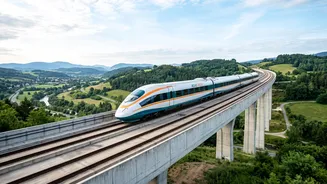
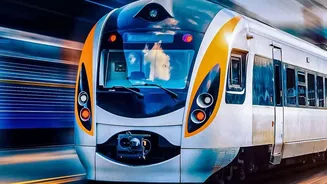
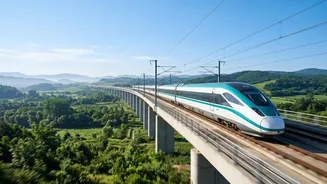
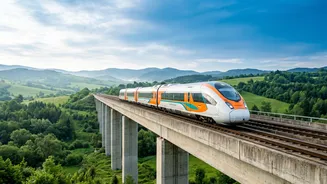
The Namo Bharat system itself is an engineering marvel. The trains are designed to run at a top speed of 180 km/h, with an operational speed of 160 km/h, making them a semi-high-speed service distinct from conventional metro trains. This is a significant step up in public transit, offering a reliable, high-frequency alternative to road travel. The benefits extend beyond saving time. By encouraging a shift from private vehicles to public transport, the RRTS network aims to reduce road congestion and air pollution in the densely populated NCR. The project is seen not just as a transport solution, but as a driver for economic development, connecting regional nodes and opening up new opportunities for housing and business along the corridor.
The Road Ahead for RRTS
The Delhi-Ghaziabad-Meerut line is just the beginning. It is the first of three corridors prioritized in Phase-I of the RRTS project, which also includes routes from Delhi to Gurugram-SNB-Alwar and Delhi to Panipat. The success of the Delhi-Meerut line, which has already served over five crore commuters, provides a strong proof of concept for this new era of regional mobility. In the future, these corridors will be interoperable, meaning a passenger could potentially travel from one corridor to another without changing trains, creating a seamless transit network across the entire NCR. With detailed project reports for further extensions already submitted, the RRTS network is set to fundamentally reshape how people live and work across the region.