




An Alarming Deficit
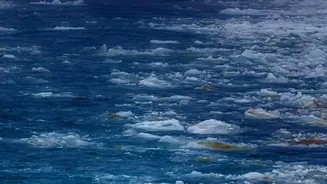
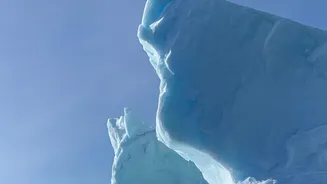
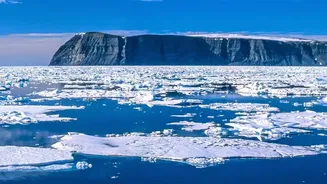
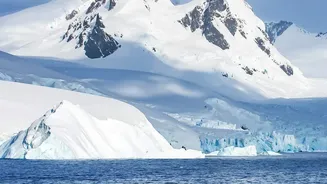
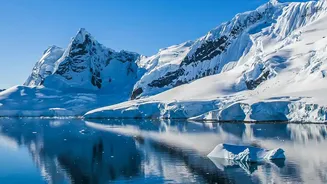
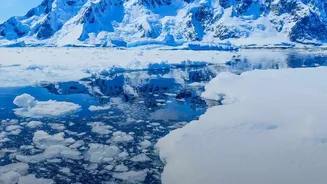
Each year, the sea around Antarctica freezes, doubling the continent's size before melting back in summer. But this year, something is different. According to the U.S. National Snow and Ice Data Center (NSIDC), the sea ice reached its maximum winter extent
on September 14, covering 17.59 million square kilometres. This figure is nearly a million square kilometres below the long-term average—an area roughly twice the size of Spain has gone missing. While yearly fluctuations are normal, this marks the third-lowest winter maximum since satellite records began in 1979. More worryingly, it is part of a clear and concerning pattern: the four lowest winter maximums ever recorded have all occurred in the last four years.
A Shift in a Once-Stable System
For decades, Antarctic sea ice was a story of relative stability, even showing a slight increasing trend, in stark contrast to the rapid decline seen in the Arctic. This made the southern pole seem more resilient to global warming. However, that trend abruptly reversed around 2016. Since then, the continent has experienced a series of record-low ice years, in both summer and winter. Scientists are now concerned this isn't just a temporary dip but a fundamental 'regime shift' to a new, low-ice state. While it's too early to definitively attribute this single season to human-caused climate change, the persistence of these low values is a strong indication that the system has changed.
What Is Causing the Ice Loss?
The drivers of Antarctica's ice behaviour are complex, involving a mix of ocean and atmospheric factors. Unlike the enclosed Arctic basin, Antarctic ice forms in the open ocean and is heavily influenced by winds and currents. Scientists believe stronger winds are playing a dual role. For a time, they may have pushed ice away from the coast, allowing new ice to form. More recently, however, these same powerful winds appear to be mixing warmer, deeper ocean water towards the surface. This warmer water is making it more difficult for ice to form and stick around. The ocean, which has a long memory, may be releasing heat that was trapped in deeper layers for years, now melting the ice from below.
Why This Missing Ice Matters Globally
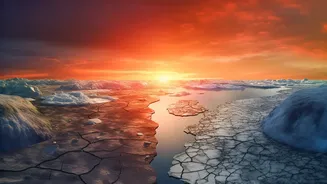
What happens in Antarctica doesn’t stay in Antarctica. The vast, white sea ice acts as a planetary sun shield, reflecting the sun's energy back into space. This is known as the albedo effect. When that ice is replaced by dark, open ocean, more heat is absorbed, creating a feedback loop that accelerates warming. Furthermore, sea ice acts as a protective barrier for Antarctica's massive land-based ice sheets and glaciers. While melting sea ice doesn't directly raise sea levels (as it's already floating), its absence exposes the coastal ice shelves to damaging ocean waves and warmer waters. This can speed up the melting and calving of land ice, which does contribute directly to global sea-level rise, threatening coastal communities worldwide, including in India.
A Ripple Effect Through the Ecosystem
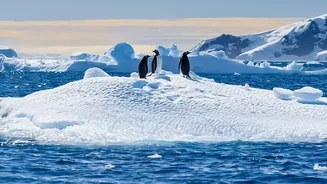
The loss of sea ice has immediate consequences for the unique Antarctic ecosystem. It is a critical habitat for everything from microscopic algae to large predators. Krill, the tiny crustaceans that form the base of the Antarctic food web, rely on the underside of the ice for shelter and food. Reduced krill populations affect the seals, whales, and penguins that feed on them. Emperor penguins, for example, depend on stable sea ice to breed and raise their chicks. A sudden loss can have devastating impacts on their colonies. The entire marine food web, which has evolved around the seasonal rhythm of ice, is now facing an unprecedented disruption.