




The Weightless Heart
On Earth, your heart works tirelessly against gravity to pump blood throughout your body. In the microgravity environment of space, this constant battle disappears. Bodily fluids shift upwards from the legs towards the head and chest, and the heart muscle
no longer needs to work as hard to circulate blood. While this might sound like a vacation for our most vital organ, the principle of 'use it or lose it' applies. This reduced workload is the primary driver behind the cardiovascular changes astronauts experience during long missions, similar to the effects of prolonged bed rest.
A Shrinking, Changing Muscle
One of the most significant findings from long-duration spaceflight is cardiac atrophy, which is a shrinking of the heart muscle. In a landmark study involving astronaut Scott Kelly, who spent nearly a year on the International Space Station (ISS), researchers found his heart's left ventricle lost mass, despite a rigorous daily exercise routine. The heart also tends to become more spherical in shape in space. The good news is that even with these changes, the heart's overall function remains largely effective while in orbit. The real test comes upon returning to a gravity-rich environment, like Earth or even Mars.
The Deep Space Difference: Radiation
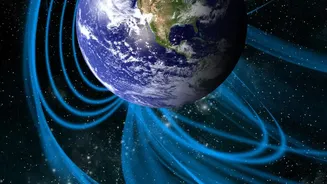
A mission to Mars presents a challenge that ISS astronauts are largely protected from: deep-space radiation. Earth's magnetic field shields us from galactic cosmic rays (GCRs), but out in interplanetary space, astronauts would be exposed for months. Recent studies, often using animal models, paint a concerning picture. This radiation exposure could cause lasting damage that is distinct from the effects of microgravity. Research has indicated that it can lead to perivascular fibrosis, a condition where scar tissue forms around the heart's blood vessels. This scarring can stiffen arteries and restrict blood flow, potentially increasing the risk of heart disease and other cardiovascular events long after the mission is over.
The Challenge of Readaptation
After months of their cardiovascular system adapting to weightlessness, astronauts face a difficult readjustment upon returning to Earth. Many experience orthostatic intolerance—dizziness or fainting when they stand up—because their bodies struggle to regulate blood pressure against the pull of gravity. There is also a documented risk of cardiac rhythm disturbances, or arrhythmias, during and after spaceflight, which NASA continues to monitor closely as missions get longer. These issues are a top priority for ensuring astronauts can safely land, exit their spacecraft, and begin work, whether on Earth or another planet.
Protecting Our Explorers
Space agencies are not just observing these changes; they are actively developing ways to counteract them. The main defence is a strict, intensive exercise regimen. Astronauts on the ISS spend about two hours a day, six days a week, on specially designed treadmills, stationary bikes, and resistance training equipment to keep their muscles and hearts engaged. This has proven effective at mitigating some of the atrophy. In fact, recent studies suggest these countermeasures may be sufficient to prevent major issues upon landing on Mars, which has about 38% of Earth's gravity. For the radiation threat, researchers are focused on developing better shielding for spacecraft and potentially new medical treatments to protect the heart.