





A Global Runway Moment
New Zealand Fashion Week 2026 is set to feature a major showcase titled 'Khadi Beyond Borders' on August 18. The event is the first major initiative from a partnership between the Fashion Design Council of India (FDCI) and NZFW, established to create
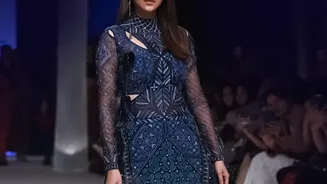
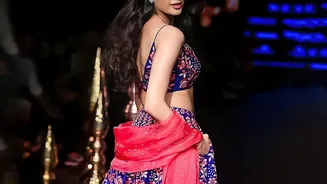
a reciprocal platform for designers from both nations. The showcase will feature some of India's most respected designers, with Rajesh Pratap Singh headlining a solo show, followed by a collaborative runway with Samant Chauhan, Shruti Sancheti, and Pawan Sachdeva. This is not just a fashion show; it's a significant act of fashion diplomacy, intended to present Khadi to a new global audience, not as a historical artifact, but as a versatile and contemporary luxury fabric. The goal is to demonstrate that in the hands of modern designers, Khadi is the future.
The Fabric of Freedom
Before it graced runways, Khadi was the uniform of a nation fighting for its independence. Promoted by Mahatma Gandhi in the early 20th century, the simple act of spinning yarn on a charkha and wearing handwoven cloth became a powerful symbol of self-reliance and resistance against British colonial rule. By boycotting foreign textiles and producing their own, Indians made a profound political statement. Gandhi saw Khadi as a way to unify Indians, bridge the gap between classes, and revive village economies. This movement turned a simple fabric into the 'livery of freedom,' an emblem of India's struggle and its journey to self-sufficiency.
A Sustainable Statement
In an era of fast fashion and mounting environmental concerns, Khadi’s original principles of local, small-scale production have found a new and urgent relevance. Khadi is inherently sustainable. Its production process is almost entirely manual, resulting in a near-zero carbon footprint. It uses significantly less water than mill-produced fabrics; one meter of Khadi requires just three litres of water, compared to 55 litres for its factory-made equivalent. Being hand-spun and handwoven from natural fibers like cotton, silk, or wool, it is biodegradable and avoids the harmful chemicals often used in mass textile production. This makes Khadi a powerful choice for the conscious consumer seeking fashion that is both beautiful and kind to the planet.
Redefining Indian Cool
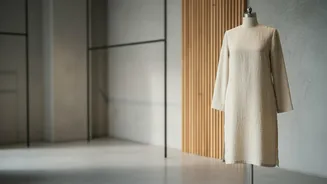
For years, Khadi was often stereotyped as a coarse fabric reserved for kurtas or the wardrobes of politicians. However, a new generation of Indian designers is shattering that image. Labels like 11.11, Akaaro, and Runaway Bicycle are reinterpreting the fabric with contemporary silhouettes, from sharp blazers and denim-style jackets to flowing dresses and chic separates. They are celebrating its unique texture and versatility, proving that Khadi can be both modern and deeply rooted in heritage. This creative renaissance has been crucial in showing younger consumers that Khadi is not just for formal or traditional occasions but is a stylish and practical choice for everyday life.
The Future is Handwoven
Khadi's appearance at New Zealand Fashion Week is more than a fleeting trend; it represents the growing global appetite for fashion with authenticity, story, and purpose. As consumers worldwide increasingly demand transparency and sustainability, artisanal textiles like Khadi are moving from the margins to the mainstream. The challenge now is to scale this interest without losing the fabric's essence — its connection to skilled artisans and its sustainable, slow-made process. The 'Khadi Beyond Borders' showcase is a testament to the belief that the future of global fashion can be intertwined with the rich legacy of handwoven Indian textiles, creating a new narrative that values both heritage and innovation.