







The High-Speed Vision
The Delhi-Varanasi High-Speed Rail (DVHSR) project is a key part of India's plan to modernise its railway network. Managed by the National High Speed Rail Corporation Limited (NHSRCL), it is one of several proposed 'bullet train' corridors intended to slash
travel times between major economic and cultural hubs. The project aims to connect the national capital with the spiritual heartland of Varanasi, covering a distance of approximately 865 kilometres. The goal is to create a transport spine through India's most populous state, Uttar Pradesh, linking its major cities with a service running at speeds up to 350 km/h. Recent announcements in the Union Budget have reaffirmed the corridor as a priority, positioning it as one of the most advanced among the next wave of high-speed projects.
Mapping the Route
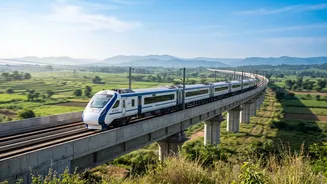
So, where will this train actually go? The proposed alignment starts at Sarai Kale Khan in Delhi, a major transport hub. From there, it is planned to run through several key cities and towns in Uttar Pradesh. The route will be a mix of elevated tracks, tunnels, and ground-level sections, often planned alongside existing expressways and highways to minimise land acquisition challenges. The corridor will connect some of the most significant political, industrial, and religious centres in the region, creating a powerful economic belt.
Stops Along the Way
The project includes about 12 stations, each strategically chosen to maximise connectivity. After departing Delhi, the proposed stops include Noida, Jewar (connecting to the upcoming Noida International Airport), Mathura, Agra, New Etawah, South Kannauj, Lucknow, Raebareli, and Prayagraj before terminating in Varanasi. There's also a proposed spur line to connect Ayodhya, further enhancing its importance for tourism and pilgrimage. Recent reports indicate that the alignment and station locations in areas like Noida have been finalised, marking a significant step in the pre-construction phase.
Achieving the Four-Hour Target
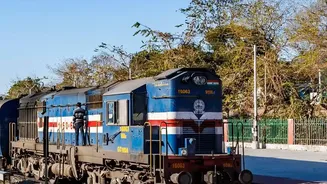
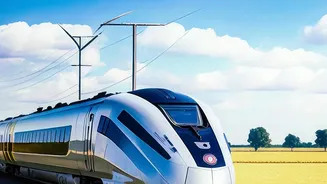
The headline claim of a four-hour journey depends on achieving high operational speeds. The corridor is being designed for a maximum speed of 350 km/h, with trains expected to run at an operational speed of 320 km/h. Planning estimates project a final travel time of around three hours and 50 minutes. This is a massive reduction from the current eight hours taken by the fastest Vande Bharat Express or the 12-plus hours on conventional overnight trains. Some initial feasibility studies even suggested a travel time as low as two hours and 37 minutes, though current official estimates are more conservative. These speeds require dedicated, grade-separated tracks—meaning no level crossings—and technology similar to Japan's famous Shinkansen bullet trains.
Current Status and Next Steps
While the prospect is exciting, the bullet train is not yet under construction. The project is currently in the advanced planning stage. The Detailed Project Report (DPR), which outlines the technical and financial aspects, was submitted to the Ministry of Railways for approval. NHSRCL has completed extensive preparatory work, including LiDAR surveys to finalise the alignment and assessments for environmental and social impact. It is considered one of the most developed of the seven new high-speed corridors announced in the 2026-27 Union Budget. The next steps involve securing final government sanction and, crucially, arranging the project's financing, estimated to be around Rs 1.21 lakh crore, before the first tenders for construction can be awarded.