

The Path to World Heritage Status
Inclusion on the UNESCO Tentative List is the crucial first step for any location aspiring to earn the prestigious World Heritage Site designation. This list is an inventory of properties that a country intends to consider for future nomination. It signals
that a site is considered to have potential 'Outstanding Universal Value'. Once a site is on this list, the country can prepare a detailed nomination dossier, which is then rigorously evaluated by advisory bodies like the International Council on Monuments and Sites (ICOMOS) and the International Union for Conservation of Nature (IUCN). The final decision on inscription is made by the World Heritage Committee. This step brings these unique Indian landscapes into the global spotlight, paving the way for formal nomination.
Sirpur: A Lost Capital in Chhattisgarh
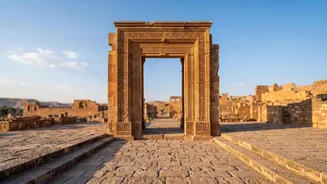
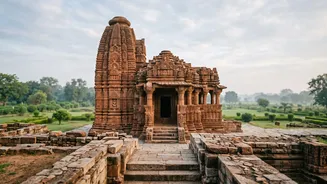
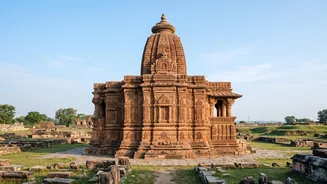
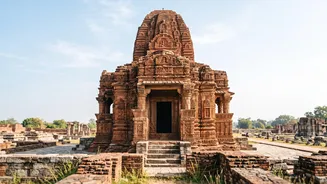
The Sirpur Cultural and Archaeological Landscape in Chhattisgarh's Mahasamund district is a testament to a rich, layered history. Located on the banks of the Mahanadi River, about 78 kilometres from Raipur, Sirpur (anciently known as Shripur) was the capital of the Dakshina Kosala kingdom. Flourishing under dynasties like the Sharbhapuriya and Panduvamshi, it was a melting pot of religions. Archaeological remains across the site reveal a rare harmony between Shaiva, Vaishnava, Buddhist, and Jain traditions. Its most famous monument is the 7th-century Lakshmana Temple, a marvel of early brick temple architecture. The entire landscape, with its temples, monasteries, and ancient urban structures, provides a window into a cosmopolitan past where multiple faiths coexisted and thrived.
Andaman's Unique Volcanoes
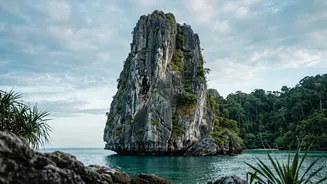
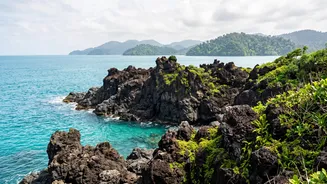
Two of the new entries highlight the unique geological heritage of the Andaman and Nicobar Islands. The first is the Andaman Subduction Volcanoes, comprising Narcondam and Barren Islands. These are the only volcanoes from the last 2.6 million years found in the inner volcanic chain of the Burma-Andaman-Java complex. Barren Island is home to India's only confirmed active volcano. Narcondam, believed to be dormant, rises sharply from the sea and is a designated Important Bird Area. Together, these isolated islands offer a living laboratory for studying volcanic processes, ecological succession, and the evolution of unique species that have captivated scientists for centuries.
Baratang's Karst and Mud Formations
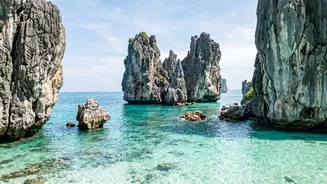
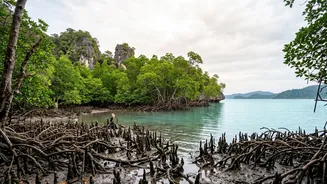
The second nominee from the Andamans is the Karst-Mud-Volcano Complex of Baratang. This site is a geological wonderland, featuring distinctive limestone karst formations and active mud volcanoes. The limestone caves on Baratang Island are a prime example of a karst landscape, created over millennia as water dissolved soluble rock. In addition, the island is known for its mud volcanoes, which are formed by the emission of mud and natural gases. This combination of geological phenomena in a single location gives the Baratang complex immense scientific and research importance, offering insights into the tectonic evolution of the region. The Geological Survey of India also recognised the mud volcano as a Geo-Heritage Site in 2025.