







A Landmark Launch for ISRO
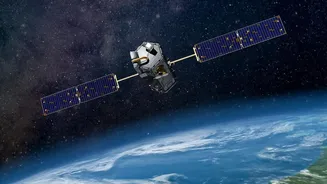
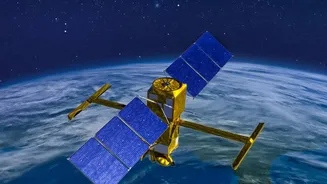
In the early hours of September 4, 2026, the Indian Space Research Organisation (ISRO) successfully launched its advanced Earth observation satellite, EOS-05, aboard a GSLV-F17 rocket from Sriharikota. This mission was not just another launch; it was a significant
moment for India's space programme, marking the first successful flight of the GSLV rocket since the unsuccessful launch of EOS-03 in 2021. The 2,367-kg satellite, described by officials as an “eye in the sky,” represents a new frontier for India's remote sensing capabilities. After a series of precise manoeuvres in the days following the launch, ISRO confirmed that EOS-05 had settled into its final operational orbit, ready to begin its mission.
The Geosynchronous Advantage
What truly sets EOS-05 apart from its predecessors is its orbit. Most Earth observation satellites, including others in the EOS series like EOS-04 and EOS-06, operate in a Low Earth Orbit (LEO), circling the globe multiple times a day and capturing snapshots of different regions as they pass over. EOS-05, however, is India's first dedicated imaging satellite to be placed in a Geosynchronous Orbit (GEO), approximately 36,000 kilometres above the Earth’s surface. At this altitude, the satellite’s speed matches the Earth's rotation, allowing it to remain stationary over a fixed point. This provides a constant, unblinking view of the entire Indian subcontinent and its surrounding oceans. Instead of fleeting passes, EOS-05 acts as a persistent watchtower, a fundamental shift in how India can observe its own territory.
From Disaster Warning to National Security
This persistent-stare capability is a game-changer for a wide range of applications. For disaster management, EOS-05 can provide near-real-time imagery of rapidly developing events like cyclones, floods, and thunderstorms, giving authorities crucial data for issuing timely warnings and coordinating response efforts. In agriculture, its observations can help monitor crop health, assess soil moisture, and improve resource management on a national scale. Beyond these civilian uses, the satellite holds immense strategic importance. Its ability to continuously monitor vast areas enhances India's capacity for border surveillance and monitoring maritime activities, providing critical data for national security agencies. The satellite is expected to complement India’s existing network of observation satellites, which already form one of the largest such constellations in the world.
A Story of Resilience and Progress
The successful deployment of EOS-05 is also a story of technological resilience. The GSLV rocket, which uses a complex, indigenously developed cryogenic upper stage, faced a setback with the EOS-03 failure in 2021 due to a technical anomaly in that very stage. The triumphant return of the GSLV with its heaviest payload to date not only places a vital asset in orbit but also reaffirms ISRO’s mastery over this critical launch technology. The mission builds upon the successes of other satellites in the EOS series, such as EOS-04 (also known as RISAT-1A), an all-weather radar imaging satellite, and EOS-06 (Oceansat-3), which monitors ocean colour and sea surface temperatures. Together, they represent an evolving and increasingly sophisticated strategy for observing our planet.