



Salar de Uyuni, Bolivia
The world's largest salt flat is a surreal, hexagonal expanse of white. During the rainy season, a thin layer of water transforms it into a near-perfect mirror, reflecting the sky in a breathtaking illusion of infinity. This geological marvel, formed
from the drying of prehistoric lakes, sits atop a massive brine that holds one of the world's largest lithium reserves, making it a key site for the future of energy.
The Galápagos Islands, Ecuador
A living laboratory for the theory of evolution, the Galápagos Islands are legendary. The unique animal life, from marine iguanas to giant tortoises, adapted in isolation, providing Charles Darwin with key insights. The landscape itself, a raw collection of volcanic cones, stark lava fields, and pristine beaches, is a visceral reminder of the powerful geological forces that created this crucible of life.
Vatnajökull Ice Caves, Iceland
Each winter, meltwater carves tunnels into Europe's largest glacier, Vatnajökull, creating ephemeral cathedrals of ice. The science of glaciology comes alive as you stand inside them. The ice, compressed over centuries, absorbs all colours of light except for blue, creating an otherworldly azure glow. These caves are a dynamic display of a glacier's life cycle, constantly changing and reforming.
Danakil Depression, Ethiopia
Dubbed the 'hottest place on Earth', the Danakil Depression is one of the most alien-looking landscapes imaginable. Situated at a triple junction of tectonic plates pulling apart, the region bubbles with neon-yellow sulfur springs, turquoise acidic pools, and vast salt pans. It's a geological wonderland and a key research area for astrobiologists studying how life might exist in extreme environments on other planets.
CERN, Switzerland & France
While not a natural wonder, the sheer scale and intellectual beauty of the European Organization for Nuclear Research (CERN) is a powerful draw. Home to the Large Hadron Collider (LHC), the world's largest and most powerful particle accelerator, it's where scientists are exploring the fundamental building blocks of the universe. For visitors, the visual appeal lies in the awe-inspiring engineering and the abstract concepts made tangible.
Atacama Desert, Chile
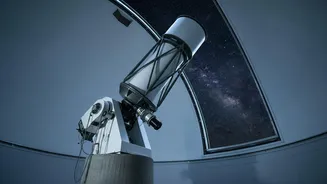
The driest nonpolar desert in the world offers two spectacles. By day, its otherworldly geology shines in places like the Valle de la Luna ('Moon Valley'). By night, the magic ascends. The high altitude, clear skies, and lack of light pollution create some of the best stargazing conditions on Earth. It is home to world-class observatories, allowing both scientists and tourists to peer deep into the cosmos.
Waitomo Glowworm Caves, New Zealand
Step into a subterranean world and glide by boat under a galaxy of living lights. The ceilings of the Waitomo Caves are illuminated by thousands of tiny creatures, Arachnocampa luminosa, a species of fungus gnat larva found only in New Zealand. Their bioluminescence isn't just for show; it's a clever predatory tactic to lure insects into their sticky silk threads, creating a spectacle of biological survival.
Giant's Causeway, Northern Ireland
This UNESCO World Heritage Site consists of about 40,000 interlocking basalt columns, most of them perfect hexagons. Far from being the work of a mythical giant, these formations are the result of an ancient volcanic eruption. As a massive pool of lava cooled and contracted some 60 million years ago, it fractured into these stunningly geometric pillars, providing a textbook example of columnar jointing for geologists.
Lake Baikal, Russia
The world's oldest and deepest lake holds about 20% of the planet's unfrozen fresh water. Formed in an active continental rift zone, its age and isolation have resulted in a unique ecosystem with over 2,000 species found nowhere else, including the Baikal seal, the world's only exclusively freshwater seal. In winter, the lake freezes over with transparent ice, offering surreal views into the depths below.
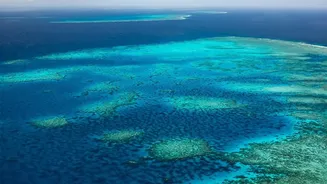
The Great Barrier Reef, Australia
Stretching for 2,300 kilometres, this is the world's largest coral reef system and the biggest single structure made by living organisms. Its breathtaking underwater cities are home to an incredible diversity of marine life, including over 1,500 species of fish and 400 types of coral. As a vital barometer for the planet's climate health, its vibrant beauty tells a crucial scientific story about marine biology and conservation.