






The Current Journey
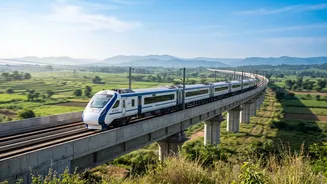
To truly appreciate the four-hour goal, it helps to know the current travel times. Right now, the fastest train on the route is the Vande Bharat Express, which takes about eight hours to cover the roughly 760-kilometre distance. Other express trains can
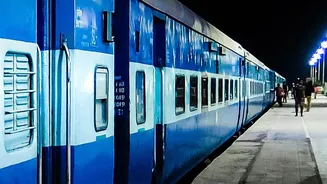
take anywhere from 10 to 15 hours. Flying is the quickest option, with a flight time of about an hour and twenty minutes, but when you factor in airport check-in, security, and travel to and from the airports, the total door-to-door time is closer to three or four hours. A road trip, meanwhile, is a long haul of over 15 hours. The new project isn't just about a slightly faster train; it's about a revolutionary reduction in journey time.
Not Just a Faster Train, a New Corridor
Achieving a sub-four-hour travel time isn't possible on existing railway tracks, which are not designed for such high speeds. The current Vande Bharat trains have a maximum operational speed of 160 km/h, but often run slower due to track limitations. The four-hour dream relies on an entirely new, dedicated high-speed rail corridor. This project, part of a larger national plan, involves laying a separate track designed for 'bullet trains' operating at speeds up to 350 km/h. The National High Speed Rail Corporation Limited (NHSRCL) is overseeing this ambitious undertaking. The plan, announced as part of the Union Budget, envisions this corridor drastically cutting travel time to approximately 3 hours and 50 minutes.
Project Status and Timeline
This massive infrastructure project is still in its early stages. The Detailed Project Report (DPR) for the Delhi-Varanasi corridor has been submitted and extensive surveys, including aerial LiDAR mapping, have been completed to finalise the route. The proposed route will pass through several key cities in Uttar Pradesh, including Agra, Lucknow, Prayagraj, and Ayodhya, connecting major economic and religious hubs. However, building a high-speed corridor from scratch involves complex processes like land acquisition and construction. While India's first bullet train project between Mumbai and Ahmedabad is targeted to have a section operational by 2027, the Delhi-Varanasi line is part of a future phase. No official completion date has been set, and it will likely be several years before the project is realised.
The Rise of Sleeper Vande Bharat
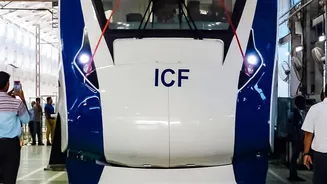
While the high-speed corridor is a long-term goal, Indian Railways is already working to improve overnight travel. In the more immediate future, a Vande Bharat sleeper train is planned for the existing Delhi-Varanasi route. Unlike the current chair-car versions, these trains will feature sleeper berths, allowing for comfortable overnight journeys. Recent reports suggest this sleeper service could complete the trip in about eight hours, a significant improvement over most current overnight options. These trains, designed for long-distance travel, are expected to feature modern amenities and enhanced passenger comfort. The first sleeper Vande Bharat trains began operation in early 2026, with more planned for rollout across the country.
Economic and Tourism Impact
The long-term vision of a high-speed corridor connecting the national capital to Varanasi, a major spiritual and cultural centre, carries immense potential. Faster, more efficient travel would provide a massive boost to tourism, making it easier for both domestic and international visitors to travel between the cities. It would also serve as a vital economic artery, enhancing business connectivity and enabling faster movement of people and commerce across Uttar Pradesh. By linking major urban centres, the corridor is designed to act as a 'growth connector', fostering regional development and creating new opportunities along its path. This project reflects a broader strategy to modernise India's railway network and build infrastructure for the future.