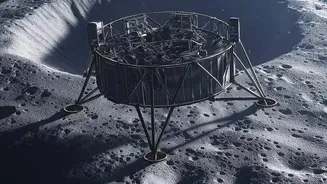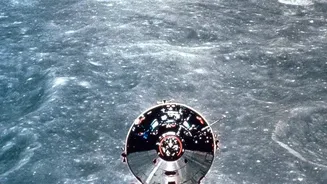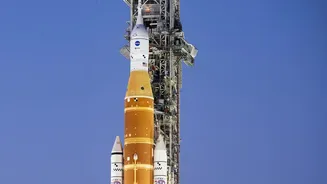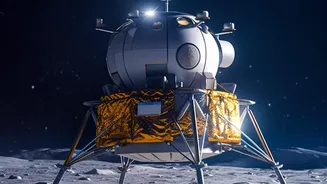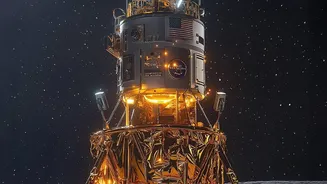




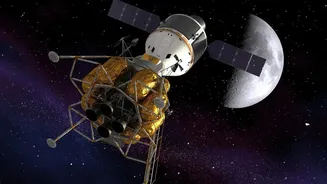
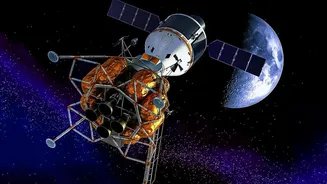
Before humanity returns to the Moon to stay, a vanguard of robotic pioneers will do the heavy lifting. NASA's ambitious Artemis program isn't just about planting flags; it's about building a permanent address on another world.
A Phased Approach to Lunar Living
NASA's strategy for establishing
its 'Artemis Base Camp' near the Moon's south pole is methodical and phased, prioritizing safety and learning. The entire endeavor is broken into three main stages. Phase One, which is currently underway and planned through 2029, is all about reconnaissance and preparation. It involves a flurry of robotic missions sent to scout the terrain, test new technologies, and understand the harsh lunar environment before committing to long-term human stays. Phase Two, projected to start around 2029, will focus on deploying foundational infrastructure, including power systems and initial habitats. The final phase, beginning in 2032, aims to establish a continuously inhabited outpost, where astronauts can live and work for extended periods, paving the way for eventual missions to Mars.
The Robotic Workforce
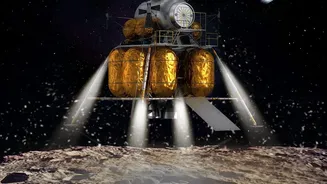
The first residents of the lunar construction site won't be human. NASA is relying on a fleet of autonomous and remotely operated robots to prepare the ground. Through its Commercial Lunar Payload Services (CLPS) initiative, NASA is partnering with private companies like Blue Origin, Astrolab, and Lunar Outpost to deliver rovers, instruments, and cargo to the surface. These rovers will play a crucial role before astronauts arrive. For instance, the Volatiles Investigating Polar Exploration Rover (VIPER) is tasked with mapping water ice deposits, a critical resource for future inhabitants. Other lunar terrain vehicles (LTVs) will be operated remotely from Earth to map the area, test mobility in permanently shadowed regions, and gather data to reduce risks for the first human crews who will later use the same vehicles for exploration.
Building with Moon Dust
One of the most innovative aspects of the plan is minimizing what needs to be launched from Earth by using local resources—a concept known as in-situ resource utilization (ISRU). A key initiative in this area is Project Olympus, a collaboration between NASA and the construction technology company ICON. This project is developing methods for 3D printing structures using lunar regolith, the loose soil and rock on the Moon's surface. The goal is to create landing pads, roads, and eventually radiation-shielded habitats robotically. By converting lunar dust into a durable building material, NASA can create robust infrastructure without the immense cost and difficulty of transporting all materials from Earth. This not only makes the base more sustainable but is a critical skill for building future outposts on Mars.
Powering the Outpost
A permanent base requires a reliable power source, a major challenge given the Moon's 14-day-long nights. The initial robotic missions will deploy demonstration solar arrays and systems designed to survive the extreme cold and darkness. During Phase Two, NASA plans to establish more robust solar power stations on sunlit ridges, coupled with battery storage. Looking further ahead, the agency is also developing nuclear power systems, such as small fission reactors, which could provide a steady and reliable energy source regardless of sunlight. This combination of solar and nuclear power is essential for running habitats, recharging rovers, and powering the scientific experiments that form the core purpose of the Artemis Base Camp.
Overcoming Extreme Challenges
Building on the Moon is an immense engineering challenge far beyond anything attempted on Earth. The lunar environment is an unforgiving vacuum with no atmosphere to protect against micrometeoroids or intense solar radiation. Extreme temperature swings, from 120°C in sunlight to -130°C in shadow, can stress materials to their breaking point. Furthermore, lunar regolith is not like terrestrial sand; it is sharp and abrasive, like microscopic shards of glass, posing a significant threat to machinery and astronaut suits. Transporting the necessary heavy equipment is another major hurdle. Each of these challenges must be solved by the early robotic missions to ensure the infrastructure is safe and reliable before the first long-duration human crews make the Moon their temporary home.