



The Planet's Dynamic Engine
Earth is not a solid, static ball of rock. At its centre lies a solid inner core, surrounded by a turbulent, liquid outer core composed of molten iron and nickel. This superheated liquid metal is constantly in motion, flowing and swirling thousands of kilometres
below the surface. This movement of electrically conductive iron acts like a planetary-scale dynamo, generating the powerful magnetic field that envelops Earth. This field is crucial for life, as it deflects harmful charged particles from the sun, known as solar wind, which would otherwise strip away our atmosphere. For decades, scientists believed the flow within the core was relatively stable, with a dominant westward drift. However, recent discoveries have shown that the heart of our planet is far more restless and unpredictable than previously imagined.
An Unexplained U-Turn
Around 2010, scientists noticed something remarkable. A massive section of the molten core, deep beneath the Pacific Ocean, abruptly changed direction. This stream of liquid iron, which had been flowing weakly westwards, suddenly reversed and began surging strongly to the east. The reasons for this dramatic reversal remain a mystery to the scientific community. It wasn't the entire core changing direction, but a significant, large-scale region that defied the long-observed pattern. This event challenges the long-held assumption that circulation in the outer core is dominated by a steady westward movement. Recent data suggests this eastward flow may already be weakening, hinting that this could be a temporary fluctuation or part of a longer, undiscovered natural cycle within the core's dynamics.
Our Eyes in Orbit
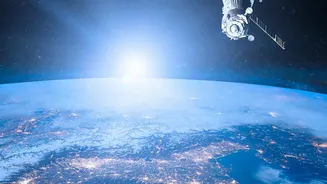
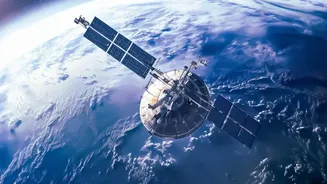
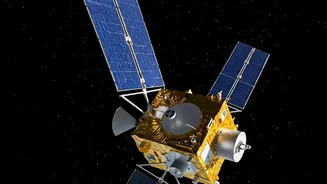
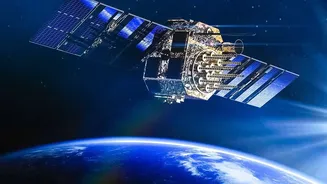
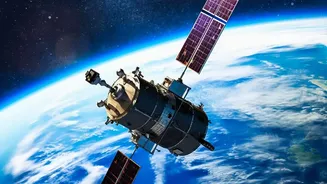
Detecting the motion of something 2,200 kilometres underground sounds like science fiction, but it is made possible through incredibly precise satellite technology. The European Space Agency's (ESA) Swarm mission, a constellation of three satellites launched in 2013, plays a key role. These spacecraft are equipped with highly sensitive magnetometers that continuously measure Earth's magnetic field with exceptional precision. Because the field is generated by the moving liquid core, any variations in its flow cause subtle changes in the magnetic field above. By flying in carefully coordinated orbits, the Swarm satellites can distinguish the magnetic signals originating from the core from other sources like the crust, oceans, and atmosphere. This allows researchers to create maps of the core's flow and track how it evolves over time, revealing events like the Pacific reversal.
What It Means for Our Magnetic Shield
While this core-flow reversal poses no immediate danger to life on Earth, it has significant implications for understanding our planet. The magnetic field is not static; it constantly changes as the core flow evolves. This is why the magnetic north pole wanders over time. Studying rapid changes like this reversal helps scientists build better models of the geodynamo—the engine that powers the magnetic field. A better understanding of the core's behaviour is crucial for everything from practical navigation systems to spacecraft operations and predicting space weather. This event provides a rare window into the turbulent processes that govern our planet's protective shield, offering clues about its long-term strength and stability.
A Puzzle for Future Science
The discovery of the core-flow reversal has opened up a new line of inquiry for geoscientists. Is this a one-off event, or is it part of a recurring cycle we've never been able to observe before? Some research suggests a possible link between this change in the outer core and the behaviour of the solid inner core, which has also shown recent variations in its rotation. Scientists now want to understand if these processes deep within the Earth are connected. Continued monitoring with missions like Swarm will be essential to see how the flow evolves and to unravel the complex dance of forces at the centre of our world. Each new piece of data helps us better comprehend the fundamental workings of the planet we call home.