






What Are Ceuta and Melilla?
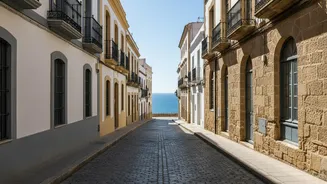
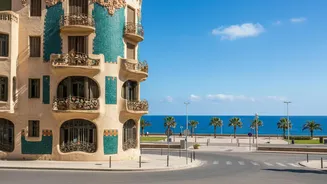
Ceuta and Melilla are two coastal cities on the shores of North Africa, separated by about 400 kilometres of Moroccan coastline. Despite their location, they are not part of Morocco. Instead, they are autonomous cities of Spain. This means their residents
are Spanish citizens with the same rights as someone living in Madrid or Barcelona. As part of Spain, they are also part of the European Union, making their borders with Morocco the only land boundaries between the EU and Africa. However, they have a unique status within the EU, as they are not part of the customs union or the border-free Schengen Area. This means even travel from the cities to mainland Spain requires police identification checks.
A Centuries-Old History
The Spanish presence in these cities is not a recent colonial relic; it predates the existence of the modern Moroccan state. European powers began establishing footholds in North Africa at the close of the Reconquista. Portugal conquered Ceuta in 1415, and it passed to Spanish rule in the 17th century. Spain took control of Melilla even earlier, in 1497. Spain argues this long history of administration means the cities are integral parts of the country, not colonies. Unlike former colonies, they have never been listed by the United Nations as non-self-governing territories awaiting decolonisation.
The Fortress Frontier
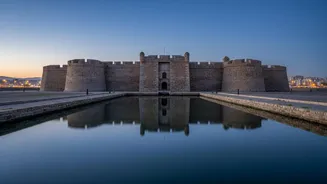
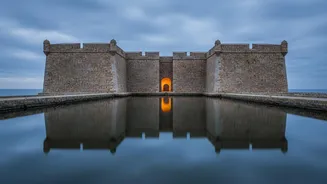
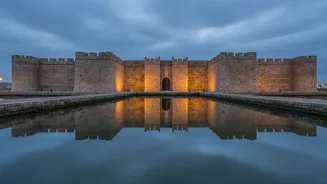
Because they represent a direct land entry into EU territory from Africa, the borders of Ceuta and Melilla are heavily fortified. For decades, Spain and the EU have invested in a sophisticated security system to manage and deter irregular migration. Both cities are enclosed by formidable border fences, which are several metres high and reinforced with barbed wire, anti-climbing mesh, and advanced surveillance technology like cameras. These fences physically demarcate the boundary between Africa and Europe, turning the enclaves into what are often described as fortress cities. Despite these measures, the borders remain a focal point for people attempting to reach Europe.
A Magnet for Migration
The economic disparity between Europe and much of Africa makes Ceuta and Melilla a powerful magnet for migrants and asylum seekers. For many, scaling the fences or swimming around the coastal breakwaters represents the most direct, albeit perilous, path to a new life in Europe. This has led to recurring humanitarian crises. Large groups, often from sub-Saharan African countries, frequently attempt to storm the fences in coordinated efforts. These attempts can result in tragedy and have created an ongoing challenge for Spanish and European authorities tasked with balancing border security and human rights. In late July 2026, a massive surge saw an estimated 72,000 migrants cross into Ceuta, overwhelming local resources and triggering a major diplomatic incident.
A Diplomatic Tightrope
The status of Ceuta and Melilla is a persistent source of tension between Spain and Morocco. Morocco claims sovereignty over the cities, which it considers occupied lands. This dispute often spills over into other areas of their relationship. Analysts suggest that Morocco has, at times, relaxed its border enforcement, allowing migration surges to occur as a way to exert political pressure on Spain over other issues, such as trade or Spain's position on the disputed territory of Western Sahara. Spain steadfastly rejects any discussion on the sovereignty of the cities, stating that its territorial integrity is not negotiable. This diplomatic friction ensures that the frontier remains a potential flashpoint, dependent on the delicate and often passionate state of Spanish-Moroccan relations.