


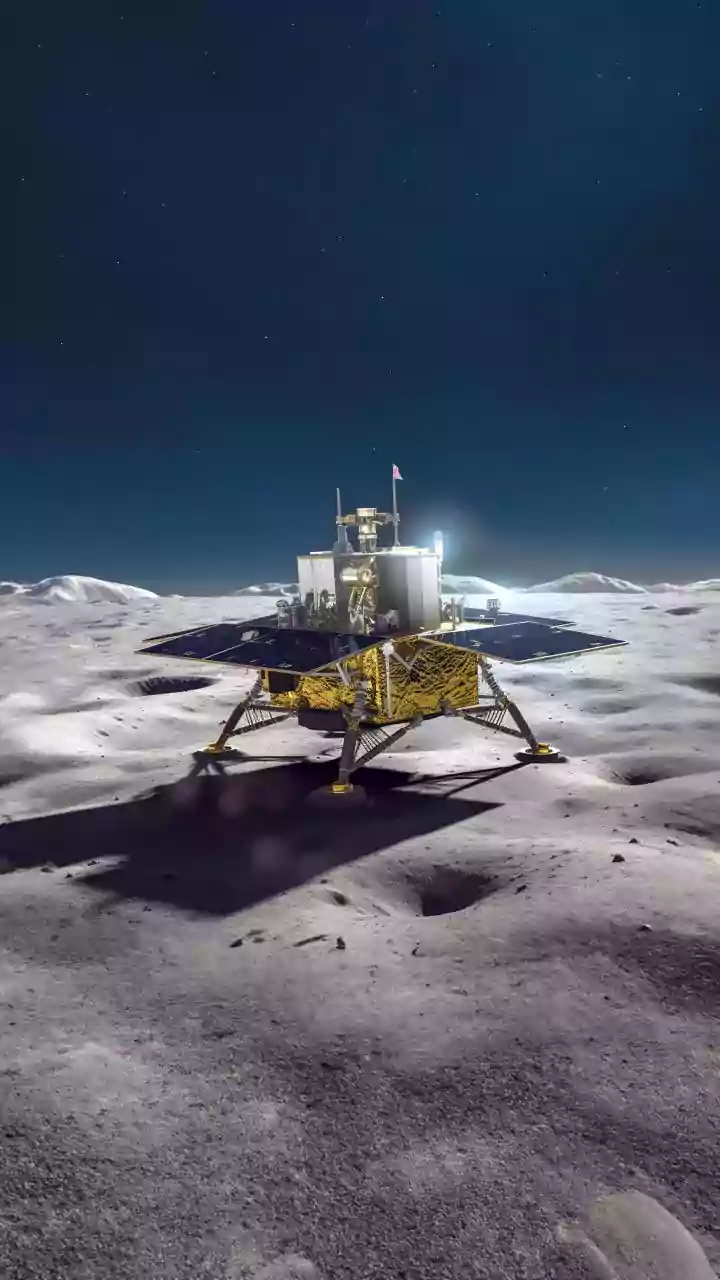




A New Commercial Space Race
In a significant strategic shift, NASA is moving away from owning and operating all its deep-space hardware. Instead, it's buying services from a growing market of commercial space companies. This was highlighted by recent announcements expanding the
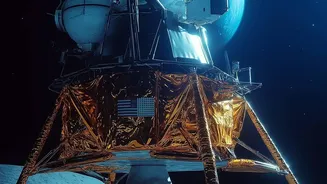
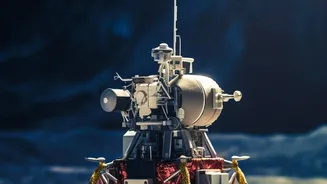
Commercial Lunar Payload Services (CLPS) initiative, a program designed to contract private companies for robotic deliveries to the Moon. NASA recently selected eight companies for the next phase of this program, making them eligible to compete for missions under a new framework with a combined maximum value of $10 billion over the next decade. The list of eligible companies includes industry giants and ambitious newcomers like Blue Origin, SpaceX, Lockheed Martin, Northrop Grumman, Firefly Aerospace, Intuitive Machines, ispace-U.S., and Voyager Technologies. This approach allows NASA to foster competition, reduce costs, and accelerate the development of a sustainable presence on the Moon.
The Next-Generation Moon Buggy
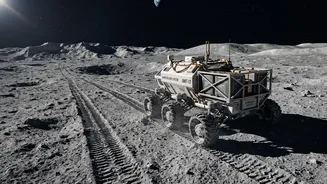
A key part of living and working on the Moon is mobility. While the Apollo-era rovers were marvels of their time, the Artemis program requires something more robust and versatile. NASA has awarded contracts to several companies to develop new Lunar Terrain Vehicles (LTVs). Earlier this year, NASA awarded contracts worth approximately $220 million each to Lunar Outpost and Astrolab to develop their respective rovers, named Pegasus and CLV-1. These vehicles are being designed to transport astronauts, haul equipment, and even operate autonomously for scientific exploration before crews arrive. To get these rovers to the Moon, NASA has tasked Blue Origin's Blue Moon lander with the delivery service. Unlike the Apollo missions where NASA built the rover, this new model has NASA purchasing services from the companies, who will own and operate their vehicles on the lunar surface.
PROMISE of a Nuclear-Powered Rover
Beyond the astronaut 'moon buggies', NASA is also funding more specialized robotic explorers. A standout project is PROMISE, which stands for 'Polar Rover for Observation, Mapping, and In-Situ Exploration'. This nuclear-powered rover is specifically designed to operate in the extreme cold and darkness of the Moon's south pole, a region believed to be rich in water ice. By using nuclear power, PROMISE can survive the two-week-long lunar night and explore permanently shadowed craters where ice might be trapped. The rover will be built using spare hardware from the highly successful Curiosity and Perseverance Mars rovers, significantly reducing cost and development time. NASA awarded Blue Origin a contract to deliver PROMISE to the lunar surface around late 2028, where it will drill for samples and map resources crucial for a future base.
Building the Lunar Supply Chain
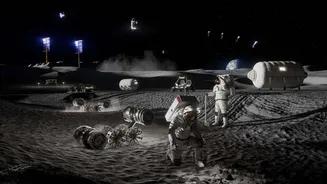
Getting equipment and supplies to the Moon requires a robust logistics network, like a series of interplanetary freight trucks and last-mile delivery vans. To build this, NASA is also investing in launch services and orbital transfer vehicles (OTVs), which act as space tugs to move cargo between Earth orbit and lunar orbit. The agency awarded a combined $1.3 billion across six task orders to companies like Blue Origin, Impulse Space, and Arrow Science and Technology. These missions will demonstrate the capabilities needed to build out the Moon Base piece by piece. This includes transporting everything from scouting drones, like the 'MoonFall' program, to communications satellites that will keep the future lunar base connected to Earth. It's all part of a deliberate, mission-by-mission strategy to ensure that when Artemis astronauts arrive, key infrastructure is already in place.