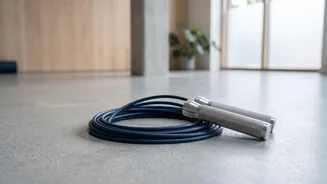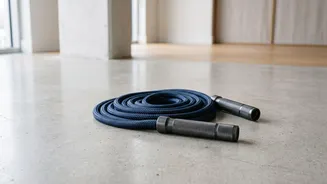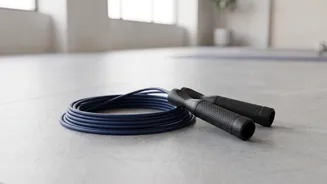





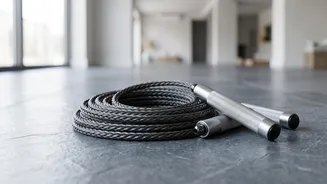


In the world of fitness, the debate over the 'best' cardio is endless. But what if the goal isn't just a higher heart rate, but sharper coordination? This is where jump rope and running reveal their unique strengths, not as rivals, but as distinct paths
to a more connected body and mind.
The Rhythmic Precision of Jumping Rope
Jumping rope is often mistaken for a simple cardio blast, but it's a masterclass in neurological coordination. The entire exercise is built on a non-negotiable rhythm. Your hands, wrists, and feet must synchronise perfectly with the rope's arc. A single miscalculation in timing results in an immediate stop, providing instant feedback that forces your brain to adapt. This constant loop of action and correction sharpens communication between your brain, eyes, hands, and feet. The act of jumping on the balls of your feet also activates neuromuscular adjustments to maintain balance, making you lighter and quicker on your feet over time, a reason it's a staple for boxers.
The Dynamic Balance of Running
Running, on the other hand, is an exercise in forward momentum and dynamic stability. Its coordination challenge lies in maintaining balance while constantly shifting your center of gravity from one leg to the other. This involves a complex interplay of muscles working to propel you forward while preventing excessive side-to-side or rotational movement. Efficient running requires a harmonious relationship between opposing muscle groups, like the quadriceps and hamstrings. Your brain must orchestrate this muscular symphony with millisecond precision over thousands of steps, a skill known as intermuscular coordination. This ability to maintain form while in motion is crucial for both performance and injury prevention.
Wiring the Brain for Movement
Both activities are powerful tools for enhancing proprioception—your body's awareness of its position in space. However, they train it differently. Jumping rope is a cognitive exercise disguised as cardio. It demands constant communication between the brain and body, activating the cerebellum for timing and the motor cortex for planning and execution. The repetition of mastering new rhythms and tricks boosts neuroplasticity, the brain's ability to form new connections. Running challenges proprioception by forcing the body to adapt to changing terrain and maintain balance during single-leg stances with every stride. This strengthens neural pathways, teaching the body to recruit muscles more efficiently without conscious thought.
Vertical Bounce vs. Horizontal Drive
The core difference in movement lies in their direction and force. Jumping rope is a predominantly vertical, low-impact plyometric exercise. You absorb force and rebound in a contained space, training the stretch-shortening cycle in your calves and ankles. This builds reactive strength and elastic power. Running is a horizontal, propulsive activity. The goal is to cover ground, using your muscles to generate forward motion. While running is also an impact sport, the forces are typically applied through a heel or midfoot strike and directed horizontally. This builds endurance and strength in a linear pattern of movement.
Better Together: A Complementary Approach
Instead of choosing one over the other, the smartest approach is to see how they complement each other. For runners, jumping rope can be a powerful tool to improve coordination, footwork cadence, and build the elastic strength in the lower legs that improves running economy. The rhythmic demands of the rope can teach a runner's body to be lighter and more efficient. Conversely, for those who focus on jump rope, running builds a strong aerobic base that can support longer, more intense jump rope sessions. Combining the vertical, rhythmic coordination of jumping with the horizontal, endurancendurance based coordination of running creates a more well rounded adaptable and injury resistant athlete.