







Meet the Habitable Worlds Observatory
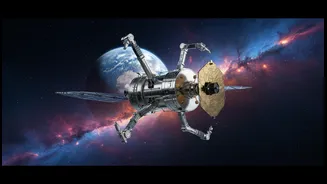
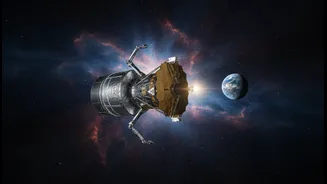
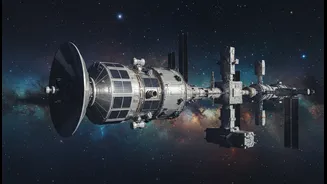
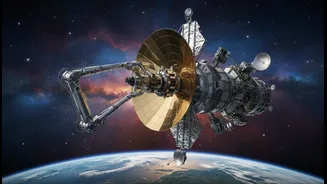
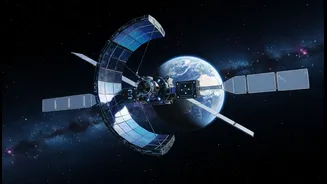
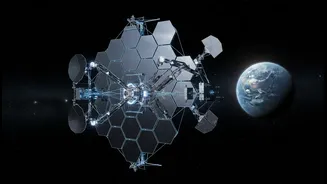
Set to be NASA's next flagship mission after the Nancy Grace Roman Space Telescope, the Habitable Worlds Observatory (HWO) is being designed with one primary, audacious goal: to be the first telescope to directly image Earth-like planets around stars
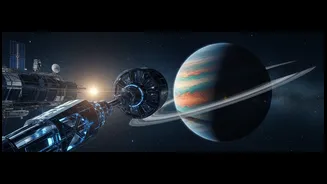
similar to our sun. Its main objective is to identify and analyze at least 25 potentially habitable worlds, searching their atmospheres for chemical clues — known as biosignatures — that could point to the existence of life. These signatures include gases like oxygen, methane, and water vapour, the very things that indicate life on our own planet. But HWO isn't a one-trick pony; it will also conduct transformational astrophysics, studying everything from the evolution of galaxies to the mysteries of our own solar system with unprecedented power.
The Robotic Advantage
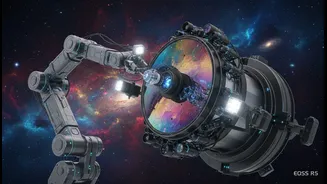
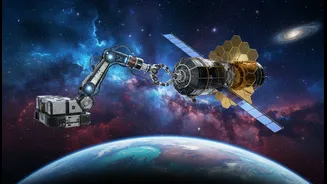
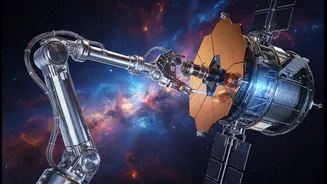
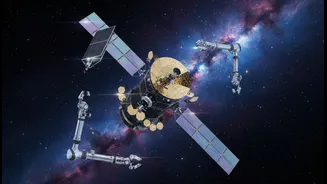
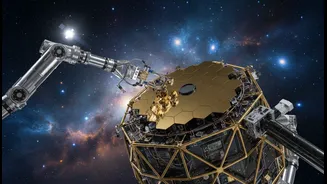
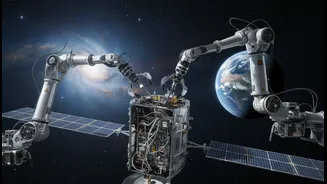
What truly sets the HWO concept apart is the plan to make it serviceable. Unlike the James Webb Space Telescope (JWST), which was sent to its deep-space post with no plans for repairs, HWO will be designed from the ground up to be maintained and upgraded. The key difference? The servicing will be done by robots. HWO is expected to operate at the same distant location as JWST, about 1.5 million kilometres from Earth at a gravitationally stable spot called Lagrange Point 2 (L2). This position is ideal for astronomy but is currently beyond the reach of human astronaut missions. Robotic servicers, however, could be dispatched to refuel the observatory, repair failing components, or even install brand-new, more advanced scientific instruments, potentially extending its life for decades and allowing it to get better with age.
Learning from Legends: Hubble and Webb
The plan for HWO builds on decades of lessons learned from its legendary predecessors. The Hubble Space Telescope, which orbits close to Earth, was famously saved and enhanced by five astronaut-led servicing missions that replaced instruments and fixed flaws. These upgrades kept it at the cutting edge of science for over 30 years. The JWST, on the other hand, is an incredible technological feat, but its lifespan is ultimately limited by the fuel and technology it launched with. HWO aims to combine the best of both worlds: the raw power and distant vantage point of Webb, with the longevity and upgradability of Hubble, made possible by a new generation of robotic technology. This forward-thinking approach could mark a new, more sustainable era for space astronomy.
The Technology of Finding Another Earth
Finding a pale blue dot orbiting a star trillions of kilometres away is an immense technical challenge. A planet like Earth is billions of times fainter than its star. To see it, HWO will need an advanced internal coronagraph — an instrument designed to block the overwhelming glare of the host star. This technology, which will be tested on the upcoming Nancy Grace Roman Space Telescope, will need to be thousands of times more capable than any previous version. The observatory itself will need incredible stability, with its optical system holding steady to within the width of a single atom during long observations. Once a planet is imaged, HWO will use spectroscopy to dissect its light, searching for the tell-tale chemical fingerprints of a world that could support life.
The Long Road to Launch
The Habitable Worlds Observatory is still in its early conceptual phase. Recommended by the National Academies' 2020 Decadal Survey on Astronomy and Astrophysics, the mission is a top priority for NASA. The agency is currently funding research and development with several aerospace companies to mature the critical technologies required. The target launch date is sometime in the early 2040s, placing it on a long but deliberate path. This long-term vision ensures that the necessary technologies, from robotic servicing capabilities to the ultra-precise coronagraph, are fully developed and tested, minimizing risks for a mission with the potential to change how we see our place in the universe.