







The Next Generation of Ambition
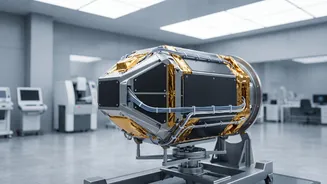
India is entering a new, muscular phase of its space journey, marked by ambitious hardware designed to secure its place as a leading space power. At the forefront is the Next Generation Launch Vehicle (NGLV), a powerful, partially reusable rocket. Approved
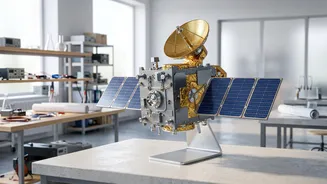
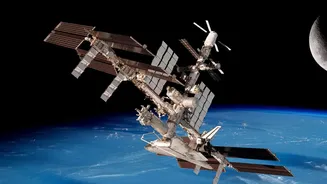
by the Union Cabinet, the NGLV is designed to be a game-changer, capable of lifting payloads up to three times heavier than the current LVM3 rocket, but at a significantly lower cost. This vehicle is crucial for India's long-term plans, including establishing the Bharatiya Antariksh Station by 2035 and achieving a crewed lunar landing by 2040. Alongside the NGLV, ISRO continues to advance its human spaceflight capabilities with the Gaganyaan mission, which aims to send its first uncrewed test flight into orbit in late 2026, followed by a crewed mission in 2027. These projects represent a massive leap in technological capability, but they also create an unprecedented demand for human expertise.
The Double-Edged Sword of Success
The very policies that have supercharged India's space ambitions have also created a fierce competition for talent. Since the government opened the sector to private participation in 2020, India’s space industry has boomed. The number of private space startups has surged to over 400, attracting significant investment and transforming the job market. This rapid growth is a sign of a healthy, dynamic ecosystem. However, it has also led to a significant talent migration from the Indian Space Research Organisation (ISRO) to the private sector. Experienced scientists and engineers, some of whom worked on critical missions like Chandrayaan and Gaganyaan, are being drawn to startups with offers of higher salaries, stock options, and faster career growth. This has raised concerns about a brain drain from the national agency at a time when its most complex projects require all hands on deck.
The Hunt for Niche Expertise
The talent challenge is not just about numbers; it is about specialisation. Both ISRO and private firms are finding it difficult to hire people with niche skills in areas like propulsion engineering, avionics, satellite systems integration, and space-grade materials science. While India graduates around 8,000 aerospace engineers annually, this represents a tiny fraction of the country's total engineering graduates, and many still lack the specific, high-level skills required for cutting-edge space projects. This creates a 'chicken-and-egg' situation: there are few candidates with the right qualifications, and sometimes the salaries offered aren't competitive enough to convince students to pursue these highly specialised fields. This skills gap is a critical hurdle for both the private sector's goal of scaling up and ISRO's mission to push the technological frontier.
Forging the Future Workforce
Recognising the challenge, multiple efforts are underway to cultivate the next generation of space talent. ISRO has launched one of its largest recruitment drives in recent years, seeking to fill hundreds of positions for scientists, engineers, and apprentices. The government, through the Indian National Space Promotion and Authorisation Centre (IN-SPACe), is actively working to build a complete ecosystem. This includes initiatives like a Venture Capital fund to fuel startups, mentorship programs, and skill development courses. Prime Minister Narendra Modi has personally urged the burgeoning private sector to help make India a global talent magnet, creating an ecosystem so compelling that experts from around the world choose to build their careers here. The movement of experienced personnel from ISRO to startups, while a short-term challenge for the agency, is also seen by some as a natural and ultimately beneficial process, strengthening the domestic industry as a whole.